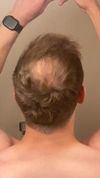
The conversation discusses using hair follicle dermal papilla exosomes for hair loss treatment. It inquires about purchasing options for this treatment.
Hair/scalp cloning for unlimited transplants is likely a decade away, with prior transplants not significantly affecting future options. Advances in AI and research in wound-induced hair neogenesis are promising, but infrastructure and technology constraints remain challenges.
A user's progress after 3 months of using the "big 4" hair loss treatments - liposomal gel minoxidil, finasteride, keto shampoo and microneedling; with people providing advice about their own experiences and asking for more information.
The post discusses a successful hair loss treatment involving a hair transplant, finasteride, and minoxidil. The user underwent a 2000 graft hair transplant at the hairline in a clinic in Sweden.
SCUBE3 is a promising new molecule that can restart hair growth by reawakening dormant hair follicles. Users express skepticism about its availability timeline, with some hoping for release by 2026.
The user experienced hair regrowth and strengthening using finasteride, minoxidil, micro-needling, Nizoral, and biotin products. Despite progress, they acknowledge that a hair transplant may be needed for full hairline restoration.
The user is using a combination of finasteride, dutasteride, oral and topical minoxidil, PRP, and stem cell treatments for hair loss. They report slowed shedding and new vellus hairs on the hairline, questioning if they are a strong responder to the treatment.
The user experienced tiny vellus hairs from 0.5mg finasteride and 2.5mg minoxidil over 9 months. Topical minoxidil, alfatradiol, and RU58841 applied twice daily for 1.5 months significantly improved temple hair regrowth.
A 29-year-old tried various hair loss treatments, including minoxidil, finasteride, dutasteride, derma stamp, and a hair transplant, but ultimately chose a hair system to cover baldness and boost confidence. The hair system looks natural and is praised by others for its appearance and feel.
A 24-year-old with early hair loss is managing it with finasteride, minoxidil, and dutasteride, and is considering using a hair system for more styling options while maintaining transparency. They emphasize confidence and self-expression over hair, viewing it as an amplifier rather than a foundation.
The user is using a self-made topical mix of finasteride and minoxidil foam for hair loss, experiencing solid regrowth in the frontal area and mild improvement at the crown, but still shedding. They previously used oral finasteride and dutasteride but stopped due to side effects, and are seeking advice on when shedding might stabilize with the topical treatment.
Scientists have grown natural-looking hair from stem cells, potentially revolutionizing hair growth treatments. Concerns include cost, DHT resistance, and the need for future procedures.
Use finasteride or dutasteride with minoxidil for at least a year to improve hair density before considering a hair transplant. A transplant might be needed if medications don't provide sufficient regrowth.
User "logart89" claims DUT 3 times a week is better than daily FIN for hair loss. Their routine includes DUT, topical DUT, stemoxydine and alfatradiol mix, 5% minoxidil with tretinoin, and weekly derma stamping.
The user noticed new hair growth after using topical minoxidil and undergoing 2 GFC sessions, along with using caffeine shampoo. They plan to start using topical finasteride and minoxidil and are inquiring if shampooing is necessary before application.
Hair regrowth from treatments like finasteride, dutasteride, and minoxidil can take several years, with most visible results appearing within 1-2 years and potential improvements continuing up to 10 years. Consistency and patience are crucial for achieving maximum hair thickness, as hair miniaturization and regrowth are gradual processes.
The user experienced rapid hair thinning on top of the head after two GFC treatments, despite using topical minoxidil for four years. Hair on the sides and back became thicker, leading to confusion and questioning of the treatment decision.
Emerging hair loss treatments like PP405, a topical MPC inhibitor, show promise in activating stem cells for hair growth. The conversation seeks information on the development stages and accessibility of these treatments.
A user shared their experience 36 days after a hair transplant of 5500 grafts in Delhi, using topical minoxidil and finasteride, and plans to start oral finasteride. They reported less shedding than expected and strong early growth, while also maintaining a healthy lifestyle.
The user is using a combination of hair loss treatments including dutasteride, minoxidil, RU58841, low-level laser therapy, ketokonozole, supplements, Viviscal, Nutrafol, microneedling, PRP, and scalp Botox injections, but is still experiencing hair shedding and thinning. Despite being on this regimen for two years, the user's hair condition is worsening, and they are seeking advice on what else they can do.
The conclusion of the conversation is that the user "Shakalakaplaka" shares their comprehensive hair loss regimen, which includes various treatments targeting different pathways such as DHT, inflammation, fibrosis, immune system, testosterone, gut problems, and scalp health. The effectiveness of the regimen is not confirmed, and some users express skepticism or request before and after pictures for credibility.
David Barreto shared that a London-based research group is conducting a 12-month trial for a new nutraceutical treatment for pattern hair loss, designed with Dr. Carlos Puig. The trial aims to provide robust data, with results expected in 1-2 years, potentially representing a significant advancement since finasteride’s introduction in 1997.
The mechanism of Androgenic Alopecia and practical applications of treatments like Minoxidil, Finasteride, RU58841, dermarolling, scalp massages, anti-fungals, progesterone, estrogen, PPAR-γ activators, reducing oxidative stress, and scalp exercises. It explains why DHT is important in AA and how other factors might be involved such as hypoxia, increased DKK-1 expression, morphological changes to the scalp, skull growth during childhood/puberty, and blood flow.
A 28-year-old underwent three hair transplants totaling 11,102 grafts at Eugenix, using finasteride and minoxidil to manage advanced hair loss. Despite limited density, the results are satisfactory, allowing the individual to feel presentable without a hat.
After 8 months of using topical finasteride, hair miniaturization continues, raising concerns about its effectiveness. Microneedling is suggested as a possible complementary treatment.
A new topical treatment, TH07, combining finasteride, latanoprost, and minoxidil, is entering phase III trials with promising early results. Some users express skepticism, noting the treatment uses existing products.
The user is using dutasteride, estradiol cypionate, microneedling, oral minoxidil, and plans to add ketoconazole for hair regrowth. They are questioning if the improvement is due to actual regrowth or just better photo angles.
The user is experiencing fluctuating hair regrowth using oral finasteride, topical minoxidil, and microneedling, with the best results in the first four months. Suggestions include being patient through shedding cycles, considering oral minoxidil, and possibly adding dutasteride for stronger results.