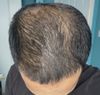
Exosomes were used for hair loss treatment, showing results 33 days after the second session. The conversation also mentions Minoxidil, finasteride, and RU58841 as treatments.
A group buy for products to treat hair loss, such as Minoxidil, Finasteride and RU58841. Participants are interested in adding more people before ordering the next order.
A user in their early 20s is concerned about minor hair thinning and is considering a hair loss regimen involving PRP sessions, mesotherapy with dutasteride injections, and low-dose finasteride. They dislike minoxidil due to its greasiness and prefer a routine that is easy to maintain.
User reported initial hair regrowth with 0.25 mg finasteride taken four times a week, experiencing a second shedding phase, and no side effects. They also mentioned using RU58841 without success and plan to stop after a year.
The user experienced increased hair stubble after using 1mg finasteride, 3mg minoxidil, microneedling twice weekly, and daily biotin and vitamin D. They plan to grow their hair out to assess coverage.
ET-02, a new hair loss treatment, shows promising results with a 6-fold increase in hair count, potentially outperforming minoxidil by activating stem cells in hair follicles. Further trials are ongoing to confirm its efficacy and safety, with potential market release in the future.
The user experienced hair regrowth and thickening using 1mg oral finasteride, 3mg oral minoxidil, biotin, vitamin D, red light therapy, and microneedling. Some shedding occurred around 4-6 weeks into the treatment.
An 18-year-old is using a high-dose treatment for hair loss, including 2.5 mg dutasteride, topical minoxidil, and injectable GHK-Cu, despite minimal hair loss. Many users suggest reducing the dutasteride dose due to potential side effects and recommend starting with finasteride instead.
The efficacy of various hair loss treatments, including Finasteride and Dutasteride, with personal anecdotal evidence about potential side effects. It also includes advice to get a male hormone blood panel done before starting treatment, and lifestyle changes to minimize side effects.
The user is using Minoxidil, finasteride, Nizoral, and dermarolling for hair loss but is not seeing results. They are considering trying a product called "capilia longa" for beard growth and are questioning its effectiveness.
Adding exosomes to a treatment of dutasteride and minoxidil for hair loss increased hair count by 55% at 6 months and 46% at 1 year compared to the control group. The control group did not receive exosomes or PRP.
Users discussed hair loss treatments, specifically 0.1% latanoprost with melatonin, caffeine, and biotin. Other treatments mentioned include minoxidil, finasteride, RU58841, and microneedling.
The conversation is about a person who underwent a hair transplant surgery after using Rogaine, finasteride, and Nutrafol. They received 2300 grafts and discussed the appearance and density of the transplant, with mixed opinions on the results and advice on future procedures.
Actifolic RU-58841 powder and GhK-Cu peptide were tested and found to be accurate. The user is satisfied with the product's authenticity for hair loss treatment.
A 25-year-old man had a 3500 graft hair transplant on the frontal region and is happy with the results after 8 months. He has been on minoxidil and finasteride, switched to dutasteride, added ketoconazole shampoo for seborrheic dermatitis, and is considering a second transplant for the mid scalp/crown.
The user "natiggiz" shared their early progress in filling in bald patches using topical finasteride, minoxidil, RU58841, ketoconazole, and derma stamp. Other users commented on the great results and expressed jealousy.
The user underwent two FUT hair transplant surgeries with subpar results, leading to disappointment and continued use of Minoxidil, laser cap, dermaroll, and biotin. They advise thorough research before committing to hair transplants, especially for those with advanced hair loss.
The conversation discusses using minoxidil, finasteride, a dermastamp, and botanical oils like peppermint, rosemary, and pumpkin seed oil for hair growth. The user is considering using Alpha Infuse, which combines microneedling with plant oils, to enhance results.
A user is documenting their natural approach to treating a receding hairline using a dermastamp, essential oils (rosemary oil at 3% dilution with pumpkin seed oil), a multivitamin with vitamin D, and daily collagen shakes. They acknowledge the common recommendations of minoxidil and finasteride but prefer to test natural methods and share their results.
User plans to switch from oral to .005% topical finasteride, using a solvent from minoxidilmax and later Essengen-F. They will monitor DHT levels and seek advice on solvents and sleep caps.
The conversation is about the availability of hair loss treatments Breezula, SM04554, Follica FOL-004, and Follicum FOL-005 in Canada after FDA approval, including potential delays, loopholes for obtaining them, and insurance coverage.
The conversation discusses a topical formula for hair loss including Finasteride (0.025%), Minoxidil (0.5%), Tretinoin (0.01%), Caffeine (0.005%), Melatonin (0.003%), Tea Tree Oil (0.05%), Aloe (0.05%), Biotin (0.05%), and Fagron TrichoXidil (2.5%). The user considers removing Minoxidil and Tretinoin to test TrichoXidil's effectiveness.
A user shared progress pictures of their FUT hair transplant in Korea, showing results one year post-op. The conversation highlights the density of the hair, the quality of Korean hair treatments, and mentions treatments like Minoxidil, finasteride, and Dutasteride.
A 36-year-old had a hair transplant with 6,500 grafts 7 months ago, took 1.25mg of finasteride every other day for 5 months, and recently switched to 1mg daily along with 5% minoxidil spray. They are considering a touch-up transplant and are seeking advice on their progress and future expectations.
A 26-year-old is using 5% minoxidil twice daily and 1 mg finasteride every other day, along with biotin and collagen supplements, for hair regrowth. They apply minoxidil to the temples and crown and experienced initial shedding in the first month.
The user had a hair transplant 5 years ago and is currently using 1 mg finasteride and topical minoxidil but is not seeing an increase in hair volume. They are considering another transplant to improve hair volume.
RootBioTec, a basil hairy root extract, claims to reduce hair loss by 31% in two months by inhibiting 5α reductase II and stimulating hair follicles. There is limited independent information available about its effectiveness.
PP405 may revive dormant hair follicles but is unlikely to help with long-term baldness where follicles are replaced by scar tissue. It is seen as a potential adjunct to treatments like minoxidil and finasteride, but its effectiveness on deeply fibrotic or scarred areas is doubtful.
A trial of verteporfin for hair regeneration, with pictures comparing the original and current status, as well as links to other resources discussing the efficacy of this treatment in combination with Minoxidil, Finasteride, and RU58841.