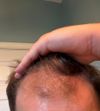
The conversation is about the availability of gt20029 for hair loss treatment, indicating that it will not be available for purchase soon. No specific treatments were discussed.
OP is trying various treatments (finasteride, minoxidil, nizoral, dermarolling, tretinoin) to regrow hair after 8 years of baldness. Users suggest persistence and possibly adding dutasteride, noting that age and consistency affect results.
A user shared a 3.5-month hair loss treatment progress using topical Minoxidil, Finasteride, and RU58841, noting improved confidence and satisfaction with the results. Other users congratulated and praised the progress shown in the pictures.
UCLA's PP405 shows promise in reactivating dormant hair follicles for hair loss treatment but is still in clinical trials. Minoxidil and finasteride remain common treatments until PP405 becomes available.
A 25-year-old experienced significant hair regrowth after 5 months using a combination of topical minoxidil and finasteride, along with vitamin D supplements. They advise against stopping minoxidil to prevent hair loss recurrence.
A 31-year-old male experiencing hair thinning since age 25-26 uses minoxidil, finasteride, a red laser cap, and microneedling to promote hair growth. Users suggest reducing microneedling frequency to once a week to avoid damaging hair follicles.
The user experienced hair regrowth using topical finasteride 1% and minoxidil 5% over four months, with no side effects and improved hair density. They initially experienced shedding, which was followed by regrowth, and they stopped dermarolling due to concerns about damaging new growth.
A 23-year-old male shared his 5.5-month progress using 5% topical minoxidil foam for hair regrowth, considering adding finasteride despite concerns about side effects. Users advised starting finasteride to maintain gains, with some suggesting topical options to minimize side effects.
PP405 is considered a promising potential cure for hair loss, with phase 2 trial results expected in February 2025. Hair cloning is also discussed as a potential ultimate solution, despite significant scientific challenges.
The conversation is about a user's 5-month progress using topical Minoxidil (5%) and Finasteride (0.1%) twice daily, along with derma stamping, improved Vitamin D levels, and increased protein intake for hair regrowth. The user is considering dutasteride if progress plateaus and uses a sulfate and paraben-free shampoo.
A 21-year-old is experiencing hair thinning and is using oral finasteride and topical minoxidil, considering adding oral minoxidil. They are unsure if the condition is androgenetic alopecia (AGA) or telogen effluvium (TE) and are advised to continue treatments and get a blood test.
The user is stressed about hair loss and is using a HIMS topical treatment containing finasteride, ketoconazole, minoxidil, and biotin, but is concerned about the oily appearance it causes. They are considering switching to Rogaine (minoxidil) due to budget constraints and side effect concerns with oral finasteride.
The user has been using topical minoxidil for over a year and added kx826/pyrilutamide to improve hair growth, avoiding finasteride due to side effects like lowered libido and panic attacks. They report positive results with reduced shedding and healthier hair, particularly in areas previously unresponsive to minoxidil.
The conversation is about a 23-year-old man's 5-month progress using minoxidil, finasteride, and dermarolling to treat hair loss, with before and after photos taken in the same location and lighting. One commenter notes difficulty in assessing the improvement due to the way the hair is combed over the bald spots.
The user experienced significant hair regrowth after 5 months using finasteride, dutasteride, and oral minoxidil, despite initial side effects like erectile dysfunction, which resolved after switching from finasteride to dutasteride. The user reports full recovery of hair density and improved skin condition, though the right temple remains slightly recessed.
The conversation is about using minoxidil for diffuse thinning after finasteride showed no regrowth. Tips include applying minoxidil directly to the scalp, considering potential shedding, and being cautious with combining tretinoin due to possible irritation.
Gamebread2000's progress with using finasteride and minoxidil to treat hair loss, which resulted in improved confidence and appearance. Other participants shared their positive reactions at the results.
The user noticed potential hair growth after 13 days of using RU58841, alongside a regimen of oral minoxidil, finasteride, and topical minoxidil. Others think it's too soon to see results, and some are surprised by the high dosage of oral minoxidil.
The user shared a 5-month update on hair regrowth using Minoxidil twice daily and Finasteride every other day, noting significant progress and initial shedding. The user started treatment at age 33 after experiencing hair loss since their early 20s.
A user experiencing diffuse thinning at the hairline after 12 months on finasteride is considering adding minoxidil, dutasteride, or RU58841 to their treatment. Another user suggests adding minoxidil now, holding off on dutasteride, and shares personal side effects from RU58841.
The user is considering continuing minoxidil and microneedling, possibly adding low-dose topical finasteride, and undergoing a large FUE hair transplant to improve hair appearance. They plan to use hair fibers for added density, aiming for a convincing cosmetic look rather than full density.
A 19-year-old male with a family history of balding is using finasteride to thicken his hair and is considering whether to add minoxidil. Users suggest continuing finasteride for several months before deciding on minoxidil.
The user is using finasteride 1mg every other day and seeks a topical solution excluding minoxidil. They are considering various combinations of ingredients like finasteride, dutasteride, and tofacitinib, with options for nourishing oils and other additives.
PP405 is not a cure for hair loss but may reactivate dormant hair follicles, similar to minoxidil. It is unlikely to help with miniaturized or vellus hairs and is still in trial phases, with availability expected around 2030.
The user is considering minoxidil, clascoterone, and fluridil for hair loss, avoiding finasteride and RU58841. They are also contemplating a hair transplant and exploring the resilience of transplanted hair without finasteride.
User shared before and after photos of 8 months using Finasteride 1mg and Minoxidil 5% 1ml nightly, with positive results and no side effects. Others praised the progress and suggested alternative treatments like topical fin, CB-03-01, or RU58841.
L. reuteri, a probiotic, is being explored for its potential benefits in treating androgenic alopecia, possibly enhancing finasteride's effects and reducing inflammation. The user combines this with finasteride, oral minoxidil, and other supplements, noting some improvement in hair loss.