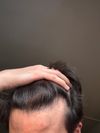
Finasteride can increase estrogen levels, causing dizziness and nausea. Users discuss adjusting treatment and diet, and explore alternatives for hair loss management.
A 31-year-old male switched from topical to oral Minoxidil (2.5 mg) and Finasteride (0.6 mg) but feels it's less effective, noticing less hair density and thickness. He is concerned about the effectiveness of the oral treatment compared to the previous combination with topical Minoxidil.
Hair loss discussion includes finasteride intolerance and questioning if Pyrilutamide is an alternative. Pyrilutamide not commercially available, but may be tolerable if approved since it's not a 5aR inhibitor.
The user shared their 4.5-month progress using oral finasteride, topical minoxidil, and oral dutasteride, along with biotin, vitamin D, saw palmetto, and multivitamins. They use a combination of finasteride and dutasteride weekly, with micro-stamping, to address hair loss.
The conversation is about hair loss treatment using finasteride and minoxidil, with the original poster considering adjusting their dosage after experiencing side effects. Other users suggest trying different dosages or adding dutasteride, emphasizing consistency and consulting a specialist if side effects occur.
The user reported significant improvement in hair thickness and color in the crown area after 3 months on Dutasteride 2.5 mg and oral Minoxidil 5 mg, with temporary side effects that resolved. They switched from Finasteride to Dutasteride due to lack of results with the former.
Salicylic Acid shampoo may hinder topical minoxidil but not oral minoxidil, which works through the liver. The user plans to continue using oral minoxidil and is concerned about the shampoo's effect on it.
A user received a prescription for a topical solution with Minoxidil 7%, Finasteride 2%, and Tretinoin 0.01%, to be used twice daily for three months. They are concerned about the safety of these dosages compared to commonly recommended lower dosages.
The user has been using Dutasteride 0.5mg, Biotin, and oral Minoxidil 2.5mg for 12 weeks to treat hair loss and is optimistic about future results. Others encourage consistency and express satisfaction with the progress.
The user is concerned about starting finasteride due to ongoing body development and seeks alternatives to maintain hair until age 25. They are considering options other than finasteride for hair loss management.
The user has been using 1.25 mg of oral minoxidil and finasteride since September 2025 to address diffuse hair thinning, and is considering trying a new shampoo. Other users suggest increasing the minoxidil dose and trying dutasteride.
Amplifica has not provided updates on SCUBE3 and AMP-303, raising concerns about their trial outcomes. Users also mention other treatments like Minoxidil, finasteride, RU58841, PP405, and ET-03.
A 20-year-old is considering switching from finasteride to dutasteride during a steroid cycle to better manage hair loss, then returning to finasteride afterward. They are concerned about the risks of post-finasteride syndrome from frequently changing medications.
The user used finasteride but stopped due to side effects, then used topical minoxidil for 13 months, and later added KX826/pyrilutamide for 8 months. They experienced shedding after starting pyrilutamide and use minoxidil and KX826 once daily.
The conversation discusses using minoxidil foam as a solvent for topical finasteride. Ingredients of minoxidil foam include butane, cetyl alcohol, glycerin, and purified water.
The conversation discusses a user's experience with topical finasteride for hair loss over a year and five months, including a two-month break due to financial reasons. Another user inquires about increasing their dosage due to lack of progress after three months.
Orsobalorso took 2.5mg oral minoxidil daily for a year but saw little improvement and stopped due to potential side effects and cost. They also tried finasteride, dutasteride, dermarolling, RU58841, keto, alfatradiol, and stemoxydine, with mild improvement from finasteride.
A user has been on oral Finasteride/Proscar for 15 years and started using topical Minoxidil, RU58841, and Dutasteride, along with microneedling, 2 years ago. They shared progress pictures and discussed their treatment routine.
A 24-year-old is experiencing hair shedding and regrowth while using dutasteride (1mg), vitamin D, and minoxidil (5%). Others share similar experiences with hair loss treatments like minoxidil and finasteride.
The user experienced significant hair regrowth on temples and beard using a combination of Dutasteride, Tretinoin, and topical Minoxidil, but stopped oral Minoxidil due to heart pain. The user switched from Finasteride to Dutasteride due to aggressive hair loss.
The user shared their 6-month progress using Dutasteride .5 daily, RU 100mg once a day, and 15 mg oral Minoxidil for hair loss. They reported visible results, no side effects, and increased body hair, despite concerns from others about the high dosage and potential health risks.
User shared progress on crown regrowth using Minoxidil Foam, oral Minoxidil 2.5mg daily, and Finasteride 1mg daily. They experienced initial headaches with oral Minoxidil, had a hair transplant, and are seeing regrowth but with thin hairs.
The user has accepted their hair loss and uses finasteride and minoxidil, with past use of RU58841 and dutasteride. They seek advice on supplements to slow down graying hair.
The user started using topical finasteride 0.025% and minoxidil 5% twice daily, seeing initial improvement but later experiencing shedding and scalp pain. They are considering increasing the finasteride dose to 0.05% while using keto shampoo and dermarolling, and are debating the effectiveness of low versus standard doses of finasteride.
The user experienced scalp irritation from a Finasteride and Minoxidil spray and serum. They are considering switching to foam, oral treatments, or another provider.
The user switched from finasteride to dutasteride for hair loss and noticed elevated cholesterol levels, questioning if dutasteride caused this change. They also take Vitamin D, biotin, magnesium, ginkgo biloba, omega-3, and NAC, and are concerned about the impact of these supplements and their health on cholesterol levels.
A user experienced hair loss due to a folic acid deficiency and saw hair regrowth after taking a folic acid supplement. They advise checking for a folic acid deficiency before spending money on other treatments.