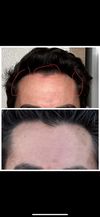
The user has been using a spray containing minoxidil and finasteride for 19 months and started oral finasteride 9 months ago. They plan to begin dermarolling.
Take 1mg finasteride daily as the standard approach; adjust only if side effects occur. Many users experiment unnecessarily with doses and methods, complicating treatment.
User shared progress on hair regrowth after 4 months of Spironolactone and iron infusions for Androgenic Alopecia. They see some improvement but struggle with perception; others note significant improvement.
The user stopped finasteride while trying to conceive and switched to oral minoxidil, ketoconazole shampoo, minoxidil foam, tretinoin, and microneedling. They are considering dutasteride mesotherapy but are unsure of its safety during conception.
Finasteride can cause gynecomastia due to hormonal imbalances, and using an aromatase inhibitor like anastrozole can help manage these side effects. It's important to work with an endocrinologist to address these issues safely.
The user maintained their hair for 7 years using alfatradiol, fluridil (later switched to pyrilutamide), minoxidil 5%, and Nizoral shampoo without finasteride due to side effects. Despite some family history of hair loss, the user believes their hair loss is not aggressive.
The user shared progress pictures after 4 months of using 1.25 mg oral Finasteride every other day. Responses indicate hair regrowth and a filling hairline, with one user asking about side effects or shedding.
The conversation is about using alfatradiol (17α-estradiol) as a hair loss treatment. The user is considering adding it to their regimen due to its safety and availability.
A 41-year-old has been using finasteride for 16 years with great results but is now experiencing temporal hair loss. Suggestions include switching to dutasteride, adding oral minoxidil, and considering a combination of treatments, while noting that supplements and weightlifting likely don't interfere with finasteride's effectiveness.
The user felt pressured during a hair transplant consultation at Bosley, where they were advised to undergo FUT surgery and use a laser cap for maintenance, but did not meet with a doctor. Other users recommended seeking a second opinion from reputable doctors like Dr. Rassman and suggested trying finasteride first.
The user has been using a topical solution of minoxidil 5% and finasteride 0.025% daily, along with dermastamping every two weeks and ketoconazole shampoo twice a week for four months. The treatment is for hair loss.
Using topical finasteride alongside oral finasteride likely won't provide significant benefits and may increase the risk of side effects. The "4-in-1" spray offers a higher minoxidil concentration but may not be worth switching if oral finasteride is well-tolerated.
The conversation is about a user's positive progress with hair regrowth using oral dutasteride and topical Minoxidil 5% over seven months. The user reports no side effects and started experiencing significant hair loss in their early 20s.
The conversation is about someone seeking a doctor in the EU who prescribes spironolactone or bicalutamide for female pattern hair loss, as they are having difficulty finding treatment options beyond Minoxidil in Austria. They are asking for recommendations and are open to direct messages for assistance.
Dutasteride is preferred over finasteride for hair loss due to fewer side effects. Combining dutasteride with minoxidil and RU58841 is effective for hair regrowth, even during steroid use.
The user is experiencing erectile dysfunction and decreased sperm quality from using Dutasteride for hair loss and is considering stopping it to improve fertility. They are exploring other treatments like Viviscal Men, Minoxidil, Revlan Red System, Fluridil, Nizoral, Stemoxydine, and Eucapil.
The user has been using oral dutasteride 0.5mg, oral minoxidil 2mg, and topical minoxidil 5% for hair regrowth, along with microneedling. They have seen significant hair coverage improvement and are considering additional supplements for better results.
Finasteride may seem less effective over time due to increased DHT sensitivity or aging, but it still suppresses DHT. Switching to dutasteride offers stronger DHT suppression but may increase estrogen levels.
The user is considering adding Alfatradiol or Pyralutamide to their current hair loss treatment of oral Dutasteride and Minoxidil. They are seeking advice on experiences and purchasing options for these products in the US.
The conversation discusses hair regrowth progress using finasteride, minoxidil, and vitamin D, with some users experiencing shedding and others seeing improvement. Additional treatments like dutasteride, topical solutions, and lifestyle changes are also mentioned.
The user is using topical minoxidil and finasteride with good results and is considering adding stemoxydine 5% to their regimen. Another user suggests trying it if financially feasible, as results can vary.
An 18-year-old has been using 5% topical minoxidil for 2 months for hair loss, with a history of vitamin D deficiency and thyroid imbalance. Users suggest starting finasteride and blocking DHT for androgenetic alopecia (AGA).
Switching from topical to oral minoxidil caused acne breakouts, leading the user to revert to topical use. Finasteride was also used, but acne was suspected to be linked to oral minoxidil.
Considering a hair transplant, using Pyrilutamide, the potential availability of CosmeRNA, and the significance of taking Minoxidil and Finasteride for long-term results.
A 50-year-old user shared progress after one year on oral finasteride 1mg/day, oral minoxidil 2.5mg/day, and ketoconazole shampoo, with no side effects, but plans to switch to dutasteride 0.5mg/day due to recent hair loss. Other users commented on the visible improvement and discussed the potential impact of switching treatments.
The conversation is about a person's one-year progress using Minoxidil and five months on Finasteride 1.25mg daily for hair loss, with noticeable improvement after switching brands and adding Finasteride. Some users commented on the unchanged position of a toothpaste tube in the progress photos, while others discussed their own hair regrowth experiences with similar treatments.
A 25-year-old male experienced significant hair regrowth after taking 1mg of oral finasteride daily for six months, with no side effects reported. Previously, he had used finasteride combined with minoxidil but stopped all treatments for a year before resuming finasteride alone.
A 23-year-old male has been using 0.25mg finasteride daily for 4.5 months to address early-stage male pattern baldness, with positive results and no significant side effects. He plans to continue with this dosage and may consider increasing it or adding minoxidil if necessary.
The user experienced significant hair regrowth and reduced shedding after increasing their dosage of minoxidil to 5mg daily and finasteride to 5mg three times a week. They reported noticeable improvements within five months and encouraged others to consider this treatment.