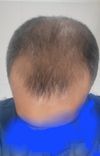
miR-205, a tiny RNA, can stimulate hair growth by softening aging hair follicle stem cells in mice. Future tests aim to see if this can work in humans.
The progress of Phase I of HMI-115, a potential hair loss treatment, which consists of Minoxidil, finasteride, and RU58841. The estimated completion date is June.
The post discusses hair loss treatment progress using oral finasteride 1mg daily for 6 months, with improvements in the hairline but not the crown. The user avoids minoxidil due to side effects and plans to try PP405 for better density.
The conversation is about choosing an anti-androgen for hair loss treatment, with options being alfatradiol and pyrilutamide. Alfatradiol is considered a better choice due to its established use, while pyrilutamide is more experimental.
A user shared a discount code for RU58841 from Anagen Inc, which some users find effective for hair loss without side effects. Another user expressed skepticism about the safety of RU58841 due to limited research.
Hair loss treatments like Minoxidil, finasteride, and potential mRNA therapies are discussed. There is skepticism about targeting specific genes due to the complex genetic nature of hair loss.
The conversation discusses using RU58841 for hair loss, with OP experiencing thinning in the front area and steady hair loss. OP plans to try microneedling while avoiding finasteride and dutasteride.
Genetics mainly cause hair loss, but diet, stress, smoking, and alcohol can worsen it. Treatments include finasteride, minoxidil, and lifestyle changes like a healthy diet and avoiding caffeine.
A 28 year old using a hair loss prevention protocol to restore thinning hair, which includes finasteride, dutasteride, minoxidil, stemoxydine, alopecin, nizoral shampoo and microneedling; the user is now adding pyrilutamide solution to the regimen with the hope of improving their results. RU58841 was also ordered but not yet used.
Stress can lead to hair loss by affecting hair-follicle stem cells, and this loss is harder to recover from if one has male pattern baldness (MPB). Treatments like finasteride and minoxidil are used to address hair loss, but stress-related hair loss differs from androgenic alopecia.
Fatty acid metabolic signaling can activate epithelial stem cells for hair regeneration. Oleic and palmitoleic acids showed the best results, but practical application on humans remains uncertain.
A user shared their positive experience with finasteride and a 1000 FUE hair transplant for the frontal region, noting significant improvement in the crown area with medication alone. They emphasized patience with finasteride, as results vary from person to person.
The conversation discusses verteporfin as a potential hair loss treatment and questions why more precise methods aren't used to test its effectiveness in regrowing hair. Some users believe verteporfin is promising and should receive more attention, while others are skeptical about the testing methods.
Clascoterone 5% and PP405 are being discussed as potential future treatments for hair loss, with clascoterone nearing phase three completion and PP405 possibly taking a cosmetic route to market. Current treatments like minoxidil, finasteride, and RU58841 are mentioned as effective in slowing hair loss, but a complete cure remains elusive.
A 36-year-old started using finasteride (0.3-0.5mg daily), 5% minoxidil foam, and weekly dermarolling/dermapen treatments to address hair loss. They also began taking supplements for low ferritin and vitamin D, hoping to improve hair thickness and cover a bald spot.
Considering alternative treatments to hair loss, such as platelet-rich plasma (PRP) and exosome therapy, instead of using medications like minoxidil, finasteride/dutasteride.
The user is experiencing irritation from using PG with RU58841 and is seeking alternative solutions like K&B in the UK. They report redness, itchiness, and flaky skin from the current treatment.
People are discussing the potential of a new hair loss treatment, pp405, and its approval timeline, comparing it to existing treatments like Minoxidil and finasteride. There is skepticism about its effectiveness and concerns about the time it will take for approval and availability, especially in Europe.
Hair loss treatments, specifically about the effectiveness of RU58841 compared to Pyrilutamide. Molecular weights and side effects were discussed in terms of efficacy and cost-effectiveness.
PP405 is in phase 2 trials for hair loss, with discussions on its cost and effectiveness compared to minoxidil and finasteride. Users are skeptical about its efficacy and timeline, with hopes for market release by 2027.
The user is anxious about potential side effects of finasteride, particularly PFS, and is considering reinstating it for hair loss treatment. They experienced anxiety-induced side effects previously and are seeking advice on overcoming their fear of restarting finasteride.
The conversation discusses concerns about using a high concentration of 1% topical finasteride for hairline balding, with some users suggesting starting with a lower dose. It also mentions the use of GHK-CU peptide and the importance of considering the formulation to avoid excessive absorption.
The user observed some regrowth and longer baby hairs after one month of using finasteride, despite experiencing increased shedding. They noted no side effects except for clear semen.
A user's experience of using Fin, Min and Microneedle treatments to help thicken their hair before undergoing a Hair Transplant (HT) procedure. The conversation also includes discussion about the results post-HT, including pictures.
A 31-year-old experiencing rapid hair loss is considering whether to shave their head or use treatments. They were prescribed B12, topical finasteride 0.1%, and minoxidil 10% but are unsure about the correct dosage and potential side effects.
The user shared progress pictures after 5 months of using 1mg finasteride, weekly 1.5mm microneedling, and daily 2mg copper peptide injections. They discussed their hair loss treatment and results.