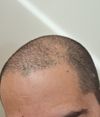
A user shared progress pictures after 8 months of finasteride, 2 months of minoxidil, and 2 months of vitamin D. The post shows significant hair improvement despite some light differences in the photos.
Hair regrowth using finasteride 1mg daily and topical minoxidil twice daily, with a hair transplant after three years, showed significant improvement over four years. The user is satisfied with the results despite not having access to oral minoxidil.
The conversation is about comparing the effectiveness of fluridil and clascoterone in preventing hair loss and inquiring about their use as standalone treatments. There is a question about the concentration of the fluridil brand for efficacy.
The user is generally happy with their hair transplant results but has concerns about graft density and placement, particularly on the left temple and hairline. They are using finasteride and minoxidil inconsistently, plan to add Priorin, and are considering microneedling and PRP sessions for future care.
User shares 4-month progress using finasteride, minoxidil, and microneedling for hair loss. Others discuss body hair, hair transplant possibilities, and user's treatment response.
Follicusan DP is discussed as a potential alternative to Minoxidil without side effects, but information is scarce. It is noted to be of German origin and details on its mechanism are limited.
The user experienced hair loss and started using minoxidil (5%) and finasteride (0.5 mg daily) with inconsistent application but still saw noticeable improvements by the end of January. They use the liquid form of minoxidil.
A 19-year-old reports positive hair regrowth using oral minoxidil and finasteride, with no side effects. The conversation includes advice on consulting a dermatologist and exploring alternative treatments.
Finasteride treatment is being considered, and it's advised to track DHT, testosterone, estradiol, and SHBG levels to monitor hormonal changes. These tests will help understand the treatment's impact.
A 19-year-old shared 6-month progress photos after using only finasteride for hair loss, noting no significant changes and considering adding oral minoxidil. Others commented that the hair looks healthy and suggested continuing the current treatment.
Ultrasound imaging can predict hair shedding and assess hair growth stages by analyzing hair follicle characteristics. The conversation also discusses using ultrasound for personal hair analysis and mentions the potential use of infrared emission for hair treatment.
A 23-year-old is experiencing hair loss, primarily at the top middle of the head, and is considering finasteride but is hesitant due to potential side effects. Other users share their positive experiences with finasteride, suggesting it is worth trying, while also discussing the importance of researching and monitoring for any side effects.
Concerns about the potential systemic effects and safety of PP405 for hair loss, with discussions on its comparison to existing treatments like finasteride and minoxidil. Users express skepticism about untested research chemicals and emphasize the importance of clinical trials to ensure safety and efficacy.
A 43-year-old male has been using oral minoxidil, finasteride, and dutasteride for hair loss, with some stabilization and thin hair growth but no significant cosmetic improvement. He is considering increasing microneedling frequency and exploring other options, as he is concerned about the lack of terminal hair growth.
New hair loss treatments like VDPHL01, PP405, Gt20029, and Breezula are anticipated, with VDPHL01 possibly releasing in 2027/28. Current treatments include finasteride, dutasteride, and minoxidil, but new options are eagerly awaited.
Hair loss treatments like GT20029, pyrilutamide, and Follica show promise in 2022. Phase 1 and 2 trials are underway, and new hair growth studies have been published.
The conversation discusses a user's 3.5-month experience using pyrilutamide and minoxidil for hair loss, with some perceived improvement in the temples but potential recent regression. Another user suggests that maintaining the current hairline, even without improvement, is positive.
The user experienced significant hair regrowth using Propecia (finasteride) 1 mg and topical minoxidil twice a day over 16 months, despite initial shedding. The user no longer needs a hair transplant and reports no side effects from the treatment.
The user, Lofi-luu, shared their transformation from balding to having a full head of hair after getting a hair transplant and using finasteride for almost 2 years. They also discussed their workout routine and emphasized the importance of not letting balding hold them back in life.
A user is advocating for Phase 3 trials of the hair loss treatment PP405 to be conducted in Germany, citing benefits like a diverse patient base and faster access for European patients. Despite skepticism about the petition's influence, the user believes it can demonstrate significant interest and potentially influence strategic decisions.
Despite using treatments like Dutasteride, Minoxidil, RU58841, and GHK-Cu injections, the individual continues to experience aggressive hair thinning and is seeking a specialist for further help. Suggestions include trying finasteride, dermarolling, or another hair transplant.
A 19-year-old male shared progress pictures showing hair regrowth on his scalp after starting a treatment with Minoxidil and Finasteride on November 24th. He noted improved hair texture and a halt in hair shedding for the past two weeks.
A 20-year-old male with a high hairline seeks advice on potential hair loss, noting a family history that typically doesn't progress beyond Norwood 2. A user suggests it appears to be a mature hairline rather than hair loss and advises monitoring for changes.
After 10 months, the user's hairline and midscalp look thick following a 6100 graft FUE hair transplant in Turkey. They plan to address the crown in a few months.
Finasteride's impact on fertility is discussed, with users sharing experiences of conceiving while on the medication. Concerns about long-term safety are also mentioned.
A trans woman is using finasteride, minoxidil, microneedling, and HRT to address hair loss, with noticeable improvement in hairline shape and presence of vellus hairs. She is considering hair transplants if these treatments don't yield desired results within a year or two.
A 48-year-old man shared his 16-month hair regrowth journey using finasteride 1mg three times a week, noting some regrowth and emphasizing patience. He chose not to use it daily to minimize side effects, and while some users debate the effectiveness, he confirms maintenance and possibly some regrowth.
The user is on their 5th week of using pyrilutamide for hair loss without experiencing side effects and has noticed slight hair growth. They also use minoxidil with finasteride and dutasteride as part of their treatment regimen.
A user shared progress pictures showing baby hairs appearing on their NW7 scalp after 4.5 months of using Propecia (finasteride) and minoxidil. They are hopeful these baby hairs will lead to full coverage.
Finasteride has no effect on the user's estradiol levels, and body fat may influence aromatization. The user is on testosterone replacement therapy and uses everyday injections to manage high RBC count, with plans to measure DHT, DHEA-S, and pregnenolone levels.