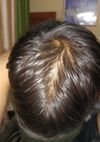
The conversation discusses using tretinoin cream with minoxidil for hair loss treatment. Users suggest applying them separately to avoid reducing effectiveness.
The conversation discusses alternatives to minoxidil and finasteride for hair regrowth, with mentions of essential oils, PRP therapy, and RU58841. The focus is on finding treatments with minimal side effects, especially concerning fertility.
A user shared their experience with a dermatologist's special minoxidil formula containing vitamin E, pantenol, rosemary, and finasteride, which improved their hair loss better than commercial minoxidil. Another user confirmed that the presence of finasteride in the formula is a significant difference.
A user is considering a topical hair loss treatment containing Minoxidil, Finasteride, and other ingredients. Some users suggest the doses are high and recommend starting with lower percentages.
Mixing charcoal, Ketoconazole, and caffeinated shampoo is questioned for potential interaction, specifically if charcoal inactivates other ingredients. Charcoal is used for seborrheic dermatitis, while caffeine is thought to improve scalp blood flow.
A joke about someone named "Fin Diesel" living life one milligram at a time, referencing the treatments Finasteride and Minoxidil used to treat hair loss; users discussed whether the look would be better with or without hair.
A doctor recommended Follivera as a minoxidil alternative, but users are skeptical, suggesting minoxidil, finasteride, or dutasteride for hair loss. Some users mention adenosine and piroctone olamine as potentially helpful ingredients.
The user experienced hair loss due to androgenic alopecia and chose to use essential oils (rosemary and peppermint) and microneedling instead of minoxidil or finasteride. They reported positive results after 24 days and plan to continue with these treatments.
Abyssinian oil, argan oil, and Batana oil are being discussed for their potential effectiveness in hair growth. The conversation questions whether these oils are beneficial or a scam.
The conversation discusses the differences in inactive ingredients between Sandoz 5mg Finasteride and Proscar/Propecia, questioning the purpose of certain additives like Docusate sodium. It seeks to determine if these differences affect the effectiveness of the treatment for hair loss.
The user switched from liquid to foam minoxidil to reduce skin irritation but finds foam harder to apply effectively to the scalp. A suggestion was made to melt the foam into a liquid for easier application.
User seeks natural hair products for hold/texture without harmful chemicals due to thinning hair. They consider Hades Matte Paste and Matte Lava Clay, asking if any ingredients could cause hair loss.
Alfatradiol is discussed as a weak 5ARI and estrogen, not as effective as minoxidil, RU58841, or CB-03-01, but a safe alternative for those who can't use finasteride. Users express frustration over the lack of strong FDA-approved topical antiandrogens for hair loss.
Batana oil is gaining attention for hair growth, but users suggest Minoxidil as more effective. Some recommend using both Batana and Rosemary oil for better results, though skepticism about viral claims exists.
The user experienced hair regrowth using finasteride, oral and topical minoxidil, and RU58841, despite initial shedding. They also transitioned from finasteride to dutasteride and addressed scalp issues with a folliculitis shampoo.
A user's experience with hair loss regrowth, achieved through the use of 1mg finasteride, 5% Minoxidil, an essential oil blend, and microneedling once per week, as well as other treatments like warm water washes, baby shampoo, and OGX coconut conditioner. Other users shared their experiences with similar treatments and congratulated the original poster on his results.
The user recommends a thickening clay as a great pre-styling product for hair volume and texture, despite its poor hold. They also mention using finasteride and express skepticism about the effectiveness of a shampoo containing saw palmetto and caffeine.
A user has been using minoxidil without noticing improvements and is considering adding tretinoin gel to their regimen before trying RU58841. They seek advice on how to mix and apply tretinoin with minoxidil, including concentration and application frequency.
The user is considering two hair loss treatments: Minoxidilmax Maxogen-x, which contains Minoxidil, Finasteride, Azelaic Acid, ABN Complex, Retinoic Acid, Fluocinolone, and Caffeine, and Morr-F, which contains only Minoxidil and Finasteride. They are asking for others' experiences with these brands.
The conversation discusses using RU58841, a research chemical, for hair loss treatment. The user plans to use it due to side effects from finasteride and minoxidil, despite skepticism about its effectiveness and lack of FDA approval.
The conversation is about finding high-purity RU58841 solutions for hair loss treatment, with mentions of Anagenic, Selleckchem, MV Supplement, and rudirect.co.uk as potential sources. Users discuss their experiences and preferences regarding product quality and shipping.
The conversation discusses optimizing sulforaphane in broccoli sprouts by soaking them in water at 74 degrees Celsius for 10 minutes. It also mentions hair loss treatments like Minoxidil, finasteride, and RU58841.
The conversation discusses natural, chemical-free methods for scalp health and hair regrowth, such as using oils like rosemary, ginger, castor, and peppermint. It seeks personal experiences and effective routines for hair regrowth, especially after chemo or stress-related hair thinning.
Users discuss the effectiveness of low-dose topical finasteride (0.005-0.05%) for hair loss, often combined with minoxidil. Some report stable results or new growth, but it's unclear if improvements are due to finasteride or minoxidil.
A group buy for products to treat hair loss, such as Minoxidil, Finasteride and RU58841. Participants are interested in adding more people before ordering the next order.
The conversation discusses making a topical melatonin solution for hair loss treatment, questioning if isopropyl alcohol can dissolve melatonin. Melatonin is soluble in lipids and alcohol, but it's unstable and should be mixed fresh regularly; it may help hair growth by affecting certain cellular signaling pathways and has anti-androgenic effects.
A user is experimenting with a hair loss treatment involving derma rolling and essential oils, avoiding expensive treatments and medications. They plan to shave their head, use a derma roller three times a week, apply Nizoral twice a week, and use a mix of Rosemary, Peppermint, and Jojoba Oil on non-rolling days.
This conversation discusses the topical application of Minoxidil, with various users providing advice on how to accurately measure a dose and keep it from melting too quickly. Others have shared their experiences using oral finasteride for hair loss treatments.