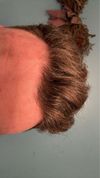
19 year old male's three month results from using a combination of Minoxidil, finasteride and dermarolling for hair loss. It was suggested that adding Minoxidil could help with further progress.
The post and conversation are about a user seeing hair regrowth after using Rogaine, rosemary oil, pumpkin seed oil, saw palmetto, microneedling, and LLLT. The user plans to add Nizoral soon and is hopeful about continued progress.
The user used finasteride but stopped due to side effects, then used topical minoxidil for 13 months, and later added KX826/pyrilutamide for 8 months. They experienced shedding after starting pyrilutamide and use minoxidil and KX826 once daily.
The user has been taking a daily finasteride pill, applying minoxidil once a day, and using a dermaroller once a week for six months to treat hair loss, showing progress with their treatment. Some users discussed side effects like testicular discomfort with finasteride, which may subside over time.
A 35 year old male who has seen good results from Finasteride and microneedling, with minimal side effects. Replies to the post ask about the device used for microneedling, discuss the progress made, and offer encouragement.
Oral minoxidil may cause dry skin and dark eye bags but doesn't significantly age the skin. Topical minoxidil is toxic to cats, and some users prefer finasteride.
A user shared their experience with hair regrowth using supplements like NAC and DIM, and briefly using minoxidil with microneedling. They reported some improvement in hair density, but the community questioned the effectiveness compared to traditional treatments like finasteride.
A 29-year-old male experienced significant hair regrowth over 8 months using a protocol of oral Minoxidil, Dutasteride, Pyrithione Zinc Shampoo, and peptides GHK-CU, BPC-157, and TB-500. The treatment led to improved scalp coverage, reduced hair loss, and thicker hair, although results may vary for others.
The user, a 27-year-old male, has been treating early hair loss with topical finasteride and minoxidil, then switched to oral finasteride and dutasteride, but has seen no improvement and plans to add oral minoxidil. Despite treatment, hair loss has progressed from Norwood 1-1.5 to Norwood 3, with noticeable thinning, especially on the left side.
Finasteride can lead to hair regrowth beyond the first year, with some users experiencing improvements for several years, though results vary. Most regrowth occurs in the first 1-2 years, but some continue to see gradual improvements over time.
The user is considering continuing minoxidil and microneedling, possibly adding low-dose topical finasteride, and undergoing a large FUE hair transplant to improve hair appearance. They plan to use hair fibers for added density, aiming for a convincing cosmetic look rather than full density.
The user switched from oral finasteride to oral dutasteride and increased minoxidil dosage, seeing significant hair improvement over a year. They plan to wait until age 35 for a hair transplant, aiming for optimal results.
The user is using oral minoxidil, finasteride, and a dermaroller for hair loss but is not seeing significant progress after three months. Suggestions include continuing treatment for at least a year, considering dutasteride, adding topical minoxidil, or possibly getting a hair transplant.
The user plans to stop finasteride after three months, believing hair loss isn't due to DHT, and will continue with oral minoxidil, microneedling, and ketoconazole shampoo. They suspect stress and poor nutrition are the main causes and seek opinions on DHT blockers' effectiveness.
A 25-year-old experiencing hair thinning all over the body and head, despite using minoxidil and having low vitamin D levels, is advised to seek a second opinion from a dermatologist specializing in hair loss. The likely diagnosis is diffuse alopecia areata, which may require treatment with a JAK inhibitor.
The user has been using finasteride for six years and minoxidil for three years with no noticeable hair regrowth. Suggestions include switching to dutasteride, considering a hair transplant, and trying microneedling.
Dutasteride can stabilize or improve hair loss but may cause side effects like depression and anxiety. Users often switch from finasteride to dutasteride for stronger results, with varied experiences in shedding and regrowth.
The user is using minoxidil, finasteride, dutasteride, and clobetasol, along with needling, to combat hair loss. They are considering stopping treatment if no improvement is seen.
Creatine may cause hair loss in some individuals, especially those on finasteride, despite no scientific link. Personal experiences suggest individual sensitivity to DHT could be a factor.
The user is considering hair restoration options after experiencing side effects from Minoxidil and avoiding Finasteride due to concerns about side effects. They are contemplating trying Finasteride or Dutasteride and possibly undergoing a hair transplant.
Pedro Pascal's full head of hair is likely due to genetics, finasteride, and possibly hair transplants. Many actors use finasteride to maintain their hair.
Pelage is developing a topical hair follicle stem cell therapy, PP405, for non-scarring alopecias like androgenetic alopecia, with Phase III trials planned and a potential market launch by 2027. The treatment may not require continuous use after initial regrowth.
A 31-year-old man successfully used oral minoxidil and finasteride for hair regrowth over eight years, experiencing minimal side effects like initial shedding and increased body hair. He credits these medications for preserving his hair despite a family history of baldness.
Dutasteride and finasteride are not effectively stopping hair loss for some users, despite long-term use. Some are considering or using RU58841, pyrilutamide, and other treatments like microneedling, while also managing seborrheic dermatitis with diet and topical solutions.
A 36-year-old experienced slow, diffuse hair thinning over 15 years and saw significant improvement using 5% topical minoxidil alone for 3 months, without finasteride or microneedling. The user is pleased with the results, noting increased hair density and no visible scalp, and plans to continue monitoring progress without using hormone-affecting treatments.
Dutasteride is considered a stronger alternative to finasteride for hair loss, with mixed results; some users report improvement, while others experience worsening or side effects. Effectiveness varies, with genetics and individual responses influencing outcomes.
The conversation discusses whether to continue using finasteride or switch to dutasteride after one year, with users generally advising to stick with finasteride for more time due to positive results and potential risks of switching. Minoxidil is also being used, and some suggest considering a hair transplant for further improvement.
A 22-year-old is experiencing aggressive hair loss despite using minoxidil and finasteride and is considering a hair transplant but lacks funds. The discussion includes advice on treatments like dutasteride, microneedling, and lifestyle changes, with mixed opinions on the timing and effectiveness of a transplant at a young age.