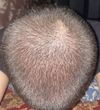
The post discusses a user's 6-month progress using topical finasteride (0.08%) and minoxidil (5%) once a day, combined with scalp micropigmentation (SMP). The user hopes for improved hair growth as they let their hair grow out.
User considers adding Alfatradiol to their topical finasteride treatment for hair loss. Others discuss Alfatradiol as a weak estrogen and 5α-reductase inhibitor used for pattern hair loss in men and women.
Topical Metformin shows potential for regenerating hair follicles and minimizing scarring in hair transplant donor areas, similar to Verteporfin but without its side effects. The discussion suggests considering Metformin for post-hair transplant care, though more human trials are needed.
John Cazale's hairline showed strong recession at the temples but maintained solid volume and density, sparking discussion on different hair loss patterns and the importance of overall hair density. Treatments like Minoxidil and Spironolactone were mentioned as potential factors in maintaining hair, though genetics and styling were also considered significant.
Hair restoration after FUE surgery, with discussions on using finasteride, dutasteride, and oral minoxidil for hair maintenance and growth. Users share experiences with these treatments, noting varying side effects and effectiveness.
An 18-year-old noticed hair thinning at 17, started finasteride 5 months ago, and saw shedding stop but no regrowth. They suspect male pattern baldness due to family history and are concerned about thinning on the back and sides, possibly due to inflammation.
The conversation is about a user experiencing a tingling sensation and redness on their scalp, possibly related to hair loss treatments. Suggestions include using Nizoral shampoo and consulting a dermatologist, while the user mentions using oral finasteride.
The conversation is about a 24-year-old using microneedling and essential oils, specifically neo hair lotion, to promote hair growth on the temples. The user reports seeing hair growth without using medications, using a 0.5 mm needle roller and planning to switch to a 1.0 mm needle.
IGFBP‐rP1 shows potential for treating androgenic alopecia by influencing hair cycle transitions. Increasing IGF-1 levels may have similar effects to Minoxidil and 5-AR inhibitors in reducing hair loss.
The conversation discusses potential causes of pigmentation around hair follicles, suggesting sebum buildup, autoimmune conditions, or dermatitis. Treatments mentioned include finasteride, dutasteride, and an anti-inflammatory diet, with a recommendation to consult a doctor for a proper diagnosis.
Applying minoxidil and finasteride to the temples won't cause shedding elsewhere. Shedding occurs due to hair follicles resetting their growth cycle, not the application location.
The user is seeking advice on treating male pattern baldness (MPB) while dealing with seborrheic dermatitis, specifically asking about the use of finasteride (Fin) and minoxidil (Min). They are concerned about side effects and are looking for recommendations to improve overall hair thickness, especially on the crown.
Minoxidil and finasteride can help regrow hair, especially in thinning areas, but restoring completely receded temples is challenging and may require a hair transplant. Some users report success with these treatments, particularly when combined with microneedling.
A user is seeking feedback on a homemade topical finasteride formula for hair loss, consisting of 7.5 mg of finasteride, propylene glycol, ethanol, and distilled water. They aim to achieve a 0.0125% solution by applying 2 ml daily.
The user was prescribed 0.3% topical finasteride with 5% minoxidil for use on the temples twice daily, while continuing minoxidil on the full scalp. Replies suggested using the treatment once daily and questioned the logic of treating only the temples, with one suggesting dilution for use across the entire scalp.
A user is concerned about receding hairlines and considers using finasteride and minoxidil but is hesitant due to potential side effects. Others advise starting treatment early to prevent further hair loss, emphasizing that finasteride is generally safe and effective for prevention.
A mid-30s individual is experiencing hair loss at the front and temples but not the crown, and is seeking affordable treatments. They have ordered pumpkin seed oil capsules due to cost and side effects concerns with official treatments.
A user shared progress pictures showing significant hair improvement using finasteride and minoxidil, expressing satisfaction with the results. Another user accused them of having a hair transplant.
The user has been using topical Minoxidil and Finasteride for 5 months and is questioning whether the new hair growth is genuine or just thin existing hairs. Another user suggests that comparison with before pictures is necessary to determine progress.
The user is experiencing new hair growth after using oral dutasteride, topical minoxidil, and microneedling, but is concerned about black dots on the hairline, which might be clogged pores or dormant follicles. The user previously used a topical minoxidil/finasteride spray and had good results, despite a shedding phase after switching treatments.
The conversation discusses hair loss treatments, including finasteride, microneedling, minoxidil, and PTD-DBM. The user has not noticed significant regrowth and is considering cost-effective options like valproic acid.
Topical dutasteride is considered more effective for hair regrowth with fewer side effects than oral finasteride. Users have mixed experiences, with some preferring topical applications for reduced side effects.
The user shared progress pictures after 4 months of using 1.25 mg oral Finasteride every other day. Responses indicate hair regrowth and a filling hairline, with one user asking about side effects or shedding.
A user shared their two-year progress using only topical finasteride for hair loss, recently adding keto shampoo, and plans for a hair transplant. They experienced regrowth and halted hair loss without using minoxidil due to side effects.
The user shared progress pictures showing hair regrowth over 7 months using topical Minoxidil, topical Finasteride, and multivitamins with biotin, noting more regrowth at 3 months than at 7 months. They suspect a shedding phase and are considering the impact of not continuing microneedling.
The conversation is about dealing with hair loss, with the original poster deciding to start using topical finasteride and minoxidil after unsuccessful PRP and Regenera treatments. Others share their experiences with hair loss, treatments, and the importance of finasteride to prevent further hair loss.
A user shared progress pictures after 3 years on finasteride, showing improved hair thickness and density, and mentioned losing 15kg. The user plans to fix their hairline next month and received mixed feedback on their hairstyle and the effectiveness of finasteride.
A user switched from topical to oral finasteride (0.5mg daily) and continued using topical minoxidil, seeing significant improvement in hair loss over four months. The user is pleased with the results, especially on the crown, and notes that hairline recession has stopped.
A man in his early 30s noticing hair thinning, mainly on the crown of his head. He's been using 1mg oral finasteride and keto shampoo daily for 4 months, with noticeable improvement and no side effects.