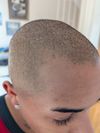
The user is considering starting minoxidil or getting their scalp checked for permanent scarring due to noticing thinner hair after bleaching. They are seeking advice on hair loss remedies.
The user reports using topical minoxidil 6% and finasteride 0.05% once daily, along with microneedling, vitamins, biotin, and nizoral shampoo. They recently increased minoxidil and finasteride to twice daily and feel their hair is thicker but are unsure about regrowth.
A user's experience with hair loss, their attempts to treat it using topical minoxidil and finasteride, and other suggested treatments such as oral minoxidil and finasteride. Replies included advice against wasting time or money on scalp massages or oils.
The conclusion of the conversation is that the user has tried various medications and treatments for hair loss, including minoxidil, finasteride, microneedling, and nizoral shampoo, but has not seen any progress. They have decided to shave their head. Other users suggest options such as hair transplants, RU58841, hair units, and scalp micropigmentation.
The conversation discusses hair loss treatments, specifically the use of topical minoxidil and derma-stamping, with suggestions to add finasteride or dutasteride for better long-term results. Ketoconazole shampoo is also considered for scalp health.
A 24-year-old male combines topical and oral finasteride with minoxidil to combat hair loss, experiencing heavy shedding but no significant side effects. Other users share their experiences with similar combinations, including using dutasteride and ketoconazole, emphasizing that personalized routines can be effective.
User discusses using Verteporfin for hair regrowth after hair transplant. Replies mention successful follicle regrowth in studies and mice, questioning if it can be replicated in humans.
A 19-year-old is experiencing hair thinning at the corners and some hair loss during sleep and washing. They are seeking advice on which treatment to start.
User shared 12-month progress using topical 0.25% finasteride and 5% minoxidil daily. Most replies suggest waiting longer for potential further regrowth before considering a hair transplant.
The user tried non-finasteride treatments for a year with little success, but has seen some improvement in hair thinning after 10 months using topical finasteride/minoxidil. They also use microneedling, Nizoral, rosemary/castor oil treatments, and maintain a nutrient-rich diet.
A user is concerned about using Alpicort, which contains Prednisolone and Salicylic Acid, for male pattern baldness. They are unsure if it will help or worsen their condition and are seeking advice.
Switching from liquid to foam Minoxidil to avoid scalp irritation, with a method to melt the foam for easier application. Users discuss alternatives and personal experiences with Minoxidil, including issues with propylene glycol and different application methods.
PP405 and ABS-201 are promising treatments for male pattern baldness. PP405 shows rapid hair growth in human trials, while ABS-201 shows significant regrowth in animal studies but is still in early human trials.
The user has been on finasteride for 8 years to treat hair loss and is experiencing obsessive thoughts about balding. They discuss the psychological impact of hair loss and the different ways people on hair loss forums cope, either by shaving their heads or seeking treatments.
A user successfully stopped balding by switching from topical to oral minoxidil, finasteride, and biotin, noting significant improvement after a year. They emphasize the importance of oral finasteride and consistent use for hair regrowth.
The conversation is about the potential side effects of using verteporfin in conjunction with a hair transplant. Specific treatments discussed include verteporfin, a hair transplant (HT), minoxidil (Min), finasteride (Fin), and RU58841 (RU).
The user is using caffeine shampoo with baicapil, microneedling, massage, and procapil lotion for hair loss. Replies suggest the user is balding and recommend finasteride.
The conversation is about the progress of verteporfin in hair loss trials, with users expressing curiosity about its effectiveness and updates. Specific treatments mentioned include FUE (Follicular Unit Extraction) combined with verteporfin, with one reported case of donor area regrowth after a year, and three patients being monitored post-treatment by Dr. Bloxham with monthly updates on YouTube.
A user shared their experience with a 7600 graft hair transplant using scalp, beard, and chest hair over three procedures, expressing satisfaction with the results despite mixed feedback. They also used finasteride to thicken hair and considered scalp micropigmentation for further improvement.
A 31-year-old experiencing rapid hair loss is considering whether to shave their head or use treatments. They were prescribed B12, topical finasteride 0.1%, and minoxidil 10% but are unsure about the correct dosage and potential side effects.
OP asked if Alfatradiol 0.1% can maintain hair after a transplant. Responses suggest using stronger treatments like finasteride or micro-dosing oral finasteride instead.
A user is experiencing scalp flaking from a finasteride/minoxidil topical solution and considers using salicylic acid shampoo to remove propylene glycol residue. Another user suggests trying a leave-in conditioner to address dryness and flaking.
A man shared his hairline improvement after two years on 1.25mg finasteride daily and using piroctone olamine shampoo. He has not had a hair transplant and does not plan to use minoxidil.
A 25-year-old man had a 3500 graft hair transplant on the frontal region and is happy with the results after 8 months. He has been on minoxidil and finasteride, switched to dutasteride, added ketoconazole shampoo for seborrheic dermatitis, and is considering a second transplant for the mid scalp/crown.
The user is experiencing scalp irritation after increasing their finasteride and minoxidil dosage with tretinoin and is considering reducing application frequency. They seek advice on managing the irritation.
A 33-year-old male with a receding hairline is advised to start with finasteride to block DHT and consider minoxidil for promoting hair growth. Other treatments like copper peptides and serums are deemed less effective, and ketoconazole shampoo is suggested for scalp health.
The conversation discusses concerns about brain fog potentially caused by finasteride use, with some users sharing personal experiences of cognitive issues and others suggesting it might be paranoia or unrelated. The original poster decides to stop using finasteride to see if their cognitive function improves.
A user was prescribed betamethasone dipropionate spray for a receding hairline, which caused skin peeling and depigmentation. They stopped using it and are considering alternatives like BPC-157/TB-500 for healing.
A 42-year-old male experienced hair regrowth using a topical treatment of finasteride, ketoconazole, and minoxidil, noticing increased hair density and reduced hair loss over a year. He plans to switch to oral finasteride and continue using topical minoxidil, with a dermatologist's guidance.