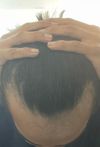
The conversation discusses the potential of PP405 as a hair loss treatment, with some users expressing skepticism and others hopeful about its development. There is also mention of other treatments like Minoxidil, Finasteride, and Pyrilutamide, with users debating the effectiveness and safety of self-experimentation versus waiting for clinical trial results.
Low-dose topical finasteride may reduce scalp DHT with fewer side effects than oral finasteride, though it can still lower blood serum DHT. Users report varying experiences, with some finding topical use effective and side-effect-free, while others note significant DHT suppression.
A user is using a Finoxidil topical spray and is curious if oral Finasteride would be more effective, considering they are already on a DHT blocker called Cyproterone. They are concerned about the potential impact of oral Finasteride on their transition.
A 23-year-old man shared his nearly 3-month progress treating hair loss with 1mg finasteride daily, 5% minoxidil once at night, and ketoconazole shampoo twice a week, showing improvement in hair thickness and coverage. He encourages others not to be afraid of using finasteride despite potential side effects.
User asks if Ashwagandha causes hair loss while using Finasteride and Minoxidil. Replies suggest Ashwagandha may increase shedding, but raising testosterone within normal levels likely won't significantly affect hair loss.
User experienced hair loss on the top of the head for 2 years, noticed improvement after adding a smoothie with various fruits, vegetables, and seeds to their diet. They observed increased hair growth after 2 weeks of this dietary change.
A user found that antihistamines stop their hair loss and related symptoms, but they experience side effects like sedation and chest pain. They are seeking alternative solutions or topical antihistamines to avoid systemic side effects.
The user started using finasteride, minoxidil, and biotin for male pattern baldness (MPB) and is experiencing rapid thinning. They are questioning if low blood flow to the head could be contributing to their hair loss.
A recent discovery in hair cloning identified a previously unknown cell type essential for hair follicle growth, which could potentially make lab-grown hair viable if translated to humans. However, skepticism remains due to past delays and the challenges of replicating results in humans and making the process affordable.
Japanese scientists discovered ABM cells, enabling successful human hair follicle cloning, potentially curing hair loss. The treatment may be available in Japan by 2028, but it will be expensive and require travel.
Finasteride is humorously claimed to enable communication with sea mammals, with users sharing exaggerated side effects and alternative hair loss treatments like olive oil and onion. The conversation is satirical, with users joking about unusual experiences and results.
South Korea's president is advocating for hereditary hair loss to be covered by national health insurance due to its impact on mental health and daily functioning. The discussion highlights the societal pressure in South Korea regarding appearance and the potential benefits of treating hair loss to improve mental health.
A user shared their five-year experience with finasteride for hair loss, noting positive results and no side effects. The discussion included debates on potential side effects like erectile dysfunction and the treatment's effectiveness.
Maintaining a healthy lifestyle is crucial for hair health, and relying solely on treatments like Minoxidil, finasteride, or RU58841 without addressing overall health may not be effective. External treatments alone cannot compensate for poor health habits.
A user with PCOS experienced hair loss and found success using a triple dose of O.N.E Omega by Pure Encapsulations after discovering low Omega fatty acids. Biotin provided minimal improvement, but the Omega supplement significantly restored hair.
The conversation is about finding reputable clinics in Canada or near the US border that offer DUT mesotherapy for hair loss. The user is seeking recommendations and cost information for these treatments.
A 52-year-old male with Multiple Sclerosis is considering using Finasteride and Testosterone Replacement Therapy (TRT) for hair loss but is advised to lose weight first to avoid side effects. He is currently focusing on diet, weight loss, and using Rogaine and microneedling for hair treatment.
A 22-year-old male with hair loss is considering treatments like finasteride, minoxidil, and derma rolling after being diagnosed with MPB, vitamin D deficiency, and dandruff. He seeks advice on whether these treatments can realistically improve his hair density and achieve a healthier NW2.
A 32-year-old female seeks ways to lower DHT without weight gain, experiencing issues with spiro and saw palmetto. Suggestions include topical finasteride, low-dose oral therapies, and checking various health markers.
The conversation discusses the importance of scalp skin barrier health in hair follicle cycling, suggesting treatments like ceramides or niacinamide to support hair growth. It also mentions the use of finasteride for hair loss.
A 19-year-old shared 6-month progress photos after using only finasteride for hair loss, noting no significant changes and considering adding oral minoxidil. Others commented that the hair looks healthy and suggested continuing the current treatment.
A healthy scalp barrier is crucial for hair growth, and ceramides may play a key role in maintaining it. The conversation suggests that focusing on scalp health, alongside treatments like Minoxidil, Finasteride, and RU58841, could improve hair follicle health.
Protein's role in hair growth is complex, with specific amino acids like cysteine being crucial for effective hair growth. Users discussed using l-cysteine supplements, noting reduced hair loss and faster growth, though some experienced digestive issues.
Minoxidil and finasteride aid hair regrowth, but a healthy lifestyle, including proper nutrition and maintaining a healthy weight, enhances their effectiveness. Being underweight can impede hair regrowth, while a balanced diet and addressing deficiencies can improve outcomes.
A 19-year-old male experiencing hair loss is seeking advice on managing it without sexual side effects. He has used topical minoxidil and finasteride but experienced side effects, and is considering lifestyle changes to help slow hair loss.
Rejuv-3X, a topical blend with GHK-Cu, AHK-Cu, and JXL-089, is used for hair loss, offering a targeted option without finasteride's side effects. The user plans to combine it with microneedling for enhanced results.
Hair loss involves more than just DHT, with genetic factors like TRPS affecting hair follicles. Treatments such as Amplifica's AMP-601 and AMP-303 target stem cells for potential hair growth solutions.