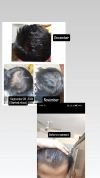
Oral minoxidil and spironolactone helped restore the hairline but not the scalp behind it. Hairline and temples often respond first to treatment, with mid-scalp and crown following later.
The user is considering switching from finasteride to dutasteride due to side effects like brain fog and lower libido. They experienced hair regrowth with finasteride but are concerned about potential side effects of dutasteride.
The user has been using oral finasteride, oral and topical minoxidil, RU58841, and microneedling to treat hair loss, with recent additions of oral dutasteride, GHK-Cu serum, and increased microneedling. They report visible thickening and new hair growth, expecting significant improvement by next June.
The user has been using finasteride inconsistently for 2 years and minoxidil for 6 months without seeing hair growth. They are considering switching to dutasteride and restarting minoxidil to address thinning at the right temple, with advice suggesting consistent use for better results.
A user is considering using both oral and topical finasteride for hair loss, despite having elevated liver enzymes. They currently use a topical spray with finasteride and minoxidil and are seeking advice on whether using both forms is advisable.
A user is considering starting finasteride to prevent further hair loss and is unsure whether to add minoxidil immediately or later. They plan to try finasteride alone first to assess its effectiveness and consider adding minoxidil later if needed for regrowth.
Switching from topical to oral minoxidil led to significant hair shedding, with increased dutasteride usage possibly contributing. Users suggest that dosage changes can cause shedding, but hair often regrows stronger.
Hair shedding in the shower is normal, with 50-100 strands lost daily, but excessive shedding may indicate issues like low iron. Treatments like gentle hair care, iron supplements, and medications like minoxidil and finasteride can help reduce hair loss.
A user shared their 3-month progress using a topical solution containing 0.3% finasteride, 7% minoxidil, 2.2% ketoconazole, and 0.2% biotin, reporting improvements in thinning areas. Another user mentioned using oral finasteride, oral minoxidil, dutasteride, and minoxidil foam, discussing costs and side effects.
Dermastamp is preferred for hair growth and skin health due to fewer scars, with recommended needle sizes of 0.5-1.5mm. Dermapen is also favored over dermarollers, which are considered dangerous.
The conversation discusses using a lipodermal solution for hair loss, with concerns about side effects from multiple active ingredients. Users mention experiences with minoxidil, finasteride, and dutasteride, noting side effects like brain fog and sexual issues.
Stopping finasteride and dutasteride led to significant hair shedding, but restarting finasteride may help regain previous hair thickness. The shedding is likely temporary and may stabilize in a few months.
A 23-year-old male experienced good hair growth and increased self-confidence after 10 months of using oral finasteride (1.25mg) and topical minoxidil (5% twice a day), despite no decrease in hair shedding. He also used 1mm microneedling monthly and reported minor side effects like forgetfulness.
A user was prescribed a topical treatment for hair loss including Latanoprost, Minoxidil, Dutasteride, Hydrocortisone, and Progesterone, after using an oral Minoxidil and Finasteride combo without significant results. Concerns were raised about the long-term use of hydrocortisone, with suggestions to consult a doctor regularly.
Minoxidil 5% foam was used twice daily for 4 months, resulting in visible hair regrowth. Users discussed adding finasteride for better long-term results, with concerns about its side effects and alternatives like breezula and clascoterone.
Individuals discussing hair loss treatments, including finasteride and minoxidil, express mixed results and concerns about effectiveness after two years. Some consider switching to dutasteride or exploring other options like hair transplants.
The user experienced hair shedding in late summer after starting finasteride in December 2023, with regrowth by February. They are concerned about shedding again and question if finasteride is losing effectiveness.
The user shared their 5-month progress using oral finasteride, topical minoxidil, and weekly dermarolling for hair loss. They expressed pride in their results, receiving positive feedback from others.
Dutasteride reduces DHT more effectively than finasteride, but finasteride is more commonly used and approved for hair loss. Users have mixed opinions on dutasteride's effectiveness, with some experiencing better results and others facing side effects or no improvement.
The user experienced unexpected hair volume increase after combining scalp massages with topical minoxidil and oral finasteride. They plan to continue this regimen, noting a reduction in hair shedding.
Red light therapy with dual wavelengths (650nm and 850nm) can stimulate hair regrowth without DHT blockers. Consistent use of a panel with these wavelengths has shown positive results in hair regrowth.
The user is using topical dutasteride, minoxidil, and spironolactone for hair loss, with positive results after adding spironolactone. Another user takes oral spironolactone, dutasteride, and finasteride, noting decreased libido but no major side effects.
A 42-year-old user shared positive results from using oral and topical Minoxidil, Finasteride, and weekly dermarolling for hair regrowth over three months. The community responded positively, noting significant progress and discussing treatment details and concerns.
Finasteride can cause oily skin and acne due to increased testosterone or sensitivity of androgen receptors. Some users find dutasteride results in less oily skin compared to finasteride.
The user experienced hair regrowth after using 5% topical minoxidil for over four months, despite initial shedding. They apply it once daily but occasionally skip days due to concerns about collagen production interference.
PP405 is a potential new hair loss treatment that might replace finasteride and minoxidil, but it is still in clinical trials and may not be available until 2028-2031. There is skepticism about its effectiveness, with only a 20% increase in hair density observed in some participants.
The user has been using oral Dutasteride (.5mg) for 104 days and oral Minoxidil (.5mg) for about 2 months to address hair loss. Changes in hair appearance are noted, influenced by haircuts and dyeing, which affect the visibility of thinning areas.
The discussion is about whether to continue reducing finasteride dosage with already low DHT levels. Treatments mentioned include minoxidil, finasteride, and RU58841.
The conversation discusses hair loss treatments, specifically mentioning Exosomes, Minoxidil, Finasteride, and RU58841. The user offers $50 gift cards for new Musely customers.
The user stopped oral minoxidil due to side effects and is now using dutasteride mesotherapy and plans to start oral dutasteride. They are concerned about potential hair shedding and wonder if dutasteride alone will be effective.