The conversation discusses hair loss treatments, specifically Minoxidil, finasteride, and RU58841. It also inquires about the timeline for the GT20029 phase 3 trial by Kintor.
Pyrilutamide, a nonsteroidal antiandrogen drug under development for the potential treatment of androgenic alopecia. The conversation discusses its binding affinity to the androgen receptor and the timeline for possible availability after trials are completed in the United States and China.
Kintor Pharmaceutical's KX-826 shows promising results for hair loss treatment. Users discuss the use of anti-androgens like spironolactone and RU58841, noting concerns about concentration and safety.
A 17-year-old is addressing hair loss with finasteride, topical minoxidil, and microneedling. They are considering adding GHK-Cu to their regimen, but others advise caution with finasteride due to age.
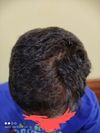
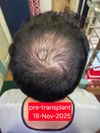
A 27-year-old male with AGA and diffused thinning has been using oral Minoxidil, Finasteride, Vitamin D, B12, Iron, and Ketoconazole shampoo. Despite a hair transplant and improved blood levels, he continues to experience hair loss and suspects a possible misdiagnosis of Alopecia Areata Incognita.
Feeding bacteria-free mice with Lactobacillus murinus worsened hair loss, but a regular diet with biotin stopped it. The conversation suggests gut bacteria and diet may influence hair loss, with some skepticism and discussion about other factors like DHT and genetics.
A 7-month update of hair regrowth achieved by using daily topical finasteride and minoxidil, combined with weekly microneedling. It is also noted that the results are different for females.
The user is considering RU58841 and has been using dutasteride since age 17. They are seeking affordable SARD options, mentioning ASC-J9, GT20029, and AH001.
Experimenting with trestolone as a treatment for hair loss in an attempt to avoid DHT-related treatments such as finasteride and dutasteride, and discussing the potential effects of its receptor selectivity on the androgen receptors in the scalp.
A user wants to make a solution for RU58841 and finasteride powder using only glycerin and asks if ethanol is necessary. They are seeking advice on whether glycerin alone is sufficient.
Men with early male pattern baldness (MPB) may have hormonal abnormalities similar to those in women with PCOS. Specific treatments mentioned include Minoxidil, Finasteride, and RU58841.
A 28-year-old male shares his 7-month progress after a crown hair transplant, using topical minoxidil foam, finasteride, and microneedling. He seeks feedback on whether his crown's progress is typical and if further thickening is expected between months 7 and 12.
Clascoterone is a topical treatment for androgenetic alopecia, showing modest to moderate hair regrowth, and may be available by 2027-2028. It is considered safer than finasteride, with discussions on its effectiveness compared to RU58841 and pyrilutamide.
Finasteride can cause gynecomastia, which may be reversible by stopping the drug and using selective estrogen receptor modulators (SERMs) like tamoxifen. Lifestyle changes such as weight loss and avoiding alcohol can also help, but surgery may be needed if the condition persists.
A user created a tracker for hair loss treatments in clinical development, including compounds like Dermaliq, RU58841, and Pyrilutamide. The tracker updates with new information and allows filtering by conditions like androgenetic alopecia (AGA) and alopecia areata (AA).
Isoflavones from soybeans may help limit estrogen's effects on the body, potentially preventing gyno. However, surgery is the only way to remove gland enlargement.
The conversation discusses the mechanism of action of alfatradiol (17 alpha estradiol) in treating hair loss. It explores theories that it either inhibits 5 alpha reductase to prevent T->DHT conversion or aromatizes scalp T into 17-alpha-estradiol to save hair.
After 7 months of a hair transplant, the user is experiencing significant hair loss despite using a minoxidil and finasteride topical solution daily. Losing around 100 hairs daily might be normal, but if it persists, other causes should be considered.
Lichen Planopilaris (LPP) is an autoimmune condition causing permanent hair loss and fibrosis, often misdiagnosed. Treatments include pioglitazone, topical corticosteroids, anti-inflammatory medication, and Jak inhibitors.
A 24-year-old male has been using finasteride for 7 months and noticed thinning hair, especially when wet, and is concerned about the effectiveness of the treatment. Suggestions include continuing finasteride, considering minoxidil, and possibly trying micro-needling.
The conversation discusses the potential role of prolactin in hair loss and mentions treatments like HMI115, mucuna pruriens, Zinc, and B6 P5P for lowering prolactin levels. It also touches on the use of natural compounds and the lack of studies due to funding issues.