The conversation discusses buying RU58841 directly from a Chinese supplier for cost savings. It mentions that companies like Anageninc and Actifolic do the same.
User is experiencing hair thinning and sebum overproduction after starting finasteride and a hair growth supplement containing biotin, iron, zinc, and calcium. They suspect the finasteride might be fake but have noticed a side effect of watery semen.
RU58841, a potential hair loss treatment, was not commercialized due to marketability issues and lack of long-term safety data. Concerns about its formulation and delivery methods further complicate its use.
The user is exploring hair loss treatments, including Patented Growth Factors (PGF) and a serum with Copper Peptide, Ceramides, Amino Acids, and Caffeine, while expressing concerns about the cost and effectiveness of PGF. They are also considering starting finasteride due to doubts about PGF's long-term viability and are seeking experiences from others who have used these treatments alongside antidepressants.
The user experienced hair growth improvement using a 1.25mm microneedle weekly, oral finasteride, oral minoxidil, and rosemary oil. They plan to switch to generic finasteride and minoxidil for safety concerns.
The conversation discusses potential hair loss treatments focusing on stimulating IGF-1 at the follicle level using growth-factor cocktails and engineered peptides, such as Acetyl Tetrapeptide-3, Copper Tripeptide-1, Oligopeptide-20, Thymosin-β4, and Palmitoyl Tetrapeptide-7. It suggests that device-assisted delivery methods like microneedling may enhance effectiveness.
The conversation discusses the absorption and effectiveness of PG-free versus PG versions of RU58841, with some users believing PG improves efficacy while others see no difference. Concerns about RU58841's potential side effects on the endocrine system are also mentioned, with one user considering switching to pyrilutamide.
KX-826 did not maintain hair loss prevention for users. Some switched to Pyrilutamide but returned to Minoxidil and RU58841 due to worsening conditions.
The user tried pyrilutamide for hair loss and noticed reduced scalp itch and improved skin but stopped due to mild heart sensations. They plan to update after consistent use, noting improved sleep when applied at night.
A user tried the Rapid Minoxidil Response Test (TrichoGene) and found they don't respond to topical Minoxidil, so they added tretinoin. The test is available internationally, and another user is considering ordering it.
The conversation is about adding crushed bicalutamide or spironolactone to a topical mix with finasteride and minoxidil to suppress testosterone in hair follicles, similar to what RU58841 does. The user cannot obtain RU58841 in their country and is seeking advice on this alternative approach for hair loss treatment.
PP405 may promote short-term hair growth by pushing follicles into the growth phase, but concerns exist about long-term effects due to lack of rest phases. Users discuss various treatments like finasteride, minoxidil, spironolactone, alfatradiol, and investigational drugs like KX-826 and GT20029 for hair maintenance and regrowth.
Chime Biologics and Hope Medicine are speeding up the launch of a first-in-class antibody drug, HMI-115, for endometriosis and androgenic alopecia. The treatment involves a series of subcutaneous injections, has shown promising results in phase 1, and continues to promote hair regrowth even after the treatment is stopped.
The conversation discusses the sale of a premixed KY19382 solution for research purposes, highlighting previous unsuccessful group buys and the formulation process. Prices and purchasing options for KY19382 solutions and powder are provided.
A user is concerned about taking 1mg/day of finasteride due to potential gynecomastia, given their blood results. They seek advice on how their hormone levels might be affected by blocking DHT.
PP405 is considered a promising hair loss treatment, potentially replacing minoxidil but not finasteride. Users are hopeful for future treatments like GT20029 and VDPHL01, while remaining cautious about effectiveness and side effects.
The user has been using Minoxidil and finasteride with success and is now trying Dualgen-5R with retinoic acid but without finasteride, along with microneedling. They plan to share results in 5-6 months.
Treatments for hair loss, with the user considering Pyrilutamide and RU58841 as options. It is noted that although Pyrilutamide has been studied more and is allegedly more effective, there are doubts about its authenticity in the market. KX-826 is suggested as an alternative as it has a stronger effect than RU58841 and there is scientific research on it.
The conversation is about a user's positive experience with hair regrowth using 1mg finasteride and 2.5mg oral minoxidil, noting improvements in scalp and eyebrow hair. The user mentions minimal side effects, such as a slight increase in heart rate, and prefers oral minoxidil over topical due to ease of use.
Clascoterone, a topical anti-androgen, is generating interest for potentially fewer systemic side effects. Users are curious about its effectiveness and details like concentration and duration of use.
The conversation discusses anticipation for CB-03-01, a potential new hair loss treatment that may be more effective and have a cleaner safety profile than finasteride. Users are hopeful but cautious, discussing current treatments like minoxidil, nizoral, and dermarolling, and the possibility of combining them with CB-03-01 for better results.
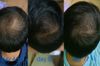
A user shared progress pictures after using finasteride and minoxidil for two years, showing significant hair improvement. The user started treatment at age 20 and reported no side effects.
Peptides like GHK-Cu, BPC-157, and TB-500 have significantly reduced hair loss, with GHK-Cu being particularly effective. The discussion also covers the high cost of these peptides and explores more affordable purchasing options.
Hairgenetix Copper Peptide Serum and PeptideLabz GHK-Cu + AHK-Cu Serum are being compared for effectiveness in hair loss treatment. The user is seeking recommendations for other brands with authentic reviews.
The conversation discusses updates on hair loss treatments, specifically GT20029, PP405, and a rumored injectable peptide from UT. GT20029 is seen as a promising treatment expected within 5-7 years.
PP405 and ABS-201 are promising treatments for male pattern baldness. PP405 shows rapid hair growth in human trials, while ABS-201 shows significant regrowth in animal studies but is still in early human trials.
The conversation questions the lack of feedback on the effectiveness of PGE2 and setipiprant for hair loss, despite their availability. The user is puzzled by the absence of reviews or results, whether positive or negative.