Search
for
Sort by
Community Join
270-300 / 1000+ resultscommunity Disingenuous before and after posts and results
community TGF-Beta. Good or Bad? Help for treatment investment
TGF-B affects hair growth, both causing stem cell division and death depending on amounts. Amplifica's treatment injects Scube3 to increase TGF-B for hair growth.
community Female male-pattern AGA- seeking help
A female with male-pattern hair loss (AGA) is seeking help after unsuccessful treatments with spironolactone and supplements, and is considering oral minoxidil and finasteride despite concerns about medication side effects. She has ruled out hormonal birth control and PRP/PRFM, and is looking into further medical advice due to abnormal lab results.
community Is it an llusion or a regrowth?
The user has been using oral minoxidil 2.5mg and finasteride 1mg for 3 months and is unsure if they are experiencing hair regrowth or if it's an illusion. Some responses suggest it is regrowth, while others think it's an illusion due to angles and lighting.
community Rate Cbum hair transplant after 1 year
The hair transplant has a straight, unnatural-looking hairline that many find unappealing. The person is not using finasteride or minoxidil, which may affect future hair retention.
community How do you distinguish miniaturised hairs from velus hairs regrowing from dormant follicles around temples?
The conversation discusses difficulty in distinguishing between new hair growth and thinning hair at the temples after using microneedling and a rosemary peppermint topical for four weeks. The advice given is to wait a few months to see if the hairs grow out to determine their nature.
community What routines helped you reduce dry scalp, flaking, and irritation?
community Microneedling & Derma Stamp Longevity
community Hair restoration : Minox + Fin
community What do yall think is thinking I see progress
community Do you guys feel bad using hair fibers?
Hair loss discussion includes using hair fibers to improve appearance and boost confidence. Some users find it effective, while others mention drawbacks like moisture affecting the look.
community 4 months Fin+Min. Daily. Hairline looks promising
A 40-year-old user reports promising hairline improvement after 4 months of using 1mg finasteride daily and 5% minoxidil foam 2-2.5 times daily. The hairline vellus hair appears to be turning terminal.
community Why are the results so varied depending on WHERE you’re balding??
community Starting Bimatoprost! Hair time
The conversation is about using Bimatoprost for hair growth, with concerns about potential side effects like eye color change and fat atrophy. Users discuss combining it with other treatments like Minoxidil and Finasteride, and sourcing Bimatoprost in bulk.
community 6 months post Hair Transplant - 3361 grafts
community Hairline Slowly Growing Back On It's Own After Seborrheic Dermatitis
The user treated seborrheic dermatitis by cutting sugar, improving sleep, using four different shampoos, and occasionally using steroids. Their hair is growing back thicker and new hair is appearing.
community Is LockLab.co Sketchy? Different then online.
Users are concerned about inconsistencies in the packaging and form of a Minoxidil, finasteride, and Biotin blend from LockLab.co, with some receiving capsules and others tablets. Despite reassurances from customer service about changes due to maintenance, users remain skeptical about the product's authenticity and effectiveness.
community Stem cell-grown hair could help those with hair loss
community PRP + GFC for hair regrowth?..
A dermatologist recommended PRP (Platelet Rich Plasma) and GFC (Growth Factor Concentrate) for pattern baldness, but online sources suggest they may not be effective. The user is seeking opinions on these treatments.
community Botox vs PRP What's the better option?
The conversation discusses the effectiveness of Botox and PRP for hair regrowth. Users share experiences and insights on these treatments.
community 7.5 month closeup hairline comparison
The conversation is about hair regrowth progress using topical finasteride and minoxidil twice daily, with occasional microneedling. The user also uses Minoxidilmax and WOW Skin Science Apple Cider Vinegar Shampoo.
community Creatine monohydrate causes hairloss?
community Is this hair regrowth at my hairline? Also, I suck with microneedling.
The user recently started topical dutasteride and microneedling, and has been using RU58841 and Minoxidil for 16 months. They are curious if small black dots at their hairline indicate hair regrowth.
community Thrive's hair serum (30 lines title)
The user has been using finasteride for 7 months and is inquiring about Thrive's hair serum, which contains redensyl, procapil, and anagain, seeking feedback from others who have used it.
community 2 month progress shots topical min/fin
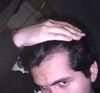
community Can i save this hairline
The user is concerned about a receding hairline and is seeking advice on whether it can be saved. Treatments like Minoxidil, finasteride, and RU58841 are discussed as potential options.
community JPEGMafia Hair Transplant — Incredible Result
A user's successful hair transplant, with some people questioning the donor area regrowth, and others speculating that hair fibre may have been used to help fill in areas.
community 5 month progress on Locklabs oral tablet
The user experienced significant hair regrowth over five months using Locklabs oral tablets, with no side effects and only a minor shed. They dye their hair black to cover natural blonde, which may affect perceived hair density.