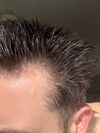
After 2 months of using Minoxidil and finasteride, OP noticed fuller hair, confirmed by their wife's observation. OP is pleased with the progress, though the change isn't drastic.
Switching from topical finasteride to oral Dutasteride and using Fluridil caused persistent testicular discomfort. The discomfort did not subside after stopping Fluridil, raising concerns about Dutasteride's role.
A 26-year-old has been using finasteride for over two years, initially at 1.25mg daily and later at 5mg weekly, resulting in stable hair condition with some regrowth and minimal side effects. The user reports high libido and a protein and vegetable-heavy diet, with initial watery semen as the only side effect.
The user reported hair thickening after two months of using topical 7% minoxidil and 0.1% dutasteride, with no side effects. They previously experienced side effects with oral finasteride and switched to the topical treatment.
A user shared 3-month hair regrowth results using a combination of oral Dutasteride, daily Minoxidil, RU58841, micro-needling, Keto shampoo, scalp massages, and supplements. Positive progress was noted, and encouragement to continue was given.
The user experienced improved libido and erections after reducing DHT levels with 0.5mg of dutasteride once a week, despite previous side effects from finasteride. They are also on testosterone replacement therapy and have not noticed major personality changes.
The user is using oral and topical minoxidil, finasteride, dutasteride, and considering adding rosemary and pumpkin saw palmetto to their regimen. They report significant hair growth, especially with dutasteride, and are considering increasing their dose and adding RU58841.
Excessive use of topical minoxidil led to unwanted facial changes and side effects. The user plans to switch to oral minoxidil with microneedling for hair regrowth.
A user switched from finasteride to dutasteride, experiencing significant shedding initially but noticing improved hair health and thickness over time. They also use minoxidil, both oral and topical, and report no significant side effects from the treatments.
User experiencing hair loss on dutasteride; others suggest shedding is normal and to track progress with pictures. Some mention using RU58841 for improvement.
The user reported initial hair regrowth and improved hair quality after starting finasteride, but noticed a return of hair loss after about a year. They also experienced side effects like erectile dysfunction and watery semen, which later improved.
A user reported hair thinning, started using finasteride, and experienced a significant initial hair shed followed by noticeable hair regrowth after 2 months. Some responders questioned the rapid progress, while another noted that finasteride typically increases hair density by 16% after 2 years.
The user has been taking dutasteride for 8 months and finasteride before that, with normal DHT levels but high estradiol and prolactin, leading to sexual side effects. The user is disappointed with these results.
The user experienced hair thickening and reduced shedding using minoxidil, finasteride, and dutasteride, with a switch from finasteride to dutasteride due to ineffectiveness. They also use a saw palmetto shampoo and take vitamin D3 supplements, while considering potential underlying causes like vitamin deficiencies and hard water buildup.
A 39-year-old male is experiencing hair regrowth after three months using 1mg oral finasteride daily, 5% topical minoxidil twice daily, dermastamping twice a month, and 2% ketoconazole shampoo weekly. He shares progress photos and receives encouragement and advice from others, noting some improvement and considering additional treatments but is limited by budget.
Amplifica's new injectable treatment for androgenetic alopecia shows a 15% increase in hair thickness and coarseness in 60 days. The treatment is in early human trials and offers a promising alternative to hormone-related hair loss treatments.
The user experienced hair improvement over a year using finasteride, topical minoxidil, tretinoin, ketoconazole, and microneedling. The hair density and hairline have strengthened with this routine.
A user plans to experiment with creating new hair follicles using methods like derma rolling, applying lithium chloride, tannic acid, and various other substances including caffeine, ketoconazole, and raspberry ketones. They also consider using anti-inflammatories, immunosuppressants, and DHT inhibitors to potentially improve results.
The user experienced increased shedding and an itchy scalp after switching from Ascend to Aurobindo finasteride. They are considering switching to dutasteride and are concerned about elevated estrogen levels and the effectiveness of adding minoxidil later.
The post discusses the experiences of individuals with diffuse hair thinning using finasteride, with many reporting no improvement or worsening conditions after 6 months. Various suggestions include persisting with the treatment, checking for underlying conditions, adding minoxidil for volume, adjusting dosage, and considering other potential causes like autoimmune responses and inflammation.
A 31-year-old man shares his 4-month hair regrowth progress using topical minoxidil, topical finasteride, microneedling, biotin, and other supplements. He reports new hair growth despite experiencing side effects from finasteride and plans to continue his regimen for further improvement.
The user underwent a hair transplant 11 months ago and is satisfied with the results, regaining confidence. Post-operation treatments included oral minoxidil, finasteride, dutasteride, vitamin supplements, and occasional QR678 injections.
The conversation discusses the effects of lowering DHT on hair loss and the importance of monitoring DHT levels during treatment. The user suggests that individual responses to DHT and hair loss treatments vary, and expresses a preference for topical treatments over oral medications due to concerns about systemic DHT reduction.
The conversation is about the effectiveness and production of GT20029, a drug being developed as a topical androgen receptor degrader for hair loss, and whether it can fully degrade androgen receptors or only partially. It also discusses the drug's potential unique working mechanism and synthesis by a company called Anagen.
User experienced hair thinning due to high cortisol and thyroid issues, along with insulin resistance. They are taking magnesium, zinc, vitamin D, calcium, and selenium as supplements.
The conversation is about hair regrowth or miniaturization after two months of using minoxidil and spironolactone. Specific treatments mentioned are minoxidil and spironolactone.
The user discussed switching from RU58841 with Minoxidil to Finasteride due to cost, noting better physical feelings and hair growth with RU58841. They are considering returning to RU58841 and checking DHT levels after a month.
The user shared progress pictures after three months of using RU58841, finasteride, and OM (oxidative stress modulators) for hair loss treatment. They haven't noticed much change but are seeking feedback on their results.
The user experienced increased hair shedding after adding tretinoin to their regimen of finasteride, minoxidil, and dermarolling, but noticed new vellus hairs appearing. They plan to restart tretinoin more gently, as some users suggest shedding indicates treatment effectiveness, while others warn it may cause severe thinning for a minority.