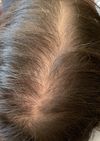
PP405 shows promise for hairfollicle reactivation with minimal side effects. Users recommend continuing Minoxidil and Finasteride until more results are confirmed.
The user shared a four-month update on their hair regrowth journey using 1mg daily finasteride, 5mg daily oral minoxidil, and weekly dermarolling, noting significant improvement in hair thickness and uniform growth. They reported no side effects from minoxidil except increased hair growth on arms, fingers, and eyelashes.
A user's successful hair regrowth after 7 months of using 5% minoxidil, 1mg finasteride, and adding micro needling 4 months ago. The user also took biotin, fish oil, and collagen supplements, and reduced finasteride intake to once every 3 days due to minor libido decay.
The user experienced hair regrowth using 0.5mg oral finasteride and the iRestore laser cap every other day, with reduced shedding. They also take collagen peptides and Nutrafol vitamins, though they are unsure of the latter's effectiveness.
The user is experiencing significant hair shedding despite using 1.25mg oral minoxidil and 1mg finasteride daily for a year. They are advised to monitor health factors like vitamin levels and heart health, and consider increasing ferritin levels for optimal hair growth.
The user experienced hair regrowth using a routine of topical minoxidil, dutasteride, and microneedling, and is considering adding a peptide product for increased hair density. Other users suggest maintaining the current routine, monitoring heart health due to oral minoxidil, and considering cost-effective alternatives.
The conversation discusses hair loss treatments, including microneedling, Nizoral, LLLT, Minoxidil, and Finasteride. The user experienced initial shedding reduction with Nizoral and LLLT, but shedding resumed with Minoxidil and Finasteride, which is considered a normal part of the treatment process.
The user has been taking 1 mg of finasteride daily for four months and is questioning if they are experiencing hair regrowth, as suggested by their barber. Another user suggests taking better photos to assess the crown area more clearly.
The user experienced significant hair regrowth using finasteride 1mg daily, minoxidil 5% twice a day, and microneedling 3-4 times a week. They reported no side effects from finasteride and are pleased with the results, feeling more confident and maintaining a new hair baseline.
The user "Expliced" shared their progress pictures after using finasteride, minoxidil, and microneedling for 1 year and 3 months. Another user mentioned that using a high-definition camera with flash and sharpening the photo can show new hairs appearing sooner.
Hair cloning is humorously discussed as always being 5-7 years away, with skepticism about its near-term availability. Gene editing to reactivate dormant follicles is suggested as a more likely solution within the next ten years.
Keratin microspheres may offer additional mechanisms to combat hair loss compared to minoxidil. The process to create these microspheres is relatively simple and can be done at home with basic equipment.
The user reports hair regrowth at the crown and thickening at the front after three months using 1mg finasteride, 0.5% minoxidil, biotin supplements, vitamin D, and argan oil shampoo and conditioner. They express a wish that hair growth could occur at the back of the head as well.
A user reported success with RU58841 and a 1mm derma roller for hair regrowth, noting significant improvement in hair density and reduced scalp visibility. They also mentioned using minoxidil and black castor oil in the past, with mixed results.
GT20029 shows promise as a topical treatment for hair loss, potentially replacing finasteride for some due to its low systemic exposure and ability to degrade androgen receptors. However, skepticism remains about its long-term efficacy and availability, with some users expressing doubt about new treatments consistently failing to reach the market.
A user shared their hair regrowth progress using oral finasteride, biotin, topical minoxidil, and DS thickening shampoo over five months, reporting significant improvements in hair texture and growth. They experienced minor side effects like a slight headache from switching minoxidil forms but noted no issues with finasteride.
The conversation discusses hair regrowth and miniaturization, with the user transitioning to oral dutasteride and oral minoxidil, and occasionally using topical minoxidil. The user observes baby hairs near the hairline but less on the scalp, indicating possible regrowth and shedding.
Exosome treatment for hair loss, derived from umbilical cord stemcells, is being considered as an option before a hair transplant. Users discuss the need for ongoing maintenance and share experiences with different exosome sources, including plant-derived options.
Tressless GPT is now free and accessible for hair loss advice. Treatments discussed include Minoxidil, finasteride, RU58841, dutasteride mesotherapy, topical melatonin, microneedling, and rapamycin.
A 21-year-old shared their 6-month hair regrowth journey using daily finasteride tablets and once-daily topical minoxidil, noting significant improvement in hair thickness, especially at the corners, with minimal side effects. They also mentioned using minoxidil for beard growth with limited success and occasionally using a dermaroller.
RT1640, a combination of cyclosporin A, minoxidil, and RT175, is discussed as a potential treatment for hair regrowth and repigmentation. The unique formulation aims to enhance hairfollicle growth and restore hair pigment without the negative side effects of immunosuppressants.
A 40-year-old user reports promising hairline improvement after 4 months of using 1mg finasteride daily and 5% minoxidil foam 2-2.5 times daily. The hairline vellus hair appears to be turning terminal.
PP405 is being discussed as a potential treatment for hair loss, with uncertainty about its effectiveness compared to existing treatments like finasteride, dutasteride, and minoxidil. There is cautious optimism, but its impact on hair transplants remains unclear.
Copper peptides, specifically GHK-Cu, are being considered for hair regrowth, though skepticism exists due to questionable product sources. Users suggest finding reputable sources for potential benefits, while acknowledging traditional treatments like Minoxidil and Finasteride.
A user has been taking finasteride, using a derma-roller, LLLT, and argan oil, but experienced significant hair loss at the one-year mark. They are concerned if this is a normal shedding phase or something to worry about.
The conversation discusses updates on hair loss treatments, specifically GT20029, PP405, and a rumored injectable peptide from UT. GT20029 is seen as a promising treatment expected within 5-7 years.
The user experienced hair improvement over a year using finasteride, topical minoxidil, tretinoin, ketoconazole, and microneedling. The hair density and hairline have strengthened with this routine.
The user achieved impressive hair regrowth using 1mg finasteride and topical minoxidil, and is now adding dutasteride due to recent diffuse thinning. They experienced initial side effects with finasteride but no longer have issues.
The user has been using Minoxidil, finasteride, and a dermaroller for a year with little effect on hair loss. They are considering a hair transplant and are questioning the number of grafts needed and the feasibility of transplanting onto a partially bald scalp.