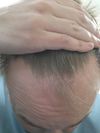
A female user is seeking feedback on using topical minoxidil on eyebrows due to eyebrow loss, as oral minoxidil hasn't worked and they avoid Latisse due to potential fat loss.
PP405 is progressing rapidly through trials, with mixed opinions on its potential effectiveness. Current treatments like minoxidil and finasteride are still widely discussed, with some users reporting positive results from new formulations.
DHT promotes beard growth but causes scalp hair loss due to inflammation and fibrosis. Treatments like finasteride and minoxidil help with hormonal signals and blood flow but don't address underlying inflammation.
DHT is not the only cause of male pattern hair loss; genetic sensitivity, inflammation, and fibrosis also contribute. GHK-Cu, a copper peptide, is being explored as an alternative treatment to finasteride and minoxidil, showing potential in improving follicle health.
An 18-year-old shaved his head due to hair loss and feels relieved, despite using Minoxidil and Finasteride without success. Many suggest seeing a dermatologist as the hair loss pattern doesn't resemble typical male pattern baldness, and some recommend trying Ketoconazole.
Clascoterone 5% topical solution is effective and safe for long-term use in treating male pattern hair loss. Cosmo Pharma aims for EU and US approval, with a potential US release in late 2027 or early 2028.
A user shared a 5-month update on their hair transplant, praising the natural results and the surgeon in Patna, India. They mentioned using 2000 grafts at a cost of 90,000 INR and discussed the importance of taking finasteride or dutasteride to maintain the transplanted hair.
PP405 is a potential new hair loss treatment that works through metabolic pathways rather than hormonal ones, with an estimated market release between late 2027 and 2029. Current alternatives to finasteride include minoxidil, pyralutamide, fluridil, and RU58841, with hair transplants also being a viable option.
PP405 is a new hair loss treatment targeting dormant hair follicles, with ongoing trials. Some users consider stopping finasteride and minoxidil to join trials, while others doubt its effectiveness.
Finasteride, dutasteride, and minoxidil can help prevent or slow hair loss for many, though results vary. The dermatologist's claim that no medication works is incorrect, as these treatments are effective for some individuals.
Federal funding cuts have delayed PP405 research, affecting hair loss treatment progress, though clinical trials will continue. The discussion highlights PP405's potential compared to minoxidil and finasteride and stresses the importance of government-funded research.
PP405 shows initial promise for treating androgenetic alopecia, with safety confirmed in early trials, but skepticism remains due to limited data. Further trials are needed to determine its true efficacy and potential market impact.
A 27-year-old male has been using finasteride for six years and recently started oral minoxidil to address hair loss, experiencing some side effects like lightheadedness. He is considering shaving his head or a hair transplant while continuing his current treatments.
The user has been using 1.25 mg Finasteride and topical Minoxidil once a day for six months with positive results and no side effects. They emphasize the importance of continuing the medication to maintain hair regrowth and discuss the potential benefits and side effects of different dosages.
Finasteride is seen as risky for men due to side effects like erectile dysfunction, while hormonal birth control for women is normalized despite its side effects. The discussion points out a double standard influenced by societal and gender norms.
A new topical finasteride has been approved in France, providing an alternative to oral finasteride with potentially fewer side effects. Users discuss the pros and cons of topical versus oral treatments, with some opting to create their own solutions to save money.
Finasteride and dutasteride are significantly cheaper in India, leading to substantial savings for users. There are discussions on the effectiveness of oral minoxidil and finasteride for hair loss, with concerns about the quality of generic medications.
PP405 shows promise for hair growth but may need continuous use like Minoxidil. Current treatments include Minoxidil, finasteride, and dutasteride, with skepticism about a true cure due to financial interests.
The user switched from finasteride to dutasteride for hair loss but faced increased shedding and anxiety, regretting not staying with finasteride longer. Other users shared mixed experiences, advising patience with dutasteride, as it may take up to a year to show results.
The user plans to switch from dutasteride back to finasteride due to worsening hair loss, possibly due to increased scalp testosterone. Others report mixed results with both treatments, showing individual variability.
PP405 shows promise for hair follicle reactivation with minimal side effects. Users recommend continuing Minoxidil and Finasteride until more results are confirmed.
PP405 shows promise for reactivating hair follicles, with potential maintenance using 5AR inhibitors. Current treatments like Minoxidil and finasteride are effective but have limitations, and there is hope for more effective solutions in the future.
Finasteride and Dutasteride do not cause depression or "Post Finasteride Syndrome," with concerns often linked to the nocebo effect and preexisting mental health issues. The EU is unlikely to ban these drugs, but access may become more restricted due to ongoing debates.
Switching from finasteride to dutasteride may be more effective for hair regrowth due to dutasteride's stronger enzyme inhibition, but combining both drugs could enhance results. Some users report better outcomes with dutasteride, while others recommend a gradual transition to prevent potential hair loss.
An 18-year-old using Minoxidil 2% for hair loss is considering adding dermarolling to their routine. Replies suggest adding finasteride, using a dermastamp, and microneedling, with positive experiences shared.
A 19-year-old is distressed about his 17-year-old autistic brother's hair loss, projecting his own insecurities despite being on finasteride and dutasteride. Replies suggest the brother might not care about balding, and the poster should address his own issues.
RU58841, a potential hair loss treatment, was not commercialized due to marketability issues and lack of long-term safety data. Concerns about its formulation and delivery methods further complicate its use.
Balding can be traumatic for many, affecting self-esteem and social interactions, while others accept it more easily. Treatments mentioned include finasteride, minoxidil, and RU58841.