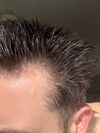
GHK-Cu is being considered for hair growth, but users report mixed results. Some use it alongside other treatments like 5AR inhibitors, making it hard to determine its effectiveness.
A 20-year-old woman with androgenetic alopecia feels depressed about her hair loss, despite using topical minoxidil, spironolactone, and saw palmetto. Suggestions include trying oral minoxidil, higher doses of finasteride or dutasteride, and checking for vitamin deficiencies and heavy metal exposure.
The conversation discusses using GFM Gel, a topical gel with polypeptides that mimic growth factors to promote hair regrowth and strengthen hair. It also mentions treatments like Minoxidil, finasteride, and RU58841 for hair loss.
The user started using topical minoxidil, oral finasteride, GHK-CU, and HGH in October, resulting in thicker hair and improved overall health. They experienced minor side effects like dehydration from HGH but reported benefits like clearer skin, better recovery, and muscle gain.
GHK-Cu injections led to unexpected temple hair growth for someone who had been using minoxidil and finasteride for over a decade. The user plans to continue using GHK-Cu and experiment with a DIY AHK-Cu serum.
The conversation discusses microneedling for hair loss, with the original poster experiencing pinpoint bleeding after using needles of 1.25mm and 0.5mm, possibly due to adding GHK-Cu to their treatment regimen. They are inquiring if others bleed at similar depths.
The conversation discusses the potential benefits and risks of using Methionine and Glycine for hair loss, with concerns about cancer risk if not balanced properly. The user seeks opinions on these amino acids for hair health and overall benefits.
The conversation is about using GHK-Cu, a copper peptide, for hair loss treatment. Users discuss their experiences, dosages, and additional benefits like improved skin and energy.
A user experienced side effects from finasteride and switched to using GHK-Cu for hairline improvement, noticing some positive changes after three months. They used a 2mg daily dose via subcutaneous injections and reported increased hair density and baby hairs, though results were not dramatic.
A 19-year-old male with no family history of androgenetic alopecia (AGA) is experiencing hair loss and considering using a topical minoxidil and finasteride mixture. Despite low vitamin D levels and normal DHT serum levels, he seeks confirmation of AGA before starting treatment.
The conversation discusses interest in peptides for hair loss, specifically mentioning ahkCU and ghkCU. A user is considering adding ghkCU to their treatment regimen.
Whey protein may slightly increase hair loss in men with androgenetic alopecia (AGA) due to elevated IGF-1 and testosterone levels, but the effect is minimal compared to treatments like finasteride and dutasteride. Many users argue that whey protein's impact on hair loss is negligible and that maintaining a healthy lifestyle is more important.
The conversation discusses the use of peptides C60 and GHK-Cu for hair growth. Participants are sharing their experiences or knowledge about these treatments.
GT20029 is a new hair loss treatment in Phase 3 trials in China, using PROTAC technology to target androgen receptors, potentially with fewer side effects than finasteride and minoxidil. VDPHL01, a second-generation minoxidil, is also mentioned as potentially more effective.
The conversation discusses concerns about using a high concentration of 1% topical finasteride for hairline balding, with some users suggesting starting with a lower dose. It also mentions the use of GHK-CU peptide and the importance of considering the formulation to avoid excessive absorption.
An 18-year-old is using a high-dose treatment for hair loss, including 2.5 mg dutasteride, topical minoxidil, and injectable GHK-Cu, despite minimal hair loss. Many users suggest reducing the dutasteride dose due to potential side effects and recommend starting with finasteride instead.
Increasing IGF-1 may help hair growth, but it could also increase hair loss in people with high testosterone. Treatments discussed include l-arginine, glutamine, vanadium, Deer Antler Velvet, ATP, Cocarboxylase, l-carnitine, and Mk677.
A female with male-pattern hair loss (AGA) is seeking help after unsuccessful treatments with spironolactone and supplements, and is considering oral minoxidil and finasteride despite concerns about medication side effects. She has ruled out hormonal birth control and PRP/PRFM, and is looking into further medical advice due to abnormal lab results.
Hyperbaric Oxygen Therapy (HBOT) is discussed as a potential treatment for androgenic alopecia due to its ability to reverse hypoxia and promote angiogenesis. The conversation explores its potential benefits for hair loss, though no studies have been conducted on this application yet.
The conversation discusses hair loss treatments, specifically seeking a 15% glycyrrhizic acid formula without additional ingredients. It also mentions the potential opposite effects of glycyrrhizic acid on humans compared to rats.
HMI-115, a newly discovered hair loss treatment that could potentially be effective for those with diffuse thinning and telogen effluvium. It is based on prolactin receptor antagonist signaling and has already undergone Phase I trials in women, with potential commercialization by 2027.
Oral minoxidil was ineffective for OP, causing hair loss and unwanted body hair, while topical minoxidil showed significant regrowth. OP is switching to topical minoxidil with glycerin due to scalp issues with propylene glycol.
The GT20029 tincture, a topical androgen receptor degrader, showed significant hair growth and good safety in a China Phase II trial for male androgenetic alopecia (AGA), with the 1% dose twice weekly identified as optimal. The company plans to initiate Phase III trials in China and Phase II in the U.S., and the treatment also shows promise for acne.
A 57-year-old man with male pattern hair loss and insulin resistance experienced hair regrowth and weight loss after using tirzepatide, without other hair treatments. Dysregulated glucose metabolism is linked to hair loss, with tirzepatide potentially improving hair density by normalizing insulin resistance.
A dermatologist checked for hereditary hair loss using blood tests and plans to perform a trichogram. The user had slightly low Vitamin D3 levels, and the trichogram may help confirm androgenetic alopecia.
Sugary beverages increase the risk of pattern hair loss in men by 57%, and type 2 diabetes is linked to female pattern hair loss. Reducing sugar intake and using treatments like finasteride and minoxidil may help manage hair loss.
Male pattern baldness (MPB) may be an early warning sign for type 2 diabetes due to its association with insulin resistance. Treatments discussed include testosterone therapy and finasteride, which affects hormone levels related to hair loss and insulin sensitivity.
The conversation discusses a user's plan to inject NAD+ and GHK-Cu into their scalp to improve hair health, with concerns raised about the risks of infection and necrosis. Alternatives like finasteride, dutasteride, microneedling, oral minoxidil, and scalp massages are suggested.
Hair transplants, oral finasteride, oral minoxidil, and dutasteride mesotherapy are highly effective for treating AGA hair loss. This combination can maintain and improve hair for most people, except those with very aggressive AGA.
GHK-Cu is discussed for its potential anti-aging and healing properties, with some users considering its effects on hair growth. One user mentions using Folligen Spray and topical finasteride, noting improved healing but uncertain hair growth results.