User shared 2-year progress with Dutasteride, 5mg oral minoxidil, and 7 months of RU58841 for hair growth. RU58841 was most effective, stopping itching and promoting significant growth.
The user is using topical finasteride and is considering adding minoxidil despite concerns about dependency and side effects. Another user suggests that finasteride alone can reverse hair loss, but adding minoxidil and microneedling may improve results.
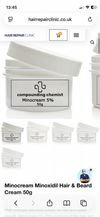
A user is considering switching from a 5% minoxidil spray to a minoxidil cream for easier application and less greasiness. They are inquiring about the Hair Repair Clinic 5% minoxidil cream, which includes optional tretinoin and other ingredients like isopropyl myristate and beeswax.
The user is experiencing improvement in hair density using a topical lotion containing minoxidil, finasteride, ketoconazole, and other ingredients. They are hopeful for further progress in the coming months.
The user has been using a hair loss treatment including oral Minoxidil, topical Minoxidil with Tretinoin and Finasteride, and is considering adding Dutasteride but is concerned about the potential side effects and risks regarding fertility. A reply suggests that having children while on these medications should be fine, advising to avoid letting the partner come into contact with the drugs.
The conversation is about using tretinoin to enhance minoxidil's effectiveness for hair loss, discussing whether to mix tretinoin with minoxidil or apply it separately, and considering the concentration of tretinoin to use.
The user is considering using "Grow Gorgeous Intense Hair Density Serum" alongside Minoxidil and is currently taking Finasteride. Some users doubt the serum's effectiveness, while others suggest it may help with hair strength and thickness, but opinions are mixed.
A user applied Minoxidil foam to their face to grow a beard and experienced increased hair density and darker hair as unintended benefits, despite initially using it for diffuse thinning on the scalp. Another person suggested that the user's heart rate increase might indicate a high conversion rate of Minoxidil to its active form, similar to taking oral Minoxidil.
Pyrilutimide and CB-03-01, two treatments for hair loss, have similar clinical trial results despite different binding affinities to androgen receptors. Factors other than binding affinity, like the time a drug stays bound to the receptor, may influence their effectiveness.
The conversation is about finding cheaper alternatives for hair loss treatments. Specific treatments mentioned include finasteride and L'Oréal Paris Elvital Hyaluron Plump Leave-In Spray.
This conversation is about how topical treatments for hair loss, such as Minoxidil and Finasteride, can be replaced by drinking oral versions of the same medications to achieve better results with less hassle. Some users have already been doing this with positive results.
User wants to make homemade topical finasteride to minimize side effects and asks about using glycerin, stirring time, storage, and alternative solvents. Another user's comment is unclear.
A user questions if ingesting topical minoxidil could be an alternative to oral minoxidil for hair loss. Another user reports success with this method, noting they saw results and experienced no adverse effects.
The conversation is about someone who had a bad reaction to Minoxidil, is now using Stemoxydine, and wants to create a topical finasteride solution. They are seeking advice on obtaining pure finasteride powder in Europe/UK and tips for making the solution.
The conversation is about hair loss treatments, specifically Pyrludimide (KX-826) and Breezula (clascoterone), with the user unable to tolerate finasteride and dutasteride. The user plans to use these treatments alongside minoxidil, considering the efficacy and availability of each option.
The user has been on 1mg finasteride daily for two years, experiencing initial shedding and some hairline recession, with limited regrowth. Suggestions include using oral minoxidil, switching to dutasteride, or considering a hair transplant for better results.
Switching from topical to oral minoxidil may lead to better results for some users, with oral minoxidil generally being more effective due to higher absorption. However, it can also cause side effects like hypertrichosis and blood pressure issues, and individual responses may vary.
The user experienced significant hair regrowth after 2.5 years of using Minoxidil 5% and hormone replacement therapy (HRT) with Lupron, despite initial scalp irritation. Finasteride was ineffective for them.
The user experienced significant hair improvement using a costly treatment involving a tincture and micro needling. They are seeking cheaper alternatives, with suggestions including finasteride, dutasteride, and minoxidil as effective options.
A user experienced hair thinning and scalp issues after using a sebum-regulating shampoo and perm treatments. They are advised to consider potential allergies, try a simple shampoo, and research treatments like finasteride for possible male pattern baldness.
The user cannot handle Minoxidil and is looking for an alternative to dilute topical finasteride. They are considering using Alpecin liquid as a solution.
Minoxidil can regrow hair but doesn't address the underlying issue of DHT, leading to continued hair loss. Users discuss their experiences with finasteride and dutasteride, mentioning side effects, personal outcomes, and alternatives like microdosing topical finasteride.
Minoxidil should be left on the scalp for at least 4-6 hours for effective absorption, even if it feels dry after 30 minutes. The skin's interaction with the chemical continues regardless of the solution's evaporation.
The post and conversation discuss the link between DHT (a hormone), scalp itchiness, and hair loss. Some users share their experiences and treatments, including the use of fluconazole, corticosteroids, and ketoconazole shampoo, with one user suspecting minoxidil as a potential cause of their symptoms.
The user "_Mad_Jack_" shared their progress pictures of using topical finasteride and minoxidil for 11 months. They experienced good hair retention and increased overall hair count, but no regrowth of the hairline. They are considering switching to oral finasteride and microneedling for better results. Testicular pain was a side effect experienced during the treatment. Another user mentioned getting a hair transplant to cover their crown.
User's hair loss treatment progress includes 1 mg finasteride, 2.5 mg minoxidil tablets twice daily, microneedling 3 times a week, and Fungoral shampoo twice weekly. Good progress and minimal side effects reported.
A user's experimentation with various hair loss treatments, including medications and topical applications; as well as their desire to experience unusual sensations through the use of drugs.
The conversation discusses whether to add minoxidil to an existing hair loss treatment regimen that includes finasteride, RU58841, and microneedling. Some users suggest trying minoxidil and monitoring for side effects, while others advise waiting to see if current treatments improve results after one year.