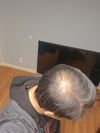
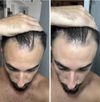
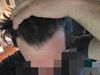
Minoxidil is effective for frontal hair loss, despite packaging suggesting it's for crown thinning. The user has seen results with Minoxidil from a different provider.
The conversation is about someone's 13-month hair regrowth progress using 0.5 mg Dutasteride daily, 5% Minoxidil twice daily, Biotin tablets, and Sebizole shampoo. They are happy with the results.
GT20029 and CosmeRNA are both potential hair loss treatments; GT20029 breaks down the androgen receptor, while CosmeRNA prevents its production. Continuous use is needed, but less frequently than current treatments like Minoxidil and Finasteride.
Pyluritamide and RU58841 are compared for effectiveness in addition to dutasteride for hair loss treatment. Reddit users report great results with RU58841, but data suggests pyluritamide may have better affinity.
The conversation discusses the delay in the release of GT20029 for hair loss treatment and skepticism about its effectiveness. Participants mention other treatments like verteporfin and advancements in transplant procedures as more realistic options.
A 48-year-old man has been using finasteride at 1mg three times a week for two years, seeing some hair regrowth but noting lighting affects appearance. He is considering adding minoxidil but is concerned about shedding.
The user is experiencing hair regrowth using topical 0.3% finasteride and 6% minoxidil, with no side effects noted. They are considering switching to oral treatments if progress stalls, but are currently satisfied with the results.
The user is considering two hair loss treatments: Minoxidilmax Maxogen-x, which contains Minoxidil, Finasteride, Azelaic Acid, ABN Complex, Retinoic Acid, Fluocinolone, and Caffeine, and Morr-F, which contains only Minoxidil and Finasteride. They are asking for others' experiences with these brands.
The user is seeking advice on adding CB 03-01 to their hair loss treatment, which includes RU58841, Fluridil, Minoxidil, and Pantostin, but cannot use finasteride.
A 42-year-old is using minoxidil for 1.5 years, recently started finasteride, and plans to use a microneedling pen on their scalp. They are seeking advice on regrowing hair.
MinoxidilMax is now selling a product called Ruderma, which contains RU58841, a chemical used for hair loss treatment. Some users question the legitimacy of the company, while others discuss the standard concentration of RU58841 and mention that both men and women use finasteride for hair loss.
A peptide-based hair loss treatment, PP405, reportedly increased hair density by 62% in 90 days, but these claims are unverified and met with skepticism. Users compared PP405 to Minoxidil and Finasteride, expressing doubts about its effectiveness without more evidence.
Minoxidil 0.5% MMP® showed better results in parietal-vertex regions for less advanced female pattern hair loss compared to Minoxidil 5%. MMP® with Minoxidil can improve the quality of life for these patients.
Pelage Pharmaceutical raised $120 million to continue research on PP405, a promising hair loss treatment that showed a 20% increase in hair density in 31% of men during a Phase 2a trial. The treatment was well-tolerated, with no systemic absorption, and Phase 3 trials are planned for 2026.
User considers trying RU58841 for hair loss and asks for advice on its effectiveness and application. Responses vary, with some reporting positive results and others warning about potential risks or lack of change.
GHK-Cu is being discussed as a potential treatment for male pattern baldness. Users are sharing experiences and asking about its effectiveness and side effects.
OP experienced significant hair regrowth after recovering from iron deficiency anemia and starting minoxidil. They suspect anemia contributed more to their hair loss than androgenetic alopecia (AGA).
The user experienced hair growth improvement using a 1.25mm microneedle weekly, oral finasteride, oral minoxidil, and rosemary oil. They plan to switch to generic finasteride and minoxidil for safety concerns.
PP405 is discussed as a potential hair loss treatment, with doubts about its effectiveness and availability. Users mention using finasteride and minoxidil, and express concerns about PP405's cost and market release.
PP405 is a potential hair loss treatment showing promising early results, with hopes for market release by 2028, but skepticism remains due to inconclusive data and past disappointments with similar products. Current treatments like Minoxidil and Finasteride have side effects, leading some to anticipate PP405 as a safer alternative, though its effectiveness compared to placebo is debated.
A 28-year-old male started a hair loss treatment with 2.5mg oral minoxidil daily, 1mg finasteride every other day, and a 1.5mm dermaroller once a week. After two months, he believes he sees some progress.
A user shared their 9-month progress using RU58841 at 2% daily for hair regrowth, initially starting at 5% but reducing the dose due to early signs of gynecomastia, which has since mostly resolved. They achieved their goal of regrowing hair at the temples and hairline.
The conversation discusses the HMI-115 trial for hair loss, which was expected to end around July 2023 due to a late participant. Participants also mention Minoxidil, finasteride, and RU58841 as treatments.
The user experienced noticeable hair regrowth using topical minoxidil and a dermaroller within a month. They are advised to consider DHT inhibition for lasting results.
A 35-year-old male has been using finasteride inconsistently for two years and is hesitant about using minoxidil due to potential side effects. He is considering oral minoxidil and microneedling as alternatives and is unsure if dutasteride is too strong.