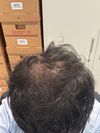
The conversation is about using GHK-Cu, a copper peptide, for hair loss treatment. Users discuss their experiences, dosages, and additional benefits like improved skin and energy.
The user, Virtual_Force3845, shared their progress pictures after using Hims Fin/Min Spray consistently for 3-4 months. They are excited about the progress and have not experienced any side effects. Other users in the conversation shared their own experiences and asked questions about the treatment.
MSM is discussed as a potential treatment for hair regrowth, with mixed opinions on its effectiveness. Some users report faster hair and nail growth, while others question its credibility due to lack of scientific evidence.
Koshine KX-826 has different versions, and the green version uses a plant-based carrier that may be less irritating for those sensitive to propylene glycol. Users report irritation with some versions of KX-826.
TDM-105795 is a potential hair growth stimulant that works differently from minoxidil and could be used alongside it for enhanced growth. It completed phase 2 trials in 2024, with a medium to high chance of release in 2026, but lacks recent updates or phase 3 trial information.
Probiotics like L. reuteri ATCC PTA 6475 and B. longum BB536 may improve hair growth and density by reducing inflammation and reversing DHT damage. The user is trialing these probiotics personally, ordering them from the U.S. to Canada, and plans to continue if no adverse effects occur.
People are discussing their reactions if PP405 fails in phase 3 trials, with some expressing skepticism and others holding onto hope for future treatments like GT20029 and Breezula. Many mention continuing with existing treatments like minoxidil and finasteride, while others express disappointment and consider alternative solutions.
The user shared progress on hair regrowth using finasteride, minoxidil, dermastamp, Nizoral shampoo, and scalp massage, showing significant improvement in three months. The user reported no side effects and asked if early regrowth is normal.
The user is applying topical finasteride with stemoxydine for hair loss and has noticed hair thickening but no regrowth after two months. They also report high SHBG and prolactin levels and a lack of morning erections, even on low doses of medication.
PP405 shows promise in activating dormant hair follicles and increasing hair counts but lacks detailed efficacy data compared to minoxidil and finasteride. Opinions are mixed, with some optimism and skepticism about its effectiveness.
The user stopped using finasteride after two weeks due to gynecomastia symptoms and shared blood work results questioning if they indicate a cause for the side effects. The user is considering restarting finasteride and seeking advice on their blood work levels in relation to gynecomastia.
The conversation discusses GT20029, a drug in Phase II trials that targets androgen receptors with minimal systemic effects, and TDM-105795, a growth stimulant with a different mechanism than minoxidil that may revive papilla stem cells. Both are potential new treatments for hair loss.
A 21-year-old male experienced significant hair regrowth using minoxidil 5% topical, oral finasteride 1mg, derma stamping, and ketoconazole shampoo over several months. He reported no side effects and remains optimistic about further progress.
The user plans to switch to oral finasteride and oral minoxidil due to insufficient results from PRP, topical minoxidil, and mild DHT inhibitors. They seek advice on purchasing these medications from My.India, questioning its trustworthiness.
AHK-cu peptides are discussed for hair growth, with users comparing them to GHK-cu peptides and sharing sources to buy. AHK-cu is noted as more expensive, and users express interest in finding cheaper, reliable vendors.
The conversation discusses using Rogain foam as a solvent for topical finasteride due to an allergy to propylene glycol. The foam's ingredients, including alcohol SD 40B, are considered suitable for dissolving finasteride for easier application without skin irritation.
PP405 significantly improves hair density, outperforming finasteride, with 31% of users seeing over 20% improvement in four weeks. Concerns exist about its availability, cost, and long-term effects.
The user shared progress photos of hair regrowth using a topical spray with 0.3% finasteride and 6% minoxidil, applied daily. They experienced significant shedding initially, but hair loss stopped and noticeable regrowth began around 16-18 months, with improved hair color and no side effects.
A user is making their own dutasteride solution using MCT oil but is concerned about its effectiveness and bioavailability. They are considering using propylene glycol or adding ethanol for better results, while others suggest the current dosage might be excessive.
The conversation discusses making oral minoxidil from minoxidil powder as a backup plan due to the unavailability of packaged oral minoxidil in Turkey. The user has a capsule machine and some chemistry knowledge but lacks professional equipment.
Hair loss may be linked to the TRPS1 gene and protein, not just DHT. Amplifica's AMP-303 targets mesenchymal stem cells and shows promise in treating hair loss, unlike Pelage's PP405.
Pelage Pharmaceuticals' PP405 aims to treat hair loss by reactivating dormant hair follicle stem cells, showing promising results in early trials. The company plans to present their findings at the American Academy of Dermatology Annual Meeting in 2026.
A user is organizing a group buy for various compounds aimed at reversing hair loss and gray hair, and improving brain health and fat loss. The user has developed a treatment plan based on extensive research and is inviting others to participate, with the option to choose only the compounds they need.
The conversation is about seeking information on GT20029 from Kintor Pharmaceutical as a potential hair loss cure and inquiring about experiences with CosmeaRNA.
A new hair loss treatment, pp405, may regrow hair better than finasteride and minoxidil, with potential availability by 2028. However, there is skepticism about its effectiveness and commercialization timeline.
A user shared their 6-month progress using 1mg finasteride, daily minoxidil, 1.5mm microneedling twice a week, biotin, and Nizoral shampoo, showing significant hair regrowth. Other users were impressed, noting the regrowth resembled a hair transplant.
The user is experiencing severe hair shedding after taking finasteride for three weeks and plans to stop due to gynecomastia symptoms. Stopping finasteride may lead to some hair regrowth, but benefits from the treatment might be lost; topical alternatives are suggested.
People are hopeful about future hair loss treatments like PP405, GT20029, and VDPHL01, while some are currently using finasteride and minoxidil. There is skepticism about the effectiveness of new treatments, and some advise against hair transplants until more promising drugs are available.