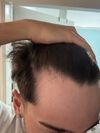
A user is developing a tool to track hair density, aiming to help those using treatments like minoxidil. They seek feedback on the tool's usefulness and are considering a low-cost model to cover expenses.
The user is using Minoxidil, Finasteride, Nizoral, Nutrafol supplements, and PRP sessions for hair loss treatment. They are concerned about the effectiveness of these treatments and whether they should continue or consider a hair transplant.
The conversation is about a user's one-year progress after a 3,200 graft FUE hair transplant and their use of oral finasteride and minoxidil. People are impressed with the results and are discussing the effectiveness and cost of the treatment.
Tretinoin and microneedling both enhance hair growth through different mechanisms, with microneedling being considered safe for long-term use. Optimal microneedling needle length varies, but 0.8 mm is suggested for hair growth, and a Dermastamp is recommended to avoid skin damage.
A user shared their positive experience with a 2200 graft FUE hair transplant at DiStefano Hair Restoration in Worcester, MA, praising Dr. Heinis and his staff for their care. The user is also using oral Dutasteride, topical Minoxidil, and vitamins D and B.
Finasteride can cause gynecomastia, which may be reversible by stopping the drug and using selective estrogen receptor modulators (SERMs) like tamoxifen. Lifestyle changes such as weight loss and avoiding alcohol can also help, but surgery may be needed if the condition persists.
Switching from propylene glycol to glycerin in topical finasteride may reduce systemic absorption and side effects while maintaining local scalp DHT suppression. Concerns exist about glycerin's ability to deliver the full dose to hair follicles.
The user is using topical Minoxidil, finasteride, tretinoin, redensyl, and dermastamping for hair loss treatment. There is debate about the effectiveness of these treatments, with suggestions to improve photo comparisons for better assessment.
The user is considering adding tretinoin cream to their hair treatment routine, which currently includes minoxidil and finasteride, to enhance results. They seek advice on its effectiveness, usage frequency, side effects, and whether it complements microneedling.
The conversation discusses using tretinoin as an additional treatment for hair loss alongside minoxidil, with plans to test its effectiveness by applying it to only one side of the scalp. The user intends to start this experiment after using minoxidil for a year.
The conversation discusses hair regrowth after 100 days using 5mg Minoxidil and 0.5mg Dutasteride, focusing on changes in the temples and hairline. Users debate the effectiveness due to inconsistent photo comparisons.
A user ordered a topical dutasteride gel with tretinoin for hair loss after unsatisfactory results with minoxidil and finasteride. Another user shared their experience with the same product, noting its pleasant smell and feel but difficulty in application and uncertainty about its absorption and frequency of use.
Hair loss treatments, specifically, discussing the effectiveness and side effects of finasteride, minoxidil, and RU58841 in various microdoses. It also includes an updated graph which provides information on how different doses affect DHT levels, scalp skin and serum androgen levels, as well as hair count.
A user in England seeks advice on where to get a custom blood test for DHT, PRL, estradiol, SHBG, testosterone, and free testosterone before starting dutasteride. They want a baseline measurement before beginning treatment.
User "logart89" claims DUT 3 times a week is better than daily FIN for hair loss. Their routine includes DUT, topical DUT, stemoxydine and alfatradiol mix, 5% minoxidil with tretinoin, and weekly derma stamping.
The conversation discusses why CB-03-01, a potential hair loss treatment, isn't widely discussed despite evidence of its effectiveness and safety. Some users mention other treatments like melatonin, procianidin b2, and RU58841, debating their effectiveness and safety.
A 40-year-old shared their positive experience with a second hair transplant at HDC Cyprus, involving 4148 grafts and costing around 9,000 euros. They used oral minoxidil, Dutasteride, biotin, and vitamins to aid recovery and were pleased with the results.
The conversation discusses sourcing topical dutasteride for hair loss treatment, with mentions of Dr. Mwamba's products and Farmacia Prati as potential suppliers. Additional treatments like topical tocotrienols and botox are suggested as extensions to the regimen.
A transwoman shared her 11-month progress using hormone replacement therapy (HRT), finasteride, and minoxidil, reporting significant hair regrowth and satisfaction with the results. The discussion included various perspectives on HRT, its effects on hair and sexual function, and personal experiences with similar treatments.
Tazarotene shows potential as a standalone treatment for hair regrowth by stimulating new hair follicle formation and promoting angiogenesis, similar to microneedling effects. It can be used topically without minoxidil, but users should start with a low concentration to avoid irritation.
The conversation discusses various treatments for hair loss, including minoxidil, finasteride, and topical dutasteride, with users debating their effectiveness and side effects. Despite the treatments, many believe androgenetic alopecia (AGA) ultimately prevails in the long term.
The conversation discusses affordable low-level light therapy (LLLT) products for hair loss, with users debating the effectiveness of red LEDs versus lasers. The original poster is already using finasteride, minoxidil, ketoconazole, and microneedling, and is seeking budget-friendly LLLT options to add to their regimen.
A 21-year-old male suffering from male pattern baldness is using topical finasteride and minoxidil, and oral minoxidil. His bloodwork shows normal DHT levels and slightly high testosterone, leading to discussions about the role of DHT sensitivity in hair loss, the potential impact of finasteride on his DHT levels, and the suggestion to proceed with oral finasteride due to his high testosterone.
The user is experimenting with GHK-Cu and AHK-Cu to stop hair loss and promote hair growth, using a serum from Etsy and injectable GHK-Cu. They supplement this with dermastamping and ketoconazole shampoo.
After 4 months of using topical finasteride and minoxidil, blood tests showed increased E2, Test, and Prolactine levels. The user is concerned about potential side effects like gyno and is seeking advice on managing these values.
A user is considering using 70% isopropyl alcohol with glycerin as a carrier for topical finasteride for hair loss but is concerned about its safety compared to ethanol. They are unsure where to buy ethanol without toxic methanol.
Before starting hair loss treatment, it's suggested to undergo various blood and health tests to minimize side effects. The checklist includes tests for kidney function, liver enzymes, blood sugar, vitamins, hormones, and more.
The user underwent a hair transplant in Boston, initially dissatisfied with the results, but later achieved significant improvement in hair density and natural appearance after consulting a different surgeon. They used finasteride, minoxidil, and low-level laser therapy as part of their treatment.
The conversation is about the effectiveness of alfatradiol for hair loss and whether it can be used with or as a replacement for common treatments like minoxidil, finasteride, and RU58841. The user is seeking feedback on others' experiences with alfatradiol.
The user is experiencing a greasy and dandruff-prone scalp from using RU58841 with glycerin and is seeking alternative carriers for seborrheic dermatitis. They are also using dutasteride 0.5mg.