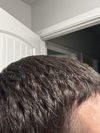
User asks if washing hair or using hair fibers after minoxidil dries is okay and if dry scalp means full absorption. Some doctors and sources say 50-75% absorption occurs after an hour.
A user shared their 7-month progress on hair regrowth using a regimen of dutasteride, minoxidil, stemoxydine, microneedling, and keto shampoo. They noted significant improvement, particularly in vellus hair growth, and discussed the potential addition of RU58841, though they experienced side effects with it previously.
The conversation is about a user experiencing hair shedding after using a brand of RU58841, questioning its effectiveness and safety. Concerns are raised about RU58841 being an abandoned research chemical and the use of heavy oils like castor and argan oil potentially affecting absorption.
A 48-year-old who had been thinning since 25 and reached NW4-5 baldness saw no improvement with 1mg/day finasteride and 5% minoxidil twice a day after 8 months. After copying another person's routine, they now use 0.5mg finasteride, ketoconazole shampoo weekly, daily microneedling with 0.5mm and 1mm once a week, and apply minoxidil twice daily, resulting in baby hairs on their bald spot and temples after three months.
Low Dose Naltrexone (LDN) may reduce inflammation in alopecia conditions. It is discussed as a potential adjunct treatment with finasteride or dutasteride for androgenic alopecia.
The conversation discusses a hair loss treatment called "nanoxidil," which is similar to minoxidil but with better absorption. Users are curious about its effectiveness for hair regrowth.
The user has been using a hair solution with 0.3% finasteride and 5% minoxidil, along with microneedling, but is experiencing more thinning on one side. Suggestions include checking application techniques and ensuring microneedling is not overdone.
The conversation discusses using pumpkin seed oil and rosemary oil for hair thinning, with skepticism about their effectiveness compared to pharmaceutical options like finasteride and minoxidil. Some users suggest trying natural treatments, while others emphasize the proven success of pharmaceuticals.
The conversation discusses using RU58841 at a 2% concentration as an alternative due to side effects from finasteride. The user plans to start with a lower concentration and increase if necessary.
The post discusses a phase 2 trial for HMI-115, a hair loss treatment, in China, specifically seeking volunteers aged 18-65 with Norwood 3 vertex, 4, and 5 hair loss. The conversation includes questions about the specific recruitment criteria and how to volunteer.
Microneedling combined with latanoprost may convert vellus hairs to transitional or terminal hairs. The user suggests using oral minoxidil to increase vellus hair, then applying a high concentration of latanoprost with microneedling for conversion.
Using a combination of finasteride, minoxidil, dermarolling, and RU58841 to treat hair loss. Participants discussed the time commitment required for treatment and the effectiveness of different dosages.
Topical minoxidil can cause water retention, making the face appear swollen. Switching from liquid to foam and reducing application frequency may help; using dandelion root extract as a diuretic is also suggested.
The user is considering switching from Minoxidil to Nanoxidil due to severe fatigue while continuing with Topical Finasteride and oral Dutasteride. They hope to maintain hair gains without the side effects of Minoxidil.
The user uses a 1.5mm derma stamp weekly for hair loss and applies minoxidil afterward, feeling a slight burn but no bleeding. They question if bleeding, seen in others using a derma pen, indicates proper technique.
Revivhair serum is discussed as a potential treatment for mild hair thinning, but skepticism exists about its effectiveness without proven treatments like finasteride, dutasteride, or minoxidil. Users share experiences with various treatments, noting side effects and exploring alternatives like topical dutasteride and alfatradiol.
User discusses hair regrowth using RU58841, minoxidil, and dutasteride. Many users praise the progress and ask about the treatments' effectiveness and side effects.
User shared 15-month results using finasteride and minoxidil, showing no loss but minimal growth, considering a hair transplant. Replies suggest starting treatment earlier, continuing current treatment, or getting a transplant.
A user is considering whether to continue using RU58841 or switch to hair system patches for a receding hairline, while already using finasteride, oral minoxidil, and microneedling. Another user suggests buying RU58841 in powder form to save money and notes the original poster's hair has significantly improved.
A user is attempting to recover from severe hair loss using 1.25mg finasteride, 5mg topical minoxidil twice daily, pyrilutamide for a month, RU58841 for two weeks, and weekly microneedling at 1.5mm. They have seen new hair growth after two months and plan to continue the treatment for a year with the hope of regrowing enough hair for a transplant.
The conversation is about managing allopregnanolone deficiency caused by 5-alpha-reductase inhibitors like finasteride or dutasteride. Specific treatments discussed for hair loss include Minoxidil, finasteride, and RU58841.
The person is using 1mg of finasteride daily, 2mg of minoxidil, and weekly dermarolling with a 1mm needle. They sometimes use topical minoxidil as well.
OP experienced side effects from finasteride and is considering trying RU58841 for hair loss, while currently using minoxidil, Stemoxydine, a dermapen, and Nizoral. Another user shared positive results with RU58841, noting no side effects and maintained hair thickness after stopping its use.
Peptides like GHK-Cu are discussed for hair regrowth, with mixed results; some users report no regrowth, while others notice thicker hair. Topical application is common, and proper sourcing and mixing are emphasized.
The user is experiencing positive results in hair regrowth using a topical spray with minoxidil and finasteride, along with rosemary and pumpkin seed oil, and derma rolling. They note the importance of patience in the process.
The user shares their experience with hair loss treatments, including oral finasteride, oral minoxidil, and a topical lotion for dandruff, expressing dissatisfaction with past treatments like PRP and hair transplants. They seek advice on a DNA test to determine suitable medications and express frustration with dermatologists' advice.
The user reported using Morr-F (topical finasteride and minoxidil), microneedling, castor and coconut oil, rosemary oil, and various supplements. They observed some hair regrowth, particularly fine hair on the crown and hairline, after four months of needling and three weeks of Morr-F.
GHK-Cu is discussed for its potential anti-aging and healing properties, with some users considering its effects on hair growth. One user mentions using Folligen Spray and topical finasteride, noting improved healing but uncertain hair growth results.
People are discussing the use of an untested hair loss treatment called PP405, which is not available on the grey market. Some users are trying a mimic formulation called HP3, reporting thicker hair but no new growth yet.