Search
for
Sort by
Community Join
810-840 / 1000+ resultscommunity Q1 2024 is done. And kintor is completely silent about GT20029.
The conversation discusses the lack of updates on GT20029 for hair loss treatment, with some users noting recent reports indicating ongoing data collection. There are mentions of other treatments like Pyrilutamide and Minoxidil.
community Is 2-deoxy-D-ribose (2dDR) good for human hair?
Topical 2-deoxy-D-ribose (2dDR) regrows hair in mice almost as well as 2% Minoxidil. However, 2dDR may contribute to oxidative stress and hair loss due to the formation of advanced glycation end products (AGEs).
community Lion Mane Part 2: Microneedling with Topicals, beneficial compounds, maybe?
The conversation discusses microneedling techniques and the use of Minoxidil, copper peptides, EGF, FGF, ceramides, and hydration serums to enhance hair growth. It explores optimizing scalp conditions and the potential benefits of various compounds in conjunction with microneedling.
community Feeling A LOT of stubble on my scalp (I'm a diffuse thinner). What does this mean?
A user with diffuse thinning noticed stubble-like hairs on their scalp after using 2% ketoconazole shampoo, dermarolling, castor oil, Vitamin D3, biotin, and iron supplements. They are unsure if this indicates regrowth or miniaturized hairs.
community Can MPB come and go?
Hair loss can stabilize at a certain level and may not be permanent, especially if hormonal. The user experienced hair regrowth after using fish oil and derma rolling, but is hesitant to use Minoxidil or finasteride.
community Finally did my hairline transplant at 21
community 5 months on dermaroller 0.5 mm + min5%, 3 months on fin. M21
A 21-year-old has been using a 0.5 mm dermaroller weekly with 5% Minoxidil for five months and Finasteride for three months to address hair loss. The conversation includes questions about the frequency of dermarolling.
community RU58841 3 Month Results while abusing PEDs
RU58841 helped regrow hairline without side effects for a bodybuilder using PEDs. The treatment included RU58841, finasteride, minoxidil, GKH-Cu, microneedling, and HGH.
community New & Improved Hair Growth Stack for Maximum Results
A user shared a hair growth stack using minoxidil sulfate, valproic acid, bimatoprost, blue copper peptide, and other ingredients, emphasizing a gel-based formula for better skin tolerance. Another user suggested adding a 5-alpha-reductase inhibitor like finasteride or dutasteride for more effective long-term results.
community Has anyone tried Foligain's DHT blocker?
community Pre-mixed RU58841 in the KB solution vs PG solution?
Choosing between KB and PG solutions for applying RU58841, considering factors like scalp oiliness and absorption. Some users prefer KB for being gentler, while others use PG and recommend washing hair before application for better results.
community Worth a go: Collagen, Chondrotin Sulfate, Hyaluronic Acid, and MSM
Collagen, chondroitin sulfate, hyaluronic acid, and MSM are used to improve hair appearance, making it fuller, thicker, and shinier. The user noticed significant hair improvement after resuming these supplements.
community Updates on the Sulforaphane group?
Hair loss discussion involves experimenting with Sulforaphane from broccoli sprouts and possibly procyanidin b2. People seek updates on progress and if it's worth adding to treatment stack like microneedling.
community Meds aside, what do you guys use to thicken hair
community DIY do it yourself prp, meso and other crazy procedures.
The conversation discusses DIY cosmetic procedures like PRP, mesotherapy, and micro-needling, with some users experimenting with Minoxidil, finasteride, and RU58841 for hair loss. It highlights a community of mostly older women performing these treatments themselves.
community Micro needling and ptd-dbm progress
The conversation is about using micro needling and PTD-DBM for hair loss treatment. The user applies PTD-DBM drops on weekdays and performs micro needling weekly.
community How long are Pelage going to milk the phase 2a results of PP405?
PP405, a potential hair loss treatment, is facing delays in releasing Phase 2 results, causing frustration among users who compare it to past failed treatments. Despite skepticism, some remain hopeful about PP405's future, while others discuss alternative treatments like Clascoterone and its expected market release.
community Minoxidil + MN is lowering my hairline, but mostly just the center?
Minoxidil and microneedling are causing new hair growth, particularly in the center of the hairline, creating a more prominent M shape. Users discuss the progress and potential benefits of the treatment.
community My current regimen for MPB
The user is treating hair loss with dermarolling, a laser helmet, scalp massages, and Nizoral. They stopped using minoxidil and finasteride and are considering pumpkin seed oil and sulforaphane.
community folligenz liposomal minoxidil sulfate
Folligenz liposomal minoxidil sulfate is being discussed for its effectiveness and cost, with users comparing it to regular minoxidil and tretinoin. One user found no difference with the 10% version and noted that a lower tretinoin percentage reduced side effects like skin peeling.
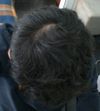
community 25 M Could this be the start for AGA? Should I be worried?
The user is experiencing hair loss, initially diagnosed as Telogen Effluvium due to stress, but is concerned it might be Androgenetic Alopecia (AGA). A suggestion was made to consider using Minoxidil or Finasteride if the condition worsens.
community Min/Fin/Dut and Topical Biotin progress pics
User tried Min/Fin/Dut and Topical Biotin for hair loss. Some say it's not working, while others appreciate the progress.
community ABS-201 Trial - What should I know going in
The conversation is about a user preparing to join the ABS-201 clinical trial for hair loss treatment, which involves a prolactin inhibitor. The user plans to update others on their progress if enrolled.
community Recent discovered thinning hair, taking steps to diagnose.
A 43-year-old noticed significant hair thinning and is using topical minoxidil, dermarolling, Alpecin, biotin, zinc, copper, vitamin D, and rosemary oil. They plan to see an endocrinologist and have blood tests scheduled to investigate further.
community Minoxidil temple and hairline results, true progress or placebo? as well as a few other questions
community Dr Gokhan Gur. 2nd HT - 1849 grafts. Focus on midscalp and crown
A user shared their experience with a second hair transplant by Dr. Gokhan Gur, focusing on the midscalp and crown with 1849 grafts. Their current treatment includes dutasteride, finasteride, oral and topical minoxidil, and Nizoral shampoo.
community Progress update Finasteride 1mg, 6 months update (20M)l
community RU58841 and some major questions?
A user is asking about the effectiveness and dosage of RU58841 for hair loss, comparing it to Minoxidil and discussing its long-term use alongside Finasteride. They plan to use RU58841 and Finasteride for several years before potentially switching to GT20029.
community Get excited: The topical anti-androgen that's going to change everything
CB-03-01 is a topical anti-androgen with low absorption, offering potential as a side-effect-free alternative to Finasteride/Dutasteride for hair loss. It's in stage 2 clinical trials for acne and showing promise for male pattern baldness.