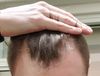
The user is seeking alternative hair loss treatments due to side effects from finasteride and minoxidil. They are inquiring about the availability of gt20029 from u-lab.
A user's successful hair regrowth journey using a cocktail of finasteride, minoxidil, and ketoconazole. The user started seeing noticeable results after 8 months and also incorporated saw palmetto, biotin, keratin, and dermarolling into their routine.
PP405 and GT20029 are new hair loss treatments with different mechanisms from traditional options like Minoxidil and Finasteride. PP405 targets hair follicle stem cells to reactivate growth, while GT20029 works as an androgen receptor deleter, both requiring ongoing use for effectiveness.
The conversation discusses the potential use of verteporfin for hair loss treatment, with one user mentioning their surgeon's interest in trying it and another noting its research status and clinical use as a YAP inhibitor. Some users debate the market size, availability of generics, and the optimism in the hair loss community regarding new treatments.
The conversation is about the timeline for Kintor's phase 3 trials for GT20029 and the potential release of the product in three years. It also mentions treatments like Minoxidil, finasteride, and RU58841.
PP405 shows significantly better early-stage hair regrowth results compared to minoxidil and finasteride, with 31% of users experiencing over 20% density increase in 4–8 weeks. Minoxidil and finasteride show minimal or no visible regrowth in the same timeframe.
GT20029 and KX826 are promising hair loss treatments, with GT20029 increasing hair count and KX826 showing significant results. KX826 may be a good alternative for those who can't use finasteride or dutasteride, though results vary.
Recruitment for a verteporfin trial and a separate hair cloning trial using verteporfin and other methods is underway, with locations in Jordan, NYC, Beverly Hills, and Memphis. Dr. Bloxham is conducting the hair cloning trial, and interested participants are encouraged to contact him directly.
Kintor's GT20029, a treatment for hair loss, has completed Phase 1 successfully, showing promise as an androgen receptor degrader that could potentially regrow hair. It is considered more effective than Pyrilutamide, with infrequent dosing and minimal systemic absorption.
Lighting can significantly affect the perception of hair progress in photos. The user has been using dutasteride and oral minoxidil for hair loss, noting improvements after switching from finasteride.
The conversation is about the anticipated release date of phase II results for a hair loss treatment called GT20029 and the cautious optimism surrounding it due to past disappointments with similar treatments. Users expect an update in the next few months.
A user tried the Rapid Minoxidil Response Test (TrichoGene) and found they don't respond to topical Minoxidil, so they added tretinoin. The test is available internationally, and another user is considering ordering it.
The conversation is about choosing the right concentration of tretinoin cream to enhance the absorption of minoxidil for hair loss treatment. The options discussed are 0.5, 0.05, 0.25, and 1mg/g concentrations.
A user experienced side effects from finasteride and switched to using GHK-Cu for hairline improvement, noticing some positive changes after three months. They used a 2mg daily dose via subcutaneous injections and reported increased hair density and baby hairs, though results were not dramatic.
The conversation discusses positive initial trial results for GT20029, a topical compound for hair loss that degrades androgen receptors, potentially requiring only weekly application. Participants express hope for this treatment to be more effective and convenient than current options like Minoxidil, Finasteride, and RU58841.
The user shared progress pictures showing hair improvement after using Minoxidil for over a year and Finasteride for 8 months. They use a topical spray of Minoxidil twice a day and have seen positive changes in hair density and appearance.
The conversation is about the anticipation of results for a hair loss treatment study, specifically for GT20029, with expectations for the results to be released in the first quarter of 2024. No specific treatments were discussed.
The conversation discusses the "bleach test" for minoxidil, where minoxidil turns yellow when mixed with bleach. The user tested liquid minoxidil, rogaine foam, and minoxidil tablets, all of which turned yellow, suggesting a reaction specific to minoxidil.
Finasteride and Nizoral shampoo with Ketoconazole are used for hair loss treatment. Liquid Chromatography–Mass Spectrometry (LC-MS) is recommended over Enzyme-Linked Immunosorbent Assay (ELISA) for more accurate DHT testing.
Comparing the effectiveness of RU58841, Pyrilutamide and CB-03-01 as treatments for hair loss, with people discussing different aspects such as binding affinity, time of inhibition, safety data and cost.
A user is making a homemade topical finasteride solution by dissolving crushed finasteride tablets in ethanol and PG. They are unsure if the final solution maintains the intended concentration after filtering and are considering adding more ethanol to ensure accuracy.
PG solvent is considered superior to K&B solvent for RU58841 and Pyralutamide due to cost and effectiveness. The user questions why they should use K&B when PG offers more benefits.
The conversation is about the stability of pyrilutamide in different solutions. The user is asking if a 70/30 ethanol/pg solution with 4% water will degrade pyrilutamide.