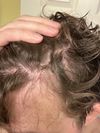
A user wants to try melatonin for hair loss by mixing melatonin powder with a topical oil serum. They are asking if this mixture is possible and effective.
Castor oil's effectiveness for hair growth is debated, with concerns about its impact on skin health and prostaglandin levels. Some users suggest combining it with coconut oil and using it alongside finasteride for better results, while others recommend sticking to proven synthetic treatments.
A humorous discussion about a scalp massager used in a barber shop, with no mention of specific hair loss treatments like Minoxidil, finasteride, or RU58841. The massager is described as pleasurable but not a treatment for hair loss.
The conversation is about using melatonin for hair loss, with users discussing different products and methods for topical application. They mention concerns about ingredients and cost, and one user suggests a magnesium scalp serum with melatonin.
A user noticed baby hairs after combing out locs and has been applying castor, rosemary, and peppermint oil daily. They are curious about progress, sharing photos from different stages.
Hair loss discussion involves experimenting with Sulforaphane from broccoli sprouts and possibly procyanidin b2. People seek updates on progress and if it's worth adding to treatment stack like microneedling.
A user is considering making their own topical finasteride from crushed Propecia tablets and asks if there would be any difference compared to pharmacy-made versions or products like Essegen-F. They note that making drugs at home is generally not recommended.
Applying Epidermal Growth Factor (EGF) topically may improve skin and potentially promote scalp health and hair growth, especially after microneedling. The user shares their positive experience with EGF and provides a product link.
The user is seeking advice on a hair loss treatment called Ell Cranell, which contains Alfatradiol. Another user shared information from a study stating that Alfatradiol only slows down or stabilizes hair loss, but does not increase hair density or thickness.
A user shared their 4-month progress using oral Minoxidil (3mg) and Finasteride (1.1mg) with a 0.5mm derma roller twice a week, noting visible improvement. Others congratulated and encouraged them to continue the treatment.
Individuals with oily scalps, dandruff, and diffuse thinning hair loss who have managed to either halt the loss or regrow their hair by using topical finasteride and minoxidil as well as microneedling and ketoconazole 2% shampoo.
The conversation discusses creating a topical finasteride solution by crushing finasteride pills and mixing them with minoxidil to reduce side effects. Users share experiences and methods for making the solution, with some suggesting using a premade topical finasteride if available.
The user is seeking a way to obtain 5mg finasteride in Germany, as local dermatologists refuse to prescribe it. They are considering online options but have only found 1mg pills available.
A 28-year-old male has been using oral finasteride and minoxidil for over a year without seeing significant results in hair thickness, particularly in the front. He is considering adding dermastamping to his routine and is exploring whether topical treatments might be more effective.
The user is considering making a homemade topical finasteride solution using an ethanol-based carrier. They are inquiring if a solution containing partially denatured ethyl alcohol and benzalkonium chloride is suitable.
The conversation is about obtaining custom-compounded topical finasteride in Germany due to side effects from oral finasteride. The user seeks a lower concentration solution separate from minoxidil, and others suggest self-mixing or trying alternatives like dutasteride.
GHK-Cu and Acetyl Tetrapeptide-3 are ineffective for hair regrowth according to user experiences. Effective treatments mentioned are finasteride, dutasteride, and minoxidil.
Rhamnose may promote hair growth and pigmentation, suggesting it as a potential hair loss treatment. The conversation discusses its potential alongside known treatments like Minoxidil, finasteride, and RU58841.
The conversation discusses the availability of GT20029, a new topical hair loss treatment with fewer side effects than Minoxidil or finasteride. Users suggest using finasteride to preserve hair until GT20029 becomes available.
A clean diet, including cutting sugar, gluten, and dairy, improved hair health and reduced shedding for a user on oral minoxidil and finasteride, but reverting to an old diet worsened hair condition. While diet impacts hair health, genetic factors and treatments like topical ketoconazole and hydrocortisone are also important for managing hair loss.
OP wants to increase pyrilutamide concentration from 0.5% to 1% while already using finasteride. Users suggest waiting for a commercial 1% solution and caution against using grey market products.
The conversation is about the potential release of GT20029 on the grey market and concerns about its safety and authenticity. One user advises waiting for the official release by Kintor.
The user shared progress pictures after four months of using finasteride, minoxidil, a dermaroller, and biotin for hair loss. They discussed their treatment regimen and results.
A user shared progress pictures showing significant hair regrowth from using 1mg finasteride, Minoxidil, vitamins, and dermarolling over 4 months. The user reported no side effects and takes a generic multivitamin and biotin.
The user noticed hair regrowth after supplementing with vitamin D, magnesium, zinc, and vitamin B12, alongside using minoxidil for 3 years. They observed a lower hairline and improved density, supported by photographic evidence.
Carpronium chloride 5% is a hair growth treatment in Japan, considered less effective than minoxidil or finasteride. Some users report moderate success with it, but its efficacy is not well-verified.