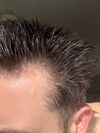
The user discusses their hair loss experience, exploring various hypotheses including thyroid levels, vitamin D, DHEA, nutritional deficiency, diabetes, seborrheic dermatitis, lack of nutrition to hair follicles, chronic inflammation, female pattern hair loss causes, cortisol, and prolactin levels. They are currently using finasteride, beta-sitosterol, and have tried topical dutasteride and microneedling therapy.
A user struggles with male pattern baldness and a persistent tingling itch on their crown, trying various treatments like aloe vera, tea tree oil, and Nizoral without success. Another user suggests the itch might be psychosomatic, linked to worrying about hair loss.
Switching from topical to oral minoxidil caused acne breakouts, leading the user to revert to topical use. Finasteride was also used, but acne was suspected to be linked to oral minoxidil.
A 17-year-old using 5% topical minoxidil experienced significant hair shedding after a year, possibly due to a "synchronization shed" and deficiencies in vitamin D and iron. Recommendations include continuing minoxidil, optimizing vitamin D and iron levels, and reducing tretinoin use if scalp irritation occurs.
The user has been using finasteride for 2 years, nizoral for 1.5 years, topical minoxidil for 1 year, and microneedling for 3 months to treat hair loss but hasn't seen improvement or regrowth, even experiencing shedding with new treatments. They are concerned about continued thinning despite the treatments.
A user expressed disappointment that their hair loss worsened after 11 months using topical finasteride with TrichoSol, despite no side effects and initial signs of improvement. They asked for advice and opinions on their treatment and alternatives, with suggestions including switching to oral finasteride or dutasteride, starting minoxidil, and addressing their seborrheic dermatitis with different shampoos or medical advice.
The user experienced significant hair regrowth using 5mg oral Minoxidil and 0.5mg oral Dutasteride daily, with no side effects except increased body and eyebrow hair. They are concerned about progress plateauing but have not experienced shedding.
The user is experiencing increased hair shedding and is concerned about regression despite consistent use of finasteride, minoxidil, and other treatments. The consensus is that this is likely a temporary shedding phase, and adjustments to the dermarolling frequency are suggested.
The user is using oral dutasteride, topical minoxidil (Regaine foam 5%), and ketoconazole shampoo for hair loss, reporting good results with no significant side effects. The user is 26 years old and applies minoxidil once or twice daily.
The user experienced reduced hair loss using an online serum but found it too expensive and is seeking a vendor for ptd-dbm. They are also interested in KY19382 but are unable to find it.
A user shared their experience with microneedling and minoxidil for hair loss, avoiding finasteride due to concerns about systemic hormone effects. They reported slight hair regrowth after one month and plan to continue the regimen, noting improvements in skin sensitivity and managing dandruff with anti-dandruff shampoo.
The user is concerned about hair loss despite taking finasteride and has a hair transplant scheduled. They experience scalp itching and burning, which hasn't been relieved by various treatments, and another user suggests using ghk-cu & ahk-cu serum and Koshine kx-826/pyrilutamide for relief.
The conversation discusses the potential of topical rapamycin, metformin, and alpha-ketoglutarate (a-KG) for hair growth, with skepticism expressed about their effectiveness based on personal experience and existing use. It also mentions AICAR, known as cardarine or GW, which is not suitable for long-term use due to cancer risks in animal studies and its similarity to metformin.
Potential success with the hair loss treatment Pyrilutamide, and possible group buying opportunities for it along with other treatments such as Finasteride and Minoxidil.
A 33-year-old male is experiencing thinning at the temples and hairline, with increased shedding over the past year. The user suspects androgenetic alopecia (AGA) despite AI suggesting a maturing hairline.
Minoxidil use led to excessive eyebrow and forehead hair growth, prompting grooming advice like waxing, tweezing, and shaving. Some suggested reducing dosage or considering electrolysis for permanent hair removal.
The user has been using pyrilutamide 0.5% for over 7 weeks, alongside dutasteride, and noticed some hair improvement, particularly at the temples. They plan to continue and possibly try a 1% solution, with no shedding or side effects reported.
After a year on dutasteride and oral minoxidil, the user experienced significant hair regrowth, improving from Norwood 2 to almost Norwood 1. They added RU58841, microneedling, rosemary oil, GHK-Cu, and annurca apple supplement to their regimen and are now noticing hair loss in the temple area.
The user has been using a topical spray containing finasteride and minoxidil for six months but is experiencing increased hair shedding and concerns about its effectiveness. Suggestions include switching to oral finasteride and minoxidil, consulting a dermatologist, and checking for underlying health issues like thyroid function and nutrient deficiencies.
The user visited a trichologist due to ineffective topical finasteride treatment for hair loss. The trichologist recommended a new regimen including a two-month course of locoidon (cortisone 0.1%), followed by a solution containing minoxidil, hydrocortisone butirrate, estrone, progesterone, tocopherol acetate, trichosol, and transcutol.
User noticed black dots along the hairline and temples, questioning if it's regrowth. They are using a regimen including Dutasteride, oral and topical Minoxidil, and a compounded topical treatment.
Obscure hair loss topicals like Alfatradiol, Fluridil, and Stemoxydine are discussed. They may be considered for those not responding well to common treatments like Minoxidil and Finasteride.
The user has been on finasteride for 8 months and minoxidil for 3 months, experiencing minor regrowth at the temples but overall worse hair loss, with constant shedding and itching. They are concerned about thinning on the sides and nape, questioning if it's diffuse unpatterned alopecia (DUPA) and seeking advice on what to do next.
A 40-year-old male experienced significant hair regrowth and no hair fall after 5 months using topical minoxidil, dermarolling with a 1.0mm roller, Nizoral shampoo, and biotin gummies. He previously stopped oral finasteride due to daily pill concerns but now uses topical treatments without noticeable side effects.
Pelage Pharmaceuticals' PP405 aims to treat hair loss by reactivating dormant hair follicle stem cells, showing promising results in early trials. The company plans to present their findings at the American Academy of Dermatology Annual Meeting in 2026.
A user is starting a topical finasteride treatment for diffuse patterned alopecia, having previously used minoxidil without success. They are cautious about side effects and have chosen topical over oral finasteride, while also using Nizoral and biotin in their routine.
The user discusses a galenic hair lotion containing progesterone, estradiol, cyproterone, hydrocortisone butyrate, and cetirizine pheniramine, which has effectively stopped their hair loss over two years. They are curious about the compatibility of finasteride with the lotion's components and note that their trichologist has successfully used minoxidil and finasteride in similar treatments for others.
The conversation discusses the effectiveness of topical tretinoin as a monotherapy for hair loss, with users suggesting it may not be as effective as minoxidil or finasteride. The original poster is considering other options like a phenol peel and is concerned about the risks of derma rolling.