The conversation discusses Melatonin's potential benefits for AGA and a product called "Asatex" by ASATONA AG. The company was uncooperative when contacted for purchase inquiries.
The user experienced hair regrowth over four months using 5% topical minoxidil, oral biotin, and saw palmetto. They also use rosemary and mint conditioner and biotin shampoo.
A user shared that taking vitamin E, specifically tocotrienols, seemed to reduce their hair shedding, and they are also using finasteride, minoxidil, and derma rolling for hair loss. Another user cautioned against high doses of vitamin E due to potential health risks.
The user shared their experience with hair regrowth using a natural approach, including a good diet, multivitamins, pumpkin seed oil, and scalp massages, without using minoxidil or finasteride. They emphasize this method for those with stabilized hair loss around Norwood 1.5 - 2, noting satisfactory progress over a year.
The conversation discusses using Sandalore for hair loss treatment, with a focus on finding the correct concentration for a topical lotion. The consensus is to start with a 0.1% concentration due to potential scalp irritation at higher levels.
Finasteride, dutasteride, saw palmetto, caffeine, spironolactone, acetyltetrapeptides, tea tree oil, hydrocortisone, zinc pyrithione, latanoprost, melatonin, marine protein supplements, PRP, microneedling, and valproate are discussed as treatments for hair loss. DHT reduction and inflammation control are key strategies.
The conversation is about identifying ingredients in a scalp serum and their effects on DHT levels. The serum contains various ingredients like Aqua, Biotin, and Oleanolic Acid.
MCT oil helps reduce dandruff, flaking, and itching, and may slow hair loss progression. Eliminating sugar and dairy also stabilizes hair loss, while zinc, sugar, and dairy can worsen scalp conditions.
The user added P5P (vitamin B6) to their shampoo to reduce scalp itch, which improved significantly. They have been using finasteride for hair loss but are exploring additional treatments like topical antiandrogens and prolactin inhibitors.
A user shared an 8-month hair loss treatment progress using daily saw palmetto and biotin capsules, weekly dermarolling, and a scalp lotion mix of castor, jojoba, and rosemary oils, avoiding finasteride and minoxidil due to side effects and cost. The user reported encouraging progress with slight hairline improvement and better crown area, attributing most success to dermarolling.
GT20029 showed significant hair growth and safety in phase II trials, with no adverse sexual events. Users are hopeful but concerned about future costs and systemic effects.
A user is considering a topical hair loss treatment with Bimatoprost 0.03%, Dutasteride 0.1%, Minoxidil 7%, and Tretinoin 0.015%, and is unsure about adding oral finasteride due to potential side effects. Another user suggests microneedling and mentions the benefits of a high protein and omega-3 diet for hair health.
A user experienced significant hair shedding and thinning after using oral castor oil for hair loss. Other users suggested seeing a dermatologist and noted that castor oil is typically used for constipation.
The conversation discusses hair regrowth strategies, including using dutasteride, minoxidil, finasteride, dermastamping, soy, curcumin, and possibly castor oil. Suggestions also include increasing dutasteride dosage, using oral minoxidil, topical finasteride, and tretinoin to enhance minoxidil efficacy.
User reported hair regrowth and thicker hair after using rosemary oil, zinc, biotin, vitamin D, and a better diet. They believe rosemary oil contributed the most to the improvement.
Hair loss discussion mentions using estrogen mixed with growth stimulants like oral minoxidil for scalp hair growth. Idea proposed for an artificial SARM-estrogen that only affects hair without body side effects.
The user is considering adding RU58841 to liquid minoxidil without propylene glycol (PG) due to an allergy and is asking if this combination is effective and if PG is necessary. They have been using finasteride and minoxidil foam, plan to use RU58841 with liquid minoxidil in the evening, and continue finasteride.
A user successfully regrew hair using finasteride, minoxidil, ketoconazole shampoo, biotin supplements, and rosemary mint oil, despite initial side effects. They highlighted the need for commitment, a healthy lifestyle, and being a "hyper responder" to treatments.
Taking CoQ10 and fish oil supplements may lead to increased body hair growth and a crawling sensation on the scalp and skin. The user suspects these supplements could be linked to hair growth, possibly due to their effects on heart health and cholesterol management.
The conversation is about creating a custom hair loss treatment by mixing Kirkland Minoxidil with latanoprost, sandalore, valproic acid, and RU58841. The user is seeking suggestions or advice on this mixture.
The user is attempting to regrow hair using natural methods like microneedling, rosemary oil, and capsaicin tincture, avoiding medications like finasteride and minoxidil due to past health issues. Feedback suggests these methods are ineffective, with many recommending shaving or considering a hair system instead.
The conversation is about whether to use gloves when applying 5% RU58841 to avoid systemic absorption and if washing hands with water is sufficient. Users question the concern, noting it is applied to the scalp.
White peony root extract is discussed as a potential treatment for hair loss. The conversation questions if anyone has tried it or researched its use in traditional Chinese medicine.
The conversation discusses a topical hair loss treatment containing 0.1% dutasteride, 6% minoxidil, tretinoin, and ketoconazole. The user is asking for opinions on the effectiveness of this solution.
The conversation discusses the potential of Verteporfin for hair regeneration and improving hair transplant surgery to leave no scars. Specific treatments mentioned include Minoxidil, Finasteride, and RU58841.
The user experienced anxiety and side effects from topical finasteride and is considering switching to saw palmetto. Another user reported no improvement with saw palmetto and experienced liver issues.
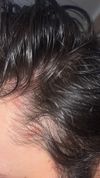
The user is experiencing scalp irritation and hair thinning, possibly due to stress, with red patches on the face and dry skin. They are considering seeing a dermatologist and have used tea tree and rosemary oil.
A user is considering switching from regular 5% minoxidil foam to a compounded 5% minoxidil spray with added caffeine, melatonin, and tretinoin for easier application and potentially better results. Another user mentions that tretinoin can enhance minoxidil's effectiveness by converting it to its active form.