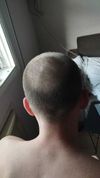
User asks about Redensyl as a substitute for Minoxidil due to side effects. Another user suggests trying Ordinary Hair Serum with dermarolling for improved hair quality.
A 26-year-old male with grade 3 hair loss is using 2.5 mg oral minoxidil, 1 mg finasteride, 5% minoxidil, ketoconazole shampoo, and kLM d3. He plans to post progress pictures every 6 weeks and is seeking suggestions.
A user experienced positive hair regrowth after 9 months using Dutasteride (0.5mg daily) and oral Minoxidil (2.5mg daily) without side effects and plans a hair transplant. They noted the cost-effectiveness of oral Minoxidil and discussed hair loss treatments, including Finasteride.
Diffuse thinners often experience more hair regrowth with DHT blockers like finasteride, possibly due to less DHT sensitivity and the presence of miniaturized, not completely bald, follicles. However, regrowth varies widely among individuals, influenced by factors like genetics, the stage of hair loss, and treatment methods such as minoxidil, microneedling, and dermarolling.
Hair loss challenges and identity issues, with opinions on using finasteride, minoxidil, and hair transplants versus accepting baldness. Some find shaving more work, while others stress personal choice and self-perception.
Hair loss is a common issue, with treatments like finasteride and minoxidil used but not as permanent cures. Frustration exists over societal perceptions and the lack of a definitive solution.
User sees possible hair regrowth using minoxidil and 0.5 dermaroller weekly for 2.5 months. Others suggest checking progress in 6 months and considering finasteride, but user experienced side effects from it.
Researching the effects of scalp trauma on hair growth, with some users suggesting experimenting with a soldering iron or derma pen, and others bringing up studies that suggest this may be an effective treatment.
The user is using a hair loss treatment regimen including Avodart (dutasteride), oral minoxidil, LLLT caps, vitamins, and ketoconazole shampoo, and is considering adding dermarolling and RU58841. They are experiencing unwanted body hair growth from minoxidil and are planning for a future hair transplant.
A 21-year-old has been using finasteride for 11 months and minoxidil for 4 months to combat hair loss, experiencing significant improvement and regrowth. The user applies 1mg of finasteride daily and 5% topical minoxidil twice a day, noting that both treatments have contributed to the progress.
User discusses hair loss treatment progress using Dutasteride for 2 years, RU58841 for 5 months, and oral Minoxidil for 1 year. Some users share side effects and experiences with these treatments.
A 27-year-old male shared his hair regrowth progress after 100 days using 5% Minoxidil twice daily, 1.25mg Finasteride daily, and weekly microneedling. He noticed improvements and hopes to avoid a future hair transplant.
The individual is considering starting hair loss treatment with dutasteride, prescribed by a dermatologist, due to concerns about finasteride side effects. They are also interested in the potential benefits of reducing DHT and are contemplating whether to maintain a shaved head or pursue treatment.
A user experienced reduced stress and improved hair appearance after getting a buzzcut while using finasteride, minoxidil, and microneedling. The user feels the haircut and treatments may have improved hair quality and filled in patchy areas.
The conversation is about hair loss treatments, specifically using topical finasteride and minoxidil, microneedling, and ketoconazole shampoo. The original poster reports positive results after almost four months, while others discuss their experiences and consider switching to oral treatments.
A person is treating their hair loss with oral minoxidil (2.5mg), derma stamping, and dutasteride (0.5mg) for nearly a year but still feels their hair isn't dense enough to grow out. Commenters are generally supportive, noting progress and suggesting it may look denser than the person perceives.
A user is experimenting with a hair loss treatment involving derma rolling and essential oils, avoiding expensive treatments and medications. They plan to shave their head, use a derma roller three times a week, apply Nizoral twice a week, and use a mix of Rosemary, Peppermint, and Jojoba Oil on non-rolling days.
Hair loss theory involves 3alpha-hydroxysteroid reductase (3AHD) converting DHT to androstenol. Discussion explores potential treatments and encourages more research.
A 49-year-old is updating on hair regrowth progress using finasteride, minoxidil foam, tretinoin cream, and ketoconazole shampoo. They report thicker, darker hair and reduced scalp itch after switching to minoxidil foam.
The conversation discusses hair loss treatments, specifically the transition from topical to oral minoxidil and finasteride, and the associated shedding phase. Users advise patience and consistency, noting that shedding is common and improvement may take several months.
PP405 is a new hair loss treatment targeting dormant hair follicles, with ongoing trials. Some users consider stopping finasteride and minoxidil to join trials, while others doubt its effectiveness.
A person had a successful hair transplant in Turkey with 3200 grafts using FUE and DHI techniques, and is satisfied with the results after 9 months. They have been using finasteride for 7 years to maintain hair health.
The conversation discusses hair loss treatments, specifically the use of oral minoxidil and finasteride, and the potential for hair regrowth. Many suggest considering a hair transplant for the persistent bald spot, while others recommend additional treatments like derma rolling and microneedling.
The user is experiencing a difficult shedding phase after starting a hair loss treatment with oral finasteride, topical minoxidil, and microneedling. Despite the shedding, they remain hopeful for regrowth and plan to continue the treatment, encouraged by others' positive results.
The user experienced significant hair regrowth after six months of using oral Finasteride (1mg) and Minoxidil (2.5mg) nightly, with no side effects. They also used dermastamping and biotin, emphasizing consistency and a healthy lifestyle.
A 29-year-old male shares his hair loss treatment progress using dutasteride, minoxidil, dermastamping, and ketoconazole shampoo, while discontinuing RU58841 due to side effects. He is hopeful for hair recovery to consider a hair transplant and discusses potential side effects and experiences with other users.
A user shared their 5-month progress in treating hair loss using HIMs topical finasteride and minoxidil, micro-needling with a 1.5mm needle, and RU-58841. The post includes progress pictures showing improvement from a NW7 hair loss stage.
Quitting vaping significantly reduced hair loss for a user who was a heavy vaper and also taking finasteride. Some participants suggest nicotine's vasoconstrictive properties may worsen hair loss, while others share personal anecdotes of hair improvement after quitting smoking or vaping.
A user shared a 17-month update on their hair loss treatment, which included a hair transplant of 2300 grafts, using a topical solution of minoxidil and finasteride, a laser cap, and ketoconazole shampoo. They are considering another transplant and seeking honest feedback on their progress, while others share their own experiences and advice on hair loss treatments.