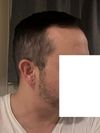
User started balding at 16 and began treatment at 18, using RU58841, minoxidil, derma rolling, and peptides. After 6 months, they experienced significant hair regrowth and are happy with the results.
The user is 2 months post-hair transplant with 6,000 grafts using the DHI method and is using oral finasteride, minoxidil, and vitamins. They are seeking feedback on their progress.
Pirfenidone is suggested to treat fibrosis and baldness by blocking inflammation markers and reducing collagen. It is also available as a gel for scar removal.
A user shared their positive experience with Roots by GA, a company that creates personalized hair loss treatments based on DNA analysis, which confirmed their inability to tolerate finasteride. The user is satisfied with their progress 30 days after a hair transplant and the customized formula they received.
The conversation is about a user's hair growth progress after 9 months of using oral minoxidil and finasteride, along with dermastamping. The user reports improved hair health and color, with some visible scalp remaining, and no side effects from the treatment.
Minoxidil, dutasteride, and copper peptides are used in a tattooing method for hair regrowth, with some users noting better results compared to oral treatments. Copper peptides are considered to have minimal impact, but the method may reduce side effects.
A 35-year-old male experiences rapid hair loss on his head and body despite normal test results for testosterone, thyroid, and vitamins. He previously used topical minoxidil and retinol, and doctors have been consulted without finding a clear cause.
The user is experiencing diffuse hair thinning despite using finasteride and oral minoxidil, with no hairline recession or bald spots. Suggestions include checking for telogen effluvium, considering a JAK inhibitor for potential autoimmune issues, and conducting further tests to rule out other causes.
A 33-year-old male is seeking advice on reversing grey hair while using minoxidil, finasteride, ketoconazole, derma rolling, cold baths, and leg exercises for hair loss. Another user mentions hearing about GHK-Cu for grey hair reversal.
A 23-year-old male is experiencing diffuse hair loss and miniaturization, possibly due to high IGE levels after using tofacitinib. He seeks advice and has not yet consulted a dermatologist.
A 30-year-old female shares her positive progress with hair regrowth using topical minoxidil and vitamins, after experiencing hair loss since her early 20s. She mentions using a product with a natural DHT blocker and emphasizes the importance of checking vitamin and iron levels.
Han Bio plans to start clinical trials for a new hair multiplication technology this year, which could significantly reduce the cost and time of hair transplantation. The technology uses a single hair strand to cultivate enough cells for 30,000 hair strands.
The user is experiencing significant hair loss and has tried treatments like PRP therapy, topical and oral Minoxidil, Finasteride, and dietary changes, with limited success. They are concerned about losing more hair before a scheduled hair transplant and are advised to postpone the transplant to allow medications more time to work.
User is experiencing hair loss despite using Minoxidil, finasteride, RU58841, dermarolling, and supplements like fish oil, collagen, hyaluronic acid, and biotin for over a year. They feel mentally distressed as their hair isn't growing longer and they avoid barbers and hats to hide thinning.
OP shares their experience with PCOS-related hair loss, highlighting that addressing vitamin D and ferritin deficiencies, managing hormones with spironolactone, and using gentle hair care products helped improve their condition. They advise against relying on "miracle" hair oils and emphasize the importance of medical evaluation and a combined approach to treatment.
The user is pleased with their hair transplant results after six months and seeks feedback. The conversation is positive, with others affirming the success of the procedure.
The user is experiencing hair loss despite using finasteride and Rogaine, with conflicting diagnoses from different hospitals. One suggests no hair loss, while another recommends continuing medication; a suggestion to see a dermatologist for proper assessment is given.
Concerns about metal particles from dermapen or dermaroller needles potentially entering the skin and lymph nodes, similar to tattoo needles. Discussion includes the possibility of using Minoxidil, finasteride, and RU58841 for hair loss treatment.
A user is considering switching from oral to topical finasteride to reduce systemic DHT impact and is exploring ethossomal finasteride for better skin penetration and potential hair regrowth. They found ethossomal finasteride in Brazil and are seeking opinions on its effectiveness compared to other topical delivery methods.
Some people have low sulfotransferase enzyme levels, affecting their response to minoxidil. Lifestyle factors, genetics, and diet, like MSM intake, might influence these enzyme levels.
A user shared their 5-month progress in treating hair loss using HIMs topical finasteride and minoxidil, micro-needling with a 1.5mm needle, and RU-58841. The post includes progress pictures showing improvement from a NW7 hair loss stage.
The conversation is about using Verteporfin with microneedling as a potential hair loss treatment that may regenerate hair follicles with minimal scarring. There are concerns about the optimal dosage and the DHT sensitivity of the new follicles.
A 27-year-old Asian male is treating hair loss with 1mg oral finasteride, topical minoxidil twice daily, and 1.5mm microneedling weekly. The discussion is about his progress with these treatments.
The conversation is about the potential risk of permanent hair loss from PRP (platelet rich plasma) treatments and whether PRF (platelet rich fibrin) carries the same risk. The user is seeking information on this topic.
The user has been using liposomal topical finasteride since late 2022, progressively increasing the dose, but DHT serum levels remain largely unchanged. Despite using finasteride, minoxidil, microneedling, and ketoconazole, hair condition has neither improved nor worsened.
The conversation is about hair loss and correcting vitamin deficiencies, specifically D3, B12, and folic acid. The user is considering if these deficiencies impact hair growth and mentions starting supplements.
The user has scheduled a hair transplant after stabilizing hair loss with finasteride and minoxidil, considering additional dermarolling. They are advised to use 2500-3000 grafts conservatively for temple filling without lowering the hairline too much.
A 31-year-old has been using finasteride, dutasteride, and oral minoxidil for hair loss. They noticed a sudden triangular thinning patch on their scalp and are seeking advice, questioning if it could be medication-related.