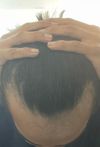
Oral minoxidil treatment increased hairdensity and shaft caliber in AGA patients. Side effects included hypertrichosis and lower extremity edema, with younger patients experiencing fewer side effects.
Dutasteride mesotherapy showed increased hairdensity and diameter without reducing serum DHT levels in a small study. However, the sample size was too small to make definitive claims about its efficacy.
The user experienced noticeable hair growth after starting dermarolling with a 1mm device, using minoxidil, and nizoral shampoo. They plan to reduce dermarolling frequency to three times a week and are considering additional treatments like finasteride or a hair transplant for increased hairdensity.
A woman who has been experiencing hairloss for several years, and her question of whether there is any benefit to getting a biopsy to check if it's AGA or diffuse alopecia areata when no cure or very effective treatment exists. Treatments such as spironolactone and Minoxidil/finasteride/RU58841 have previously been discussed.
The user is considering a hairloss treatment plan involving oral dutasteride (2.5 mg), oral minoxidil (2.5-10 mg), topical finasteride, and topical minoxidil, with additional options like ketoconazole shampoo and microneedling. They are seeking advice on whether to start with finasteride or dutasteride, the potential side effects, and the effectiveness of their approach, with a plan to evaluate results after 3-4 months.
A 22-year-old male has been treating hairloss for over three years with various methods including minoxidil, finasteride, dutasteride, and other treatments, but continues to experience hair thinning. Despite trying multiple treatments and consulting with dermatologists and hair surgeons, the individual is frustrated with the ongoing hairloss and lack of progress.
Finasteride is effective for hairloss but can cause sexual dysfunction and mental health issues in some users, leading to a polarized debate on its risks. Some switch to alternatives like Dutasteride or topical treatments to avoid side effects.
A 28-year-old male with severe hairloss is considering switching from finasteride to dutasteride due to side effects from oral finasteride, despite using topical minoxidil and finasteride with minimal improvement. He seeks advice on whether dutasteride might be effective without affecting libido.
An 18-year-old male experiencing hairloss since 2023 is using minoxidil, microneedling, and topical finasteride. He is considering switching to oral finasteride for potentially better results.
The conversation is about hairloss treatments, specifically minoxidil, finasteride, and dutasteride. The main advice is to start with finasteride and never stop minoxidil once started, as stopping can lead to significant hairloss.
A user's progress with hairloss treatment, which includes pyrilutamide, dutasteride mesotherapy and topical finasteride, as well as 3 years of minoxidil use. It also discusses whether or not the poster may have had a hair transplant.
A person struggling with hairloss is using treatments like dutasteride, oral minoxidil, and has had a hair transplant but remains deeply unhappy. Others suggest alternative treatments, acceptance, and focusing on other life aspects, emphasizing mental health and therapy.
The user discovered their previous hairloss medication was counterfeit and switched to Propecia, which significantly lowered their DHT levels. They plan to continue using Propecia and add oral Minoxidil to their routine for better results.
The conversation discusses hairloss treatments, focusing on a new slow-release oral minoxidil compared to topical minoxidil and finasteride. The results show that twice-daily dosing of the new treatment is slightly more effective than once-daily, but concerns about cost, side effects, and the accuracy of reported results remain.
A user shared their experience with hairloss, using finasteride and minoxidil, and eventually undergoing a hair transplant of 1800 grafts. They regret not starting finasteride earlier and mention that despite the transplant, their scalp is still visible under strong light.
A 19-year-old male experiencing hairloss is seeking advice on managing it without sexual side effects. He has used topical minoxidil and finasteride but experienced side effects, and is considering lifestyle changes to help slow hairloss.
The conversation discusses using microneedling with growth factor serum, PRF injections, dutasteride, oral and topical minoxidil, and topical exosomes to treat hairloss, particularly on the crown. OP plans to microneedle twice a month and seeks feedback on Korean growth factor serums.
The user has been using a hairloss treatment protocol including topical dutasteride, minoxidil with tretinoin, ketoconazole shampoo, microneedling, a laser cap, and vitamin D for 15 weeks, showing impressive progress. Feedback suggests continuing medical therapy for 12-24 months before considering a hair transplant.
RU58841 is used by some for hairloss, with mixed results; one user reported success with no side effects, while another experienced lung and heart issues. RU58841 is often sourced from third-party vendors and used alongside treatments like dutasteride and minoxidil.
A 25-year-old male experienced hairloss after taking breaks from oral dutasteride and minoxidil, leading to concerns about losing progress. He is advised to remain consistent with his current regimen and avoid adding spironolactone.
The conversation discusses hairloss treatments, focusing on a "natural stack" including minoxidil, microneedling, a laser helmet, saw palmetto, ketoconazole shampoo, and supplements. Many users suggest adding finasteride or dutasteride for better results, as natural methods alone may not effectively block DHT.
The user experienced significant hairloss after 9 months of using 0.5mg dutasteride and oral minoxidil, possibly due to alopecia areata. It is advised to consult a doctor for accurate diagnosis and treatment, as dutasteride and finasteride may not be effective.
The user experienced severe hairloss despite using Minoxidil and Finasteride and is considering switching to Dutasteride. Others recommend consulting a dermatologist, checking for health issues, and trying Dutasteride and oral Minoxidil.
The conversation discusses hairloss treatments, focusing on the use of finasteride (fin) and minoxidil (min), with some users recommending dutasteride (dut) for stronger results. Many users emphasize that these treatments are affordable and effective, with some sharing personal experiences of hair regrowth and side effects.
A 23-year-old is experiencing hairloss and has been using 5% topical minoxidil, 1 mg oral finasteride, and recently switched to 1.25 mg oral minoxidil. They are hopeful for regrowth with this new regimen, which includes biotin, iron, vitamins, Nioxin shampoo, and rosemary serum.
Minoxidil can stimulate hair growth but does not prevent long-term hairloss, while finasteride or dutasteride is necessary to address DHT and maintain hair. Family hair history may not predict individual outcomes, and combining treatments like microneedling can enhance results.
The user is concerned about hairloss and is using treatments like dutasteride, microneedling, and topical finasteride, while considering adding RU58841. They are also using Minoxidil on the temples and are worried about testosterone-related hairloss.
Dutasteride and finasteride for hairloss, with dissatisfaction expressed about dutasteride and consideration of switching back to finasteride. Users share varied experiences, noting individual responses to treatments differ.