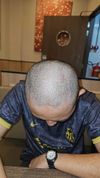
Oral minoxidil can cause multiple facial hairs to grow from one follicle, known as Pili Multigemini, leading to ingrown hairs and zits. Users report increased facial and body hair growth, with some experiencing fewer issues after switching to dutasteride.
A new hair loss treatment involving Keratin Microsphere Gel is discussed, with skepticism and jokes about its effectiveness and comparisons to other treatments. Users are doubtful and make light of the situation, referencing past disappointments and the study's focus on mice.
Dutasteride significantly reduces DHT levels in hairfollicles, potentially more effectively than previously thought. The discussion highlights differences in DHT measurements and the impact on hair loss treatment.
A user shared their 6.5-month experience with topical finasteride (2%) and minoxidil (5%), noting initial progress followed by a significant shedding phase. Others in the conversation reassured that shedding is normal and suggested staying consistent with the treatment for potential regrowth.
A user who experienced hair loss and stopped finasteride 4.5 years ago is considering restarting treatment with finasteride and oral minoxidil, questioning if their hairfollicles are still recoverable. Responses suggest that hairfollicles may not die and can potentially be revived even after many years, with some users sharing personal success stories using treatments like minoxidil, finasteride, microneedling, and RU58841.
Stress can lead to hair loss by affecting hair-follicle stem cells, and this loss is harder to recover from if one has male pattern baldness (MPB). Treatments like finasteride and minoxidil are used to address hair loss, but stress-related hair loss differs from androgenic alopecia.
A new stem cell method for culturing hairfollicles is being developed as an alternative to Minoxidil, finasteride, and RU58841. There are concerns about its cost and accessibility despite plans for commercialization.
The conversation discusses that dutasteride may be more effective than finasteride for frontal hair loss due to higher 5ar Type 1 enzyme activity in that area. Some users question the validity of this information, while others confirm it with additional sources.
Researchers are working on regenerating hairfollicles using stem cells, but a cure for baldness is still years away. Current treatments mentioned include Minoxidil, finasteride, and RU58841.
A healthy scalp barrier is crucial for hair growth, and ceramides may play a key role in maintaining it. The conversation suggests that focusing on scalp health, alongside treatments like Minoxidil, Finasteride, and RU58841, could improve hairfollicle health.
Hair loss discussion with a focus on a single resilient hair, jokingly called "chad hair," that remains despite hairline receding. Some users suggest microneedling and hairfollicle cloning as potential treatments.
Hair loss impacts mental health, with treatments like Minoxidil, finasteride, and stem cell transplants discussed. There is hope for future breakthroughs, but current treatments are limited, and awareness is lacking.
Cannabis and THC may have mixed effects on hair, with some studies suggesting potential negative impacts on hair growth in isolated hairfollicles, but these results are hard to apply to living humans. Treatments like minoxidil and finasteride are commonly used for hair loss, and the effects of cannabis might be neutral or vary based on individual factors.
The user noticed hair regrowth after 4 years of hair loss, coinciding with lifestyle improvements like quitting smoking, exercising, and a better diet. They are curious if dormant follicles can recover under improved conditions.
Exercise, especially leg workouts, combined with finasteride and minoxidil, may enhance hair regrowth. Cold exposure, like cold showers, might further boost results.
PP405, developed by Pelage Pharmaceuticals, can reactivate dormant hairfollicle stem cells and increase hair growth by 20% in eight weeks, unlike minoxidil or finasteride. However, skepticism remains about its effectiveness and availability, with concerns about funding and the timeline for broader access.
Scientists discovered a sugar gel, 2dDR-SA, that increased hair growth in mice. Users discussed its potential, comparing it to other treatments like Minoxidil and finasteride.
Hair loss and its potential treatments, such as minoxidil, finasteride, RU58841, dermarolling, and supplements. It discusses whether miniaturized follicles can be revived to grow again or must shed for new growth to appear.
Hairfollicles often go dormant rather than die, and treatments like minoxidil can help revive them. Scalp health and stimulation, such as massages and using products like sulphur soap, are also important for hair regrowth.
A breakthrough in hairfollicle cultivation using induced pluripotent stem cells (iPSCs) has been achieved, producing large hairfollicles suitable for transplantation. Clinical trials for this hair multiplication technology are planned in partnership with Yinguan Biotechnology.
The conversation humorously discusses hair loss treatments, including Minoxidil, finasteride, and RU58841, and debates the merits of being bald versus using hair systems. Opinions vary on confidence and attractiveness related to baldness and hair systems.
User discusses verteporfin for hair regrowth through "super microneedling" and preventing scarring. They mention a case of an old man regrowing hair after a head injury and suggest verteporfin could recreate this result.
Curved hair transplantation requires specialized tools and techniques to avoid damaging hairfollicles, with modified FUE being the preferred method. Proper extraction and implantation angles are crucial to prevent complications like keloids and sterile folliculitis.
The user experienced hair shedding and follicle shrinkage when using retinoic acid, despite trying different concentrations and frequencies. The hair loss persisted for six months but regrew after stopping the treatment.
Topical Metformin shows potential for regenerating hairfollicles and minimizing scarring in hair transplant donor areas, similar to Verteporfin but without its side effects. The discussion suggests considering Metformin for post-hair transplant care, though more human trials are needed.
Transitioning genders humorously suggested for hair regrowth, noting some transgender individuals experience this. Discusses treatments like minoxidil, finasteride, and hormone therapy, but advises against transitioning solely for hair regrowth.