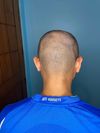
Tretinoin is not commonly linked to hair loss and can enhance the effects of Minoxidil. Users recommend starting with lower doses and gradually increasing to avoid scalp irritation.
The user reports positive results from using 1mg oral finasteride, daily minoxidil, and dermarolling twice a week for hair loss over four months. They believe these treatments have been effective.
User is depressed about hair loss despite using topical minoxidil for 5 months and topical finasteride for 2 months, with no improvement. Others suggest trying oral finasteride, seeing a specialist for dandruff and oily scalp, and being patient.
A person started using Minoxidil at 34 and had a hair transplant at 38, avoiding a straight hairline for a natural look and had 2200 grafts. They began taking Finasteride as a precaution, but Minoxidil did most of the work.
A user shared their 4-year hair loss journey, starting with finasteride and minoxidil, then adding dutasteride and oral minoxidil, which improved their hair. They are now considering RU58841 and a hair transplant in the future.
The conversation discusses a hair loss flowchart for beginners, with mixed opinions on its effectiveness. Treatments mentioned include minoxidil, finasteride, dutasteride, microneedling, and vitamins.
User found hair loss stabilization without side effects using a topical solution of 0.008% Finasteride, 2% RU, and Stemoxydine. Other treatments like Eucapil, Fluridil, RU-monotherapy, and Pyrilutamide didn't work for them.
The conversation is about a user's hair loss treatment routine, which includes RU58841 for 9 months and Dutasteride for 6 months, with other unspecified treatments considered extra. One user inquired about the source of RU58841.
The conversation is about someone experiencing continued hair loss despite using Pyrilutamide and considering the need for more time or better quality control for the treatment. Another person suggests waiting for the drug to be officially approved due to potential quality issues with current products.
Hair loss treatments include finasteride and spironolactone. Low vitamin D levels may contribute to hair loss, and normalizing levels could potentially help regrowth.
User pancake9001 experienced minimal hair growth with Minoxidil for 3 years, but noticed dramatic hair loss after stopping. Replies suggest not stopping Minoxidil and considering adding an anti-androgen for better results.
The user experienced hair loss due to undiagnosed anemia and has been taking iron and vitamin D3 supplements, which improved their energy levels but not hair regrowth. They are seeking advice on additional treatments or steps to restore hair after iron deficiency anemia.
The user experienced increased hair loss with topical finasteride and is considering switching to oral finasteride. Others shared mixed experiences, with some suggesting oral finasteride is more effective, while others noted individual results vary.
The user managed hair loss with RU58841 and finasteride but is now experiencing graying hair, possibly due to stopping oral minoxidil. Many responses suggest embracing or dyeing gray hair, emphasizing that having gray hair is preferable to balding.
Poor gut health may contribute to hair loss and scalp inflammation, with treatments like finasteride, minoxidil, and Nizoral being used. Improving gut health and addressing inflammation might help alleviate symptoms.
The conversation discusses a hair loss treatment regimen involving high doses of dutasteride, finasteride, and minoxidil, with concerns about safety and potential side effects. Users advise against the excessive use of these medications, suggesting more moderate approaches and consulting a doctor.
Hair appearance fluctuates due to factors like styling, product buildup, and humidity, causing frustration for those with diffuse thinning. Treatments mentioned include minoxidil, finasteride, ketoconazole shampoo, and RU58841, with mixed results.
A user is starting a hair loss treatment with Minoxidil (5 mg oral and 10% topical), Dutasteride, and Zinc, and is concerned about the high dosages. Other users suggest following the dermatologist's advice, starting with topical treatments, and discussing dosage concerns with the doctor.
The conversation discusses alternative and unorthodox hair loss treatments, including RU58841, nandrolone, and dianabol, as well as theoretical approaches involving high doses of estrogen and selective estrogen receptor modulators. These methods are considered extreme and potentially harmful but are explored for those unable to tolerate traditional 5-alpha reductase inhibitors.
The user is frustrated with hair loss, having switched from topical minoxidil and finasteride to dutasteride and oral minoxidil without seeing improvements. They are considering a hair transplant and are advised to continue the current treatment and explore therapy or lifestyle changes.
Dutasteride, finasteride, and minoxidil are considered the top hair loss treatments. Other suggested treatments include Nizoral shampoo, tretinoin, pyrilutamide, zinc, biotin, and low light laser therapy, though opinions on their effectiveness vary.
The user is considering hair restoration options after experiencing side effects from Minoxidil and avoiding Finasteride due to concerns about side effects. They are contemplating trying Finasteride or Dutasteride and possibly undergoing a hair transplant.
A 21-year-old male has been experiencing persistent hair loss despite using treatments like dutasteride, finasteride, RU58841, minoxidil, and ketoconazole. Suggestions include checking for hormonal issues, nutritional deficiencies, or allergies, and consulting a doctor for professional advice.
Dutasteride can slow hair loss and potentially stabilize it, but results vary by individual. Minoxidil and dutasteride may lose effectiveness over time, and hair loss might continue despite treatment.
Microneedling may worsen hair loss due to potential scarring and inflammation, with some users suggesting caution and proper technique to avoid damage. Alternatives like Minoxidil, finasteride, and RU58841 are implied as safer options.
Hair loss due to vitamin B12 deficiency is discussed, with some users suggesting supplements and dietary changes, while others recommend medications like finasteride or dutasteride. The conversation highlights differing opinions on the cause of hair loss, with some attributing it to genetics or male pattern baldness.
The person experienced worsening hair loss despite using minoxidil, finasteride, and dutasteride. They are considering increasing dutasteride dosage, trying microneedling, RU58841, and oral minoxidil, and are advised to consult a trichologist.
A 16-year-old noticed hair thinning on the crown and sides of the head, with minimal temple thinning. After using Minoxidil for 6 months, some areas improved, but the crown worsened, and they seek advice on the irregular hair loss and treatment options.