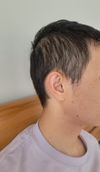
The user is experiencing excessive hair thinning and is unsure of the cause. They are seeking opinions on treatments like Minoxidil, finasteride, and RU58841.
A 21-year-old male experiencing hair thinning and shedding was diagnosed with androgenetic alopecia and prescribed a topical solution containing 5% minoxidil and 0.1% finasteride, multivitamins, and 0.5mg dutasteride daily. He seeks confirmation on whether this prescription is typical for his condition.
PP405 may reactivate dormant hair follicles but won't replace hair transplants or resurrect dead follicles. Its effectiveness, cost, and impact compared to treatments like minoxidil and finasteride are uncertain.
Creatine may accelerate hair loss in those genetically predisposed, with some users reporting increased shedding while taking it and improvement after stopping. Some users use treatments like finasteride and minoxidil, while opinions on creatine's impact vary.
Many regret delaying hair loss treatments like finasteride and minoxidil, impacting self-esteem and dating. Additional treatments include scalp micropigmentation and hair transplants, with some experiencing side effects or high costs.
Hair follicles can be dormant and potentially revived with treatments like finasteride and minoxidil, but irreversible loss occurs if certain structures are destroyed. Early intervention is more effective, and additional methods like microneedling may help.
High prolactin levels can cause hair loss, and finasteride may increase prolactin. Cabergoline or Vitamin B6 might lower prolactin, but combining them with finasteride requires caution.
An 18-year-old male switched from topical finasteride and minoxidil to oral dutasteride for diffuse hair loss and saw improvement without side effects, despite experiencing scalp itch and shedding. Commenters noted significant hair regrowth and were surprised by his young age and appearance.
A user experienced significant hair loss after 6 months of using 0.5mg finasteride daily. Suggestions from others included trying Dutasteride and Minoxidil, getting professional help from a dermatologist, and addressing high iron levels that could be contributing to the hair loss.
Hair loss greatly affects mental health and social life for young men. Treatments like finasteride, minoxidil, and hair transplants are common, with mixed success and ongoing self-esteem challenges.
Finasteride changed the user's hair texture from wavy to curly, reverting after stopping. Minoxidil was more effective for temple hair regrowth than finasteride.
Athletes often use finasteride to maintain hair transplants, but some avoid it due to potential hormonal effects. Notable examples include Mo Salah and Conor McGregor, while LeBron James has had multiple procedures with varying success.
A user who experienced hair loss and stopped finasteride 4.5 years ago is considering restarting treatment with finasteride and oral minoxidil, questioning if their hair follicles are still recoverable. Responses suggest that hair follicles may not die and can potentially be revived even after many years, with some users sharing personal success stories using treatments like minoxidil, finasteride, microneedling, and RU58841.
A user who started balding at 20 trying different treatments to combat hair loss before eventually embracing being bald and getting a custom hair piece as an option. Various people commented on his looks with and without the wig, generally agreeing that he looked better bald.
Age-linked hair loss is linked to disappearing collagen. Treatments discussed include minoxidil, finasteride, RU58841, tretinoin, microneedling, and collagen supplements.
A 29-year-old male experienced significant hair regrowth over 8 months using a protocol of oral Minoxidil, Dutasteride, Pyrithione Zinc Shampoo, and peptides GHK-CU, BPC-157, and TB-500. The treatment led to improved scalp coverage, reduced hair loss, and thicker hair, although results may vary for others.
The user is experiencing diffuse hair loss despite using finasteride and dutasteride and is considering adding minoxidil, microneedling, or RU58841. They are also thinking about increasing the dutasteride dose or opting for a hair transplant, while being cautious about side effects.
Diet and lifestyle changes can reduce hair shedding but won't regrow hair lost to genetic male pattern baldness. Treatments like finasteride and dutasteride are necessary for significant hair regrowth.
Switching to Dutasteride worsened hair condition, causing shedding and inflammation. The user will continue Dutasteride until 18 months before possibly switching back to Finasteride, while using oral Minoxidil.
Epristeride is a selective 5 alpha reductase type 2 inhibitor that may reduce scalp DHT similarly to finasteride, with potentially fewer side effects. It is suggested that combining epristeride with finasteride or dutasteride could enhance hair loss treatment effectiveness.
Melatonin is being discussed as a potential treatment for hair loss, with questions about its effectiveness and whether it should be used topically or orally. No specific conclusions or personal experiences were shared.
A user shared their 4.5-month hair transformation using a homemade topical solution with 5% minoxidil and crushed finasteride pills, applied twice daily with weekly microneedling. They plan to switch to once-daily application with tretinoin gel to enhance absorption.
The conversation discusses the effectiveness of hair loss treatments, specifically finasteride and dutasteride. The conclusion is that dutasteride significantly reduces DHT levels and may be more effective than finasteride for long-term hair retention, with some users reporting personal experiences and side effects.
The conversation discusses various theories of hair loss, including DHT sensitivity and genetic factors, with the user willing to use themselves for research due to having a hair loss gene but different hair loss patterns compared to their brothers. Specific treatments were not mentioned in the provided text.
A hair journey of someone who started using Minoxidil, Finasteride and Dutasteride to treat their Androgenic Alopecia. The user reported successful results with the medication, including compliments from strangers.
Saw Palmetto is not effective for hair loss treatment and is not a recommended alternative to finasteride due to its inability to significantly inhibit DHT.
Treatments for hair loss, including topical immunotherapy, regenerative treatments, laser and light-based therapies, oral supplements, intralesional steroids, and new drugs like finasteride and minoxidil.
HairClone is developing cell replacement treatments to rejuvenate and generate hair follicles, and has launched a crowdfunding campaign. A user expressed skepticism about the need for crowdfunding.