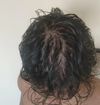
Hair loss discussion involves PRP (platelet rich plasma) treatment. PRP doesn't stop hair loss, only promotes regrowth; minoxidil is suggested as a better alternative.
PP405 shows promise in treating severe hair loss, with 31% of users experiencing over 20% hair density increase in four weeks, faster than minoxidil and finasteride. Some users are skeptical about the results' significance and long-term efficacy.
Natural treatments for hair loss, specifically peppermint oil and rosemary oil; how they can be used as a supplementary or alternative treatment to pharmaceuticals such as finasteride and minoxidil; and the personal experience of the user Divallo, who has seen an increase in density and thickness after using these oils for around 2.5 years. The post also touches on the potential antifungal properties of the oils and their effects on cutaneous blood flow.
Hair loss treatments like olive oil, coconut oil, and finasteride are discussed with skepticism and humor. The conversation highlights disbelief in quick fixes and the ongoing search for effective solutions.
PP405 may revive dormant hair follicles but is unlikely to help with long-term baldness where follicles are replaced by scar tissue. It is seen as a potential adjunct to treatments like minoxidil and finasteride, but its effectiveness on deeply fibrotic or scarred areas is doubtful.
A husband saw significant hair regrowth in 2.5 months using minoxidil, finasteride, collagen, biotin, multivitamins, GHK-cu, microneedling, and scalp oils. His wife highlighted the routine's effectiveness and the importance of consistency.
A new hair loss treatment, KX-826, is being discussed as a stronger and safer alternative to RU58841 and finasteride. Opinions are mixed, with some users skeptical about its effectiveness and others considering it as part of their regimen.
The conversation discusses microneedling for hair loss, focusing on optimal needle depth and frequency. Users report varying practices, with some using Minoxidil after microneedling and others suggesting different depths and frequencies based on personal tolerance.
The post and conversation discuss Verteporfin's potential as a hair loss treatment. It's shown promise in regrowing hair after transplants and might be effective with microneedling.
Hair loss recovery using estrogen and anti-androgen treatment for 18 months showed significant improvement. However, results vary and alternative treatments like RU58841 and Dutasteride may work without systemic feminization.
Hair loss and the importance of not letting it affect one's self-worth. The conversation includes advice on treatments such as taking medication, like Minoxidil and Finasteride, and other methods to manage hairloss, such as buzzing your head or seeking professional help.
The conversation discusses hair loss treatments, focusing on vitamin D and B12 deficiencies, and mentions using finasteride. It also suggests getting a biopsy to differentiate between MPB and other conditions.
A 25-year-old is considering using saw palmetto for hair loss due to fear of finasteride side effects but is concerned about its effectiveness and cost compared to finasteride. They are seeking advice on whether saw palmetto has similar side effects to finasteride and if it's truly effective or just a placebo.
Hair regrowth treatments for cis-males include Minoxidil, Finasteride, and RU58841. Estrogen and testosterone blockers can help restore hair loss but may not suit everyone.
The post discusses using Sandalore as a potential hair loss treatment, emphasizing precise measurements and safe handling. The user compares Sandalore's effects to Minoxidil and mentions preparing a solution with ethanol and DMSO.
The conversation discusses hair loss treatments beyond the commonly known three, focusing on separating effective treatments from myths. Dutasteride and low-dose oral Minoxidil are mentioned as having clinical evidence for increasing hair counts, but with potential side effects.
A 24-year-old experiencing severe hair thinning has been using minoxidil for 2 years but is still shedding hair. A doctor recommended plasma treatment over a DHT blocker for better and healthier results.
Minoxidil gains are typically lost after stopping its use, but some suggest finasteride or dutasteride might help retain them, though results vary. Microneedling and low-level laser therapy are mentioned as alternative treatments, but minoxidil is noted for having a more significant impact.
The conversation is about hair loss treatments, focusing on the use of dutasteride, minoxidil, and microneedling. Users suggest adding minoxidil and microneedling for better results, while some caution against using RU58841 due to potential risks.
A user reported significant hair improvement after one month of using dutasteride and oral minoxidil. Others expressed skepticism, attributing perceived changes to lighting and styling, and debated the effectiveness and risks of these treatments.
The user is experiencing significant hair shedding despite 2 years on finasteride, 1.5 years on RU58841, and 10 months on oral minoxidil, and is frustrated with the ongoing issue. Another user shares a similar experience of losing a lot of hair daily for the last 3 years.
Exploring different treatments for hair loss, such as cosmeRNA and HMI-115 which are small interference messenger RNA that inhibits the DHT receptor and an antibody that binds to the prolactin (PRL) receptor respectively; and researching mechanism and environment of hyperresponders.
Hair loss treatments have not advanced since 2018, with finasteride, minoxidil, and RU58841 still being the main options. A permanent cure is unlikely due to the profitability of ongoing treatments.
PP405 is considered a potential new treatment for hair loss, compared to finasteride and minoxidil. There is skepticism about its effectiveness in humans, with anticipation for more information from an upcoming conference.
Finasteride is a controversial hair loss treatment, with some users experiencing positive results and others facing side effects like erectile dysfunction. The discussion emphasizes the importance of personal choice and informed decision-making.
A 21-year-old is using oral finasteride, minoxidil, and vitamins to address hair loss, showing some progress after two months. Many suggest shaving his head for a better appearance and easier progress tracking, while continuing the treatment and considering additional options like microneedling and Nizoral shampoo.
The conversation discusses a hair loss treatment regimen including oral dutasteride, oral minoxidil, tadalafil, and the recent addition of RU58841. The user shares experiences with these treatments, noting significant hair regrowth and stabilization, and discusses the cost and preparation of RU58841.
Hair loss treatments like Minoxidil, finasteride, and RU58841, focusing on their effectiveness and side effects. It also highlights the disparity in medical research funding between hair loss and conditions like endometriosis.
Hair loss is linked to cellular physiology and the IGF-1 to TGF-B1 ratio, not just androgen sensitivity. The theory lacks evidence, while finasteride and minoxidil are effective treatments.