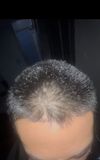
Serevelle is being considered for hairloss due to menopause, but its effectiveness is unclear. Minoxidil and hormone management are suggested alternatives.
A clinical trial in Australia offers $20,000 for participation, aiming to regrow hair and reverse grey hair. Participants must not have used hair treatments recently and must visit a Melbourne clinic regularly over 18 months.
Finasteride and dutasteride are discussed as preventative treatments for hairloss, with some advocating for early use and others concerned about side effects, especially before full maturity. Many regret not starting these treatments earlier due to their effectiveness in preventing or slowing hairloss.
Creatine is believed by some to cause hairloss, potentially by increasing DHT levels, despite conflicting evidence. Users report mixed results when combining creatine with treatments like finasteride, dutasteride, and minoxidil.
The user plans to stop finasteride after three months, believing hairloss isn't due to DHT, and will continue with oral minoxidil, microneedling, and ketoconazole shampoo. They suspect stress and poor nutrition are the main causes and seek opinions on DHT blockers' effectiveness.
A dermatologist checked for hereditary hairloss using blood tests and plans to perform a trichogram. The user had slightly low Vitamin D3 levels, and the trichogram may help confirm androgenetic alopecia.
Increasing dutasteride from 0.5mg to 2.5mg may not significantly reduce hairloss and can cause side effects like sleep disturbances and brain fog. Many users find 0.5mg effective enough, while some switch to topical finasteride due to side effects.
GHK-Cu is discussed as a potential hairloss treatment, with claims of promoting hair growth and possibly reversing gray hair, though strong clinical evidence is limited. The user also mentions using Minoxidil, red light therapy, and microneedling.
A user created a web app called TrichoMetrics to track hairloss using photos and metrics like density and thinning. The app supports tracking treatments like Minoxidil and finasteride, with features for setting baselines, comparing progress, and logging treatment adherence.
Creatine is debated for causing hairloss, with some users claiming it raises DHT levels, while others argue it has no significant effect. Despite conflicting opinions, some users report hairloss even when using DHT blockers like finasteride.
GT20029 is a potential treatment for androgenetic alopecia, addressing the root cause by targeting androgen receptors, unlike Minoxidil or Finasteride. It is seen as a preventative measure rather than a regrowth agent, with hopes for market release soon.
The user shared their positive experience with hair regrowth using dutasteride, initially combined with minoxidil, noting significant improvement in hair thickness and hairline over 1.5 years. They stopped minoxidil due to its greasiness but continued with dutasteride every other day, experiencing manageable shedding and no serious side effects.
A 32-year-old male with hairloss cannot use finasteride due to erectile dysfunction and minoxidil due to scalp psoriasis. He seeks alternative treatments for his condition.
The user seeks advice on booking a dermatologist in the UK for hairloss treatment. They mention long wait times through a GP and inquire about private options in London.
Minoxidil and spironolactone are recommended for female hairloss, and they can be used together. A dermatologist visit is advised to confirm the type of hairloss and rule out other issues.
A 38-year-old male with stress-induced Telogen Effluvium is seeking advice on using oral finasteride and minoxidil, as well as vitamin regimens, for hairloss. He is considering these treatments after a dermatologist ruled out male pattern baldness and prescribed ketoconazole shampoo.
The user stopped oral treatments due to side effects and switched to a regimen of topical minoxidil, tretinoin, azelaic acid, and dermaneedling, with recent addition of topical finasteride. They are questioning the long-term effectiveness of non-hormonal methods and considering hair transplantation.
A 19-year-old experiencing hairloss despite using minoxidil and finasteride for three months, with no family history of baldness except for maternal grandfather. The user is advised to continue the treatment for Androgenic Alopecia and not rely on home remedies.
GHK-Cu is being discussed as a potential treatment for male pattern baldness. Users are sharing experiences and asking about its effectiveness and side effects.
A user created a tracker for hairloss treatments in clinical development, including compounds like Dermaliq, RU58841, and Pyrilutamide. The tracker updates with new information and allows filtering by conditions like androgenetic alopecia (AGA) and alopecia areata (AA).
Increasing dutasteride to 2.5 mg daily and adding 2.5 mg oral minoxidil to prevent hairloss during a testosterone cycle. Suggestions include adding RU58841 for better protection against hairloss.
Topical high-dose vitamin C is discussed as a potential treatment for hairloss due to its ability to inhibit DHT and reduce histamine. Some users express skepticism about its effectiveness compared to treatments like finasteride.
Rapamycin, finasteride, and minoxidil are discussed as a strategy for hairloss prevention and reversal. Pulsed dosing of rapamycin is suggested to avoid conflicting effects with minoxidil.
Ketoconazole 2% shampoo effectively regrew hair by treating scalp dermatitis and inflammation. The user also used jojoba and oat oil, Aveeno moisturizer, and hyaluronic acid for scalp care.
A 25-year-old male with 10 years of hairloss is using minoxidil and considering adding finasteride or dutasteride, possibly with microneedling, to improve hair regrowth before a hair transplant. Community members suggest starting a DHT blocker immediately, considering oral minoxidil, and addressing low vitamin D and HDL levels.
The user shared their 10-year hairloss journey, discussing treatments like oral minoxidil, oral finasteride, and LLLT, and ultimately deciding on a hair transplant. They also explored the possibility of having alopecia areata incognita and advised seeking multiple opinions before surgery.
Creatine does not cause or worsen hairloss, despite some anecdotal reports of hair thinning. The discussion emphasizes that these reports are not supported by scientific evidence.