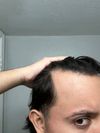
The user is concerned about hairloss and has been using finasteride and minoxidil. The doctor refused to prescribe finasteride due to a perceived increased risk of prostate cancer, prompting the user to consider seeking another doctor's opinion.
The user is experiencing aggressive hairloss and has been using minoxidil with initial success but is now seeing thinning again. They are considering starting finasteride and dermarolling while waiting for a dermatologist appointment.
A person struggling with hairloss is using treatments like dutasteride, oral minoxidil, and has had a hair transplant but remains deeply unhappy. Others suggest alternative treatments, acceptance, and focusing on other life aspects, emphasizing mental health and therapy.
Dutasteride often stops hairloss quickly, with some users noticing reduced shedding and thicker hair within a few months. Some users combine it with minoxidil for better results, though side effects like lower libido and initial shedding are common.
The conversation discusses various treatments for hairloss, including high doses of dutasteride, oral minoxidil, RU58841, microneedling, ketoconazole shampoo, and other supplements like pumpkin seed oil and multivitamins. It also touches on more extreme measures like estrogen therapy and castration, with some users emphasizing the importance of overall health and nutrition.
Stopping Minoxidil caused significant hairloss, which was mostly regained after resuming 1mg Finasteride and 3mg oral Minoxidil. Consistent use of both treatments is essential for maintaining hair growth.
The user is experiencing ongoing hairloss despite using treatments like topical and oral finasteride, dutasteride, oral minoxidil, and RU58841. They are advised to consider a scalp biopsy and blood tests to determine the underlying cause, as their hairloss may not be related to DHT.
An 18-year-old is dealing with hairloss and considering minoxidil and finasteride. Suggestions include starting finasteride, saving for a hair transplant, embracing baldness, and focusing on self-improvement.
The user is using finasteride for hairloss and is frustrated with shedding but plans to add oral minoxidil for convenience and safety. There are concerns about using topical minoxidil around pets.
KX-826 may cause increased hairloss for some users, leading to concerns about its effects. One user reported no issues but also no hair regrowth, only maintenance.
Finasteride and minoxidil stopped hairloss and improved urinary issues for a 34-year-old user. Despite some sexual side effects, the user plans to continue finasteride, while considering restarting minoxidil.
Red light therapy for hairloss is controversial, with mixed results reported. Its effectiveness may depend on device quality and proper wavelength, and it is often used with minoxidil and finasteride.
The conversation is about concerns over the authenticity of oral minoxidil for hairloss treatment, with fears it might contain finasteride despite labeling. Users reassure that if it states minoxidil only, it should be trusted, and mention that Indian drugs are generally okay.
The conversation discusses hairloss treatments, specifically the transition from topical to oral minoxidil and finasteride, and the associated shedding phase. Users advise patience and consistency, noting that shedding is common and improvement may take several months.
A user purchased an expensive hairloss treatment called Follicopeptide, which many others in the conversation believe to be a scam, suggesting instead the use of proven treatments like minoxidil and finasteride. Some users report positive effects from Follicopeptide, but skepticism remains high due to lack of transparency about its ingredients and the company's credibility.
The user experienced hairloss issues after switching from finasteride to dutasteride and back, with stress and seborrheic dermatitis affecting hair quality. They plan to continue finasteride, treat seborrheic dermatitis, and monitor nutrient levels, considering low-dose oral minoxidil if safe.
A new hairloss protocol using FDA-approved topical treatments targets eight pathways, potentially improving results by 60-75% compared to the standard 40-50% from oral minoxidil and finasteride. The protocol includes minoxidil, finasteride, tacrolimus, cetirizine, bimatoprost, lithium gluconate, losartan, melatonin, NAC, caffeine, and tretinoin, with a monthly cost of $35-50 in Mexico and $80-150 in the US.
A 25-year-old male experiencing hairloss suspects stress-related alopecia and is hesitant to use Minoxidil due to potential side effects. Another user suggests it might be androgenic alopecia and recommends starting finasteride.
The user experienced hairloss due to inconsistent oral minoxidil use while continuing dutasteride and topical minoxidil. Consistent treatment is advised for potential recovery of lost hair.
A 21-year-old is experiencing hairloss and is considering using Minoxidil and Finasteride, but is concerned about lifelong dependency and seeks advice on permanent solutions. They are advised to act quickly, consider additional treatments like Dutasteride, and get blood tests to rule out other causes.
The user experienced side effects from a hairloss treatment and is considering using pyrilutamide, alfatradiol, and possibly minoxidil. They are unsure about starting minoxidil immediately or waiting to see the effects of the other treatments.
The user is concerned about hairloss and is hesitant to use treatments like finasteride and minoxidil due to potential side effects. Another user suggests gradually introducing finasteride to minimize side effects and maximize results.
The user experienced significant hairloss after 9 months of using 0.5mg dutasteride and oral minoxidil, possibly due to alopecia areata. It is advised to consult a doctor for accurate diagnosis and treatment, as dutasteride and finasteride may not be effective.
The conversation discusses hairloss and treatments like finasteride, minoxidil, and ketoconazole shampoo. Users suggest scalp massages, warm showers, and other methods to address scalp tension and tight spots, with some mentioning the potential effects of medications like escitalopram and probiotics.
Concerns about the impact of hairloss treatments like finasteride on fertility and future children. The user is worried about reduced sperm count and quality due to lowered DHT levels.
A 31-year-old experienced significant hairloss reduction using oral finasteride for 4 months, after trying various treatments like oils, shampoos, and saw palmetto. The user avoided minoxidil due to its inconvenience and potential side effects, finding finasteride alone effective for their needs.
RU58841 is discussed as a hairloss treatment, with concerns about its effectiveness diminishing after two years due to androgen receptor upregulation. The user is hesitant to start using it, fearing it may worsen their condition over time.
PP405 is a promising hairloss treatment that may outperform minoxidil and finasteride by reviving dormant follicles and promoting significant regrowth. Results from ongoing trials are awaited, with a potential market release between 2028-2030.
Finasteride is effective for hairloss but can cause sexual dysfunction and mental health issues in some users, leading to a polarized debate on its risks. Some switch to alternatives like Dutasteride or topical treatments to avoid side effects.