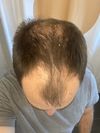
A user's experience with hairloss treatments, including finasteride, minoxidil, dutasteride, biotin and micro needling; the user is concerned about their hairline after switching to dutasteride and oral minoxidil. Responses suggest that this could be just a shed and offers advice on how to possibly address it.
Breezula shows promising results for hairloss, with one trial showing a 539% improvement and another 168%, but lacks combination data with treatments like minoxidil or dutasteride. Its mechanism differs from finasteride, potentially offering fewer side effects by blocking receptors locally at the follicle.
The conversation discusses hairloss treatments, focusing on a new slow-release oral minoxidil compared to topical minoxidil and finasteride. The results show that twice-daily dosing of the new treatment is slightly more effective than once-daily, but concerns about cost, side effects, and the accuracy of reported results remain.
Finasteride is used for hairloss, with mixed reports of no side effects and claims of long-term negative effects known as Post Finasteride Syndrome (PFS). The conversation debates the existence and causes of PFS, with differing opinions on whether it is psychological or real.
The conversation is about hairloss treatments, specifically the lack of improvement after one year of using oral finasteride and topical minoxidil. Suggestions include switching to stronger medications like dutasteride and oral minoxidil, considering a hair transplant, and possibly using microneedling or tretinoin.
Young men experiencing hairloss are frustrated with advice to embrace baldness without exploring treatments. They advocate for using finasteride and minoxidil, considering hair transplants, and hope for future advancements in hair restoration.
Red light therapy for hairloss is controversial, with mixed results reported. Its effectiveness may depend on device quality and proper wavelength, and it is often used with minoxidil and finasteride.
A 28-year-old experienced hairloss and found success with daily 1mg Finasteride, noticing thicker hair without side effects. Despite this, their dermatologist suggested switching to expensive peptide serums, prompting the individual to seek a second opinion on long-term Finasteride and oral Minoxidil use.
KX-826 is undergoing trials for hairloss treatment, showing similar effectiveness between 0.5% and 1.0% dosages, with mild side effects compared to finasteride. Users discuss combining KX-826 with other treatments like minoxidil and clascoterone for better results.
PP405 is being discussed as a potential hairloss treatment, possibly more effective than minoxidil. There are concerns about its effectiveness and product contamination, but some users report early signs of hair regrowth.
A 39-year-old is starting a hairloss treatment with 1.25mg finasteride and 2.5mg oral minoxidil twice daily, sharing baseline pictures and hoping for significant results. Progress updates will follow.
A 22-year-old is experiencing hairloss after transitioning from fem HRT to DIY testosterone therapy and is considering using Dutasteride while also taking Saw Palmetto. They are concerned about the impact on virilization and proper development.
Oral minoxidil is effective for hairloss but may cause side effects like increased heart rate and edema. Finasteride is recommended, with dutasteride as an alternative if needed.
A new hairloss treatment, PP405, showed promising Phase 2a results with 31% of patients experiencing over 20% hair density increase without systemic absorption, avoiding hormonal side effects. The treatment is expected to be expensive, with Phase 3 trials starting mid-2026, and there is skepticism about the data's strength.
Breezula's potential as a hairloss treatment is debated, with some seeing promise despite delays, while others suggest alternatives like Pyrilutamide. Breezula is compared to topical finasteride, with hopes for a better side effect profile.
Some users experience worsening hairloss with dutasteride and improvement after switching back to finasteride, while others find better results with dutasteride. The effectiveness of treatments like finasteride, dutasteride, minoxidil, and RU58841 varies, requiring individuals to try different combinations or dosages to find what works best.
PP405 is a promising hairloss treatment that may outperform minoxidil and finasteride by reviving dormant follicles and promoting significant regrowth. Results from ongoing trials are awaited, with a potential market release between 2028-2030.
Alternatives to finasteride for hairloss include minoxidil, alfatrodial, fluridil, pyrilutamide, and Nizoral. These treatments may not be as effective as finasteride but can help slow hairloss progression.
Young men experiencing early hairloss and discussing treatments like Minoxidil, finasteride, and RU58841. Many share feelings of frustration and coping strategies, with some finding solace in treatments and mindset shifts.
Minoxidil can stimulate hair growth but does not prevent long-term hairloss, while finasteride or dutasteride is necessary to address DHT and maintain hair. Family hair history may not predict individual outcomes, and combining treatments like microneedling can enhance results.
PP405 is a potential hairloss treatment that inhibits mitochondrial pyruvate carriers, increasing lactate dehydrogenase activity and stimulating hair follicle stem cells. In a phase 1 trial, 31% of participants showed over 20% hair density increase with PP405 treatment.
The conversation humorously discusses hairloss treatments, focusing on finasteride and hair transplants, with references to public figures like Trump and Biden. It speculates on whether Trump has stopped using finasteride, noting his hair thinning and potential side effects.
The conversation discusses hairloss treatments, with a focus on the use of finasteride, minoxidil, laser treatment helmets, and Redensyl. Opinions vary on the effectiveness and side effects of finasteride, with some users advocating for its use despite potential risks, while others express concerns about its impact on sexual function.
The user experienced hairloss and initially used Finasteride, but switched to Dutasteride after continued shedding. Dutasteride stabilized their hair density with mild side effects, and they did not use Minoxidil.
A user discusses their experience with hairloss, noting they don't notice shedding despite using finasteride, minoxidil, and tretinoin. Others share similar experiences, suggesting that shedding varies and may not occur for everyone using these treatments.
OP seeks advice on alternative hairloss treatments like Redensyl, Capixyl, and Procapil, instead of lifelong Minoxidil and Finasteride. Users suggest hair transplants and discuss the potential future availability of better treatments.
User shared 3-month hairloss progress using foam Minoxidil, finasteride, microneedling, and shampoos. They experienced side effects with oral Minoxidil but had success with topical treatments and finasteride.