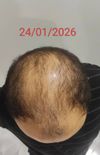
The user is questioning whether their hair shows signs of regrowth or just normal growth after two weeks. They are using Minoxidil, Finasteride, and RU58841 for hair treatment.
A user discusses using tazarotene to enhance minoxidil's effectiveness for hair regrowth, believing it will make a significant difference. Others caution about potential risks of retinoids accelerating hair loss in some individuals.
The conversation discusses natural, chemical-free methods for scalp health and hair regrowth, such as using oils like rosemary, ginger, castor, and peppermint. It seeks personal experiences and effective routines for hair regrowth, especially after chemo or stress-related hair thinning.
Some embrace baldness, while others promote treatments like minoxidil and finasteride. Opinions differ on accepting baldness versus pursuing hair regrowth.
A sugar gel has been found to aid hair regrowth, similar to minoxidil, and may improve blood supply to hair follicles. Some users report success with homemade versions, though side effects like dizziness have been noted.
A 22-year-old male is not seeing hair regrowth after using minoxidil and finasteride for a year and additional treatments for three months. Suggestions include improving scalp absorption with sea salt and trying a lipid-based solution, microneedling, and possibly switching to dutasteride if no improvement after 1-2 years.
Fish oil capsules may help hairgrowth by improving blood flow, but should be used alongside minoxidil for better results. Trusting unverified claims is discouraged.
Verteporfin reduces scar tissue in hair transplants but doesn't significantly regrow hair follicles. More testing is needed to determine its effectiveness.
The user has been using finasteride, minoxidil, and a dermaroller for 80 days to treat hair loss. Early results are noted, but significant improvement is expected in 3–6 months.
He Shou Wu (fo-ti) is discussed as a potential treatment for hair regrowth, with mixed opinions on its effectiveness. Some users report positive results, while others remain skeptical or have not noticed any changes.
The user has been using finasteride for 6 months without hair regrowth and is considering adding minoxidil. They previously had success with dutasteride but stopped due to side effects.
The user has been using a regimen including finasteride, minoxidil, various oils, and supplements for hair regrowth over 9–10 months. They observed fine hairs returning and a change in scalp texture after adding cinnamon oil, questioning if this change is a positive sign.
A user is experiencing androgenic alopecia and is considering using Vichy's aminexil for hair regrowth. They seek advice on its effectiveness and whether to combine it with microneedling.
The conversation provides advice on how to track hair loss or regrowth, emphasizing the importance of taking consistent photos and keeping a log of treatments like minoxidil and finasteride. It also suggests using scalp cameras and comparing photos side by side for accurate progress assessment.
The user started experiencing hair thinning in November and began using a specific shampoo and conditioner about two weeks ago, but noticed quicker thinning since starting the product. They are questioning if the product could cause initial shedding before promoting hair regrowth, similar to how finasteride works.
User has been using Minoxidil twice daily for a year with good results and is considering adding a 1.5mm titanium derma roller for better hair regrowth. They seek advice on the best derma roller size and frequency of use, suggesting once a month or every 3-4 weeks.
The conversation discusses the effectiveness of Spironolactone and Finasteride for hair regrowth in females. Specific treatments mentioned are Spironolactone and Finasteride.
Minoxidil increases hair count despite high prolactin being linked to hair loss. Blocking DHT is effective, but not always necessary; HMI-115 is a promising treatment for androgenetic alopecia.
A 24-year-old male is experiencing hair loss due to low ferritin and vitamin D deficiency, and is using iron supplements, vitamin D3, finasteride, and ketoconazole shampoo for treatment. Users suggest increasing vitamin D and iron intake for better results and recommend consulting a professional for proper dosage.
After suffering from hair loss and Seborrheic Dermatitis for three years with no improvement from various treatments, the individual found success with COQ10 and PQQ supplements, which led to new hairgrowth and a healthy scalp without flare-ups. They also plan to start additional supplements recommended by a dermatologist.
High prolactin levels may contribute to hair loss, and some users suggest supplements like mucuna pruriens, vitamin B6, vitamin E, L-Tyrosine, L-Theanine, DIM, and Zinc to lower prolactin. Lifestyle changes to increase dopamine, such as reducing screen time and stress, are also recommended.
MCL-1 is important for hair follicle stem cell survival, but its impact on human hair regrowth is unclear. Minoxidil and finasteride are the main treatments, with doubts about new discoveries leading to effective human solutions soon.
A user has been using minoxidil for almost three months without noticeable hair regrowth and is questioning its effectiveness. They are considering combining it with tretinoin or starting derma rolling.
The conversation is about someone using finasteride for hair loss and considering adding peppermint oil to their regimen. One person replied that they tried peppermint oil for about a month with no results.
Finasteride users discussing creatine's impact on hair loss. Most believe creatine doesn't significantly affect hair, with some reporting no issues and others experiencing thinning.
A quercetin-encapsulated and polydopamine-integrated nanosystem (PDA@QLipo) shows promise for treating androgenetic alopecia by reshaping the perifollicular microenvironment, outperforming minoxidil in hair regeneration. The nanosystem promotes cell proliferation, hair follicle renewal, and recovery by scavenging reactive oxygen species and enhancing neovascularity.
The conversation discusses enhancing Minoxidil absorption for hair loss treatment using Tretinoin and MSM (Methylsulfonylmethane). The user is seeking sources for Tretinoin and mentions MSM's potential to improve the absorption of topical agents.
The user started using dutasteride, biotin, vitamin D3, zinc, a multivitamin, and oral minoxidil, and noticed hair shedding after starting gym workouts. Another user suggested getting nutrients from food sources and mentioned that vitamin D3 might need supplementation if not obtained from sunlight.