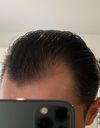
The hair transplant has a straight, unnatural-looking hairline that many find unappealing. The person is not using finasteride or minoxidil, which may affect future hair retention.
A user is concerned about hair loss despite using finasteride and minoxidil, noting changes in hair under a microscope after one week. Others suggest patience, as hair treatments take months to show results, and recommend focusing less on microscopic changes.
Hair loss negatively affects mental health, causing anxiety and depression. Minoxidil and finasteride are discussed as treatments, but side effects and mental health concerns remain.
A 27-year-old male shared his 7-month hair regrowth progress using finasteride, keto shampoo, rosemary oil, and both oral and topical minoxidil. He experienced initial shedding but is pleased with the results and plans to continue the treatments.
PRP therapy cannot make oral minoxidil's effects permanent, as minoxidil does not stay permanently in the system. Dosage of oral minoxidil is typically increased gradually, but there is a limit, and it should not be increased indefinitely.
Hair loss matters, but focusing on self-improvement like working out, using treatments like minoxidil and finasteride, and building confidence can help. People often suggest extreme solutions like becoming a millionaire or bodybuilder, but practical steps are more beneficial.
A 42-year-old male experienced hair regrowth using a topical treatment of finasteride, ketoconazole, and minoxidil, noticing increased hair density and reduced hair loss over a year. He plans to switch to oral finasteride and continue using topical minoxidil, with a dermatologist's guidance.
A hair transplant significantly improved the user's appearance, making them look younger. They consistently use oral finasteride and minoxidil, which may have contributed to the results.
The user experienced hair thinning in the middle of their head despite using finasteride and minoxidil and having a hair transplant. They are concerned about the thinning and considering shaving their head, while being advised to continue treatment and manage stress.
The user is experiencing hair thinning and visible scalp at 18, seeking advice on whether it's genetic or a scalp condition. Suggested treatments include Minoxidil, finasteride, ketoconazole shampoo, and CBD oil with MCT.
A 24-year-old male is experiencing hair loss due to low ferritin and vitamin D deficiency, and is using iron supplements, vitamin D3, finasteride, and ketoconazole shampoo for treatment. Users suggest increasing vitamin D and iron intake for better results and recommend consulting a professional for proper dosage.
A user shared their positive hair loss journey using 1mg/day oral finasteride, showing significant improvement after 8-9 months without side effects. They expressed relief in having control over their hair loss and are open to questions about their experience.
Hair loss is emotionally challenging, but acceptance and focusing on other life aspects are important. Treatments like finasteride, minoxidil, and RU58841 are discussed, with emphasis on the emotional impact over physical changes.
Hair loss treatments include using finasteride, dutasteride, and RU58841. Lifestyle changes like increasing carb intake and moderate alcohol consumption are suggested to boost estrogen levels.
The user shared their hair loss progress over a few months using minoxidil, finasteride, RU58841, and microneedling. They reported reduced hair loss and plan to continue their routine, possibly increasing dosages gradually.
The conversation is about hair loss treatments, with users recommending Finasteride and Minoxidil as the gold standard. They suggest microneedling and laser therapy as cost-effective home treatments, while expressing skepticism about the expensive clinic treatment and V2X product.
A breakthrough in hair follicle cultivation using induced pluripotent stem cells (iPSCs) has been achieved, producing large hair follicles suitable for transplantation. Clinical trials for this hair multiplication technology are planned in partnership with Yinguan Biotechnology.
A user is considering trying Aevin hair creme, which contains ingredients like jojoba oil and saw palmetto, despite skepticism about its effectiveness compared to treatments like finasteride, minoxidil, or hair transplants. They are wary of the product's legitimacy due to the lack of reviews outside the brand's website.
The conversation discusses hair regrowth treatments, including oral minoxidil 5mg and finasteride 1mg on alternate days, along with derma rolling, biotin, and other supplements. The user reports good hair growth and reduced hair fall, with no side effects from oral minoxidil except increased body hair.
The user is experiencing hair thinning and brittleness, possibly due to Telogen Effluvium, which affects body hair and may be linked to stress or nutrition. They are considering using finasteride for treatment but are unsure if it will address their symptoms.
Hair transplants cost more in the U.S. than in Turkey, but quality varies. Proper research is essential, as aggressive transplants can exhaust donor hair, and finasteride only slows hair loss.
A user shared their positive experience with hair regrowth after two years of using finasteride, reporting no side effects. Other users discussed their experiences, including side effects like gynecomastia, and shared advice on managing potential risks.
Creatine may accelerate hair loss in those genetically predisposed, with some users reporting increased shedding while taking it and improvement after stopping. Some users use treatments like finasteride and minoxidil, while opinions on creatine's impact vary.
The user experienced hair regrowth with oral Minoxidil, dandruff shampoo, topical Nanoxidil, and Revita Shampoo but lost progress after stopping Nanoxidil temporarily. They are now using topical Nanoxidil and oral dutasteride but are experiencing increased shedding and are unsure whether to continue or revert to their original regimen.
Hair loss research is important and contributes to overall scientific advancement, benefiting emotional well-being and potentially aiding other medical fields. Treatments mentioned include PP405 and SCUBE3.
A 23-year-old male is experiencing diffuse hair loss and miniaturization, possibly due to high IGE levels after using tofacitinib. He seeks advice and has not yet consulted a dermatologist.
A user shared their 7-month progress after a hair transplant, using dutasteride and minoxidil to maintain native hair. The transplant was done in Juarez, Mexico, and the user noted that medication is still necessary to prevent further hair loss.
A user shared their experience with hair loss and a hair transplant at the Scandinavian Hair Institute, using finasteride every other day as part of their regimen. They expressed satisfaction with the transplant results and decided against using minoxidil due to its inconvenience and potential side effects.
The user switched from finasteride to dutasteride for hair loss but faced increased shedding and anxiety, regretting not staying with finasteride longer. Other users shared mixed experiences, advising patience with dutasteride, as it may take up to a year to show results.