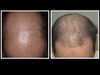
A 21-year-old male with a thyroid condition noticed his hair thinning uniformly without a receding hairline. He is considering using a 5ARI to prevent further baldness if he starts TRT.
A user shared their 1 and 2-year hair progress using finasteride only, showing significant improvement. They experienced some initial side effects but found the treatment effective and regret not starting earlier.
The conversation discusses hair loss struggles and treatments, including oral minoxidil, oral finasteride, and RU58841. Users share experiences and advice, suggesting options like topical minoxidil, microneedling, hair transplants, and scalp micropigmentation.
The user shared a four-month update on their hair regrowth journey using 1mg daily finasteride, 5mg daily oral minoxidil, and weekly dermarolling, noting significant improvement in hair thickness and uniform growth. They reported no side effects from minoxidil except increased hair growth on arms, fingers, and eyelashes.
A 29-year-old male experienced significant hair regrowth over 8 months using a protocol of oral Minoxidil, Dutasteride, Pyrithione Zinc Shampoo, and peptides GHK-CU, BPC-157, and TB-500. The treatment led to improved scalp coverage, reduced hair loss, and thicker hair, although results may vary for others.
Microneedling at depths greater than 0.6 mm may damage miniaturized hair follicles, with 0.5 mm showing better results for hair regrowth. Combining microneedling with minoxidil enhances absorption, but caution is advised to avoid damaging follicles.
The conversation discusses potential vitamin deficiencies leading to hair loss, with a focus on Vitamin D and iron. Some individuals are using finasteride and minoxidil for hair loss, while others consider vitamin supplementation due to deficiencies.
Creatine does not cause or worsen hair loss, despite some anecdotal reports of hair thinning. The discussion emphasizes that these reports are not supported by scientific evidence.
The conversation is about the impressive hair density and hairline of a person, with users attributing it to good genetics and joking about the lack of hair loss despite stress. Specific hair loss treatments like Minoxidil, Finasteride, or RU58841 are not discussed.
Adding an LLLT laser cap to a routine of finasteride, minoxidil, and ketoconazole shampoo significantly reduced hair shedding from 200+ hairs a day to around 80, improving scalp health. The user attributes the laser cap as the key factor in stabilizing hair loss after two years of using other treatments.
Hair looks thinner in sunlight, and users discuss using hair fibers, minoxidil, finasteride, and considering dutasteride for hair loss. Hair fibers like Toppik help conceal thinning, and some users suggest additional treatments like derma stamping and micro-needling.
A 26-year-old male with high testosterone is experiencing diffuse hair thinning despite using a comprehensive treatment regimen including dutasteride, oral minoxidil, RU58841, ketoconazole shampoo, microneedling, and low-level laser therapy. Suggestions include adjusting dutasteride dosage, monitoring iron levels, and consulting a dermatologist for further evaluation.
The conversation is about hair loss treatments, specifically the lack of improvement after one year of using oral finasteride and topical minoxidil. Suggestions include switching to stronger medications like dutasteride and oral minoxidil, considering a hair transplant, and possibly using microneedling or tretinoin.
A 30-year-old male is experiencing some hair regrowth after 77 days using oral finasteride, topical minoxidil 5%, and a 0.5mm derma roller twice a week. Users note small hairs filling previously smooth spots, but it's too early to determine full regrowth potential.
The user is mixing various topical solutions for hair loss, including Dutasteride, Minoxidil, Finasteride, tretinoin, RU58841, Stemoxydine, and Reviv AHK-Cu, and is questioning if this practice is effective or wasteful. They are concerned about potential interactions, especially with the new treatment KX-826, which should not be mixed with Minoxidil.
The user "LandB4TimeIn3D" shared their hair loss progress using finasteride (Fin) and minoxidil (Min). They experienced shedding for the first few years but saw significant regrowth after about 2-3 years. They also mentioned using topical liquid minoxidil twice a day.
A user shared their positive experience with hair regrowth after 9 months of using 1mg finasteride daily and 2.5mg oral minoxidil every other day, with no side effects. Other users expressed various reactions, from skepticism to hope, and discussed their own experiences with similar treatments.
The post is about a user starting a hair loss treatment using finasteride, micro needling, and nizoral. The conversation includes supportive replies from other users.
The conversation discusses the appearance of hair transplants immediately after surgery, noting that scars will be covered as hair grows. The original poster underwent both FUT and FUE procedures.
A user discussed using finasteride for six months to treat hair loss, noting minimal side effects and uncertain hair regrowth. They mentioned not using minoxidil and considering future options like hair transplants.
Increasing the dutasteride dose to 2.5 mg may significantly reduce DHT and promote hair regrowth, with similar side effects to lower doses. Some users combine dutasteride with minoxidil and finasteride for better results, but there are concerns about long-term effectiveness and availability.
A 48-year-old man has been using minoxidil for 15 years and considered finasteride but stopped due to potential side effects. He is concerned about his mental health and the impact of hair loss on self-image, and he encourages support among men experiencing hair loss.
Oral minoxidil may be more effective than topical due to uniform distribution and systemic activation, but can cause side effects like puffiness. Adding tretinoin to topical minoxidil can enhance its effectiveness by aiding conversion to its active form.
Switching generic finasteride manufacturers can reduce side effects while maintaining effectiveness. Different fillers in generics may affect bioavailability and cause varying side effects.
A user shared a beard growth protocol involving hydration toner, azelaic acid, tretinoin, moisturizer, 5% topical minoxidil, and SPF 30+ sunscreen. The regimen spans a year to a year and a half, with specific application schedules for different phases.
The conversation discusses hair color change and shedding, questioning if it's due to Telogen Effluvium or Androgenetic Alopecia (AGA). Treatments mentioned include Minoxidil, finasteride, and RU58841.
A 45-year-old from Lahore, Pakistan, shares their 7-month hair growth progress after starting a new hair regeneration treatment. Previous treatments with minoxidil and finasteride showed no progress.
After a 1,200 graft hair transplant and using minoxidil and finasteride, the user's hair initially improved but later thinned and changed texture. They are seeking advice on this issue and have a dermatologist appointment scheduled.
A user shared their experience with hair regrowth using supplements like NAC and DIM, and briefly using minoxidil with microneedling. They reported some improvement in hair density, but the community questioned the effectiveness compared to traditional treatments like finasteride.