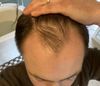
A user has been using oral minoxidil for 4 months and oral finasteride for over a year without side effects. Responses praise the user's hair regrowth and healthy appearance.
The post and conversation are about a user who made their own Platelet-Rich Plasma (PRP) for hair loss treatment at home, using their own blood and a centrifuge. The responses vary, with some users supporting the DIY approach to save money, others expressing concern about the safety and effectiveness of the method, and a few joking about the lengths people will go to combat hair loss.
The conversation discusses a user's 3.5-month experience using pyrilutamide and minoxidil for hair loss, with some perceived improvement in the temples but potential recent regression. Another user suggests that maintaining the current hairline, even without improvement, is positive.
A user's experience with a hair transplant procedure and the resulting appearance of their hairline, which included some micro irregularities to make it look natural. Other users asked questions related to cost and safety of similar procedures at different clinics.
This conversation discusses the potential benefits of using oral minoxidil and finasteride to treat hair loss, with some users sharing their own experiences in taking the medications. Others express concerns about the safety of these treatments.
The user noticed hair regrowth after supplementing with vitamin D, magnesium, zinc, and vitamin B12, alongside using minoxidil for 3 years. They observed a lower hairline and improved density, supported by photographic evidence.
The user is happy with the results of using 1mg finasteride daily for three years, reporting stopped hair loss and mild regrowth without side effects. They avoid minoxidil due to concerns about application and potential risks, and they use 2% nizoral shampoo weekly.
The user looks good bald and could enhance their appearance by gaining muscle and growing facial hair. Some suggest trying minoxidil and finasteride, while others recommend embracing baldness and focusing on confidence.
The user added 0.5mg dutasteride to their regimen of topical finasteride and minoxidil but experienced rapid hairline recession despite reduced hair fall. Suggestions included increasing the dutasteride dosage to 1mg daily to better suppress DHT and potentially adding oral minoxidil.
A 37-year-old man treated his hair loss with 0.5mg finasteride every other day and 5% minoxidil twice daily for 5 months, reducing finasteride from 1mg due to side effects. His hair improved significantly, with positive changes visible from all angles, and he experienced no more side effects after the dosage adjustment.
A hair transplant of 3361 grafts, 11.5 months after the procedure, that resulted in a very natural looking NW1 hairline; the person who underwent this procedure has not experienced any hair loss and is expecting to have no future hairloss either.
The user has been using 0.5 mg dutasteride daily for 8 months and 5 mg oral minoxidil for 14 months to address hair thinning. Despite some users seeing no change or improvement, the user feels their hairline density has decreased and corners have worsened.
A 39-year-old user experienced hair regrowth using oral dutasteride, oral minoxidil, dermastamping, and Nizoral shampoo after switching from finasteride and topical minoxidil. They are hopeful for significant improvement in their receding hairline.
The user has been using finasteride, minoxidil, and a derma stamp for a year with minimal noticeable hair regrowth, but others suggest there is slight improvement and recommend continuing the treatment. Some users suggest switching to dutasteride or adjusting the derma stamp technique for better results.
A 30-year-old is using dutasteride daily, ketoconazole shampoo twice a week, and started topical minoxidil and dermastamping six months ago for hair loss. The treatment has improved hair density, but significant hairline recession remains, and a hair transplant is suggested for further improvement.
A 19-year-old is using oral dutasteride, topical minoxidil, and dermastamping to address hair loss and enhance facial hair growth, experiencing minimal side effects and increased body hair. They report positive results in hairline thickness and temple closure.
A user shared their 9-month progress using finasteride, minoxidil with peppermint oil, biotin, coconut or almond oil, Nizoral shampoo, and derma stamping. They experienced significant hairline improvement despite some shedding and dry hair.
A user is questioning their progress after 5 months on finasteride and considering alternatives like dutasteride and minoxidil. Replies suggest that finasteride primarily maintains hair, and combining it with minoxidil might help with regrowth.
The user has been taking dutasteride for 9 months and is satisfied with the hair growth results. They had a hair transplant and don't want to share hairline progress.
The conclusion of the conversation is that some users have seen positive results with the use of finasteride and minoxidil for hair loss, while others have not. It is mentioned that consistent use of these treatments is necessary to maintain results.
The user's progress with treating their hair loss with finasteride and minoxidil, as well as using a derma-roller infrequently and Nizoral shampoo twice a week. They discussed how helpful it was for the user to post comparison pictures with the same angle and lighting in each.
A 40-year-old male using 1mg finasteride and Costco liquid minoxidil for almost 2 months reports noticeable improvement in hair regrowth, though his temples remain recessed. Encouragement from others suggests continued use will yield further progress.
A user switched from a 1.5 mm derma roller to an adjustable dermastamp for microneedling to treat hair loss and found it less painful and more effective. Some users prefer different depths and tools like the Dr.Pen for microneedling, while others debate the necessity of depth and tool type.
User shares progress after 2 months using finasteride, nizoral shampoo, and microneedling for hair loss. Comments discuss early treatment, results, and differing opinions on starting treatments.
User shares one-year hair transplant results with 3633 FUE grafts. Responses discuss improved appearance, hairline looking pluggy, and doctor's location in Ottawa, Canada.
The user started finasteride and minoxidil in 2023 and added other treatments like ketoconazole shampoo and a Theradome helmet, noting some improvement but also experiencing fluctuations in hair density. They are considering adding low-dose dutasteride to their regimen and are seeking advice on distinguishing between normal hair changes and actual hair loss progression.
A 35-year-old man has used finasteride for 12 years and oral minoxidil at 5 mg for 2 years, achieving significant hair regrowth and density without side effects, avoiding a hair transplant. He recommends consistency with medication and highlights the effectiveness and affordability of oral minoxidil.
The user experienced initial hair regrowth with 1 mg finasteride and 5 mg minoxidil but began shedding after 4-5 months, which others suggest is common and may lead to thicker regrowth. Users recommend patience, as results can take up to 12-24 months, and suggest considering specialized clinics for hairline design if unsatisfied with medication alone.
The user shared their hair regrowth journey using treatments like dutasteride, minoxidil, microneedling, tretinoin, Nizoral, silica, biotin, and hormone replacement therapy (HRT) with cyproterone and estradiol. They reported substantial hairline improvement and some crown thinning, with hopes for further progress.
A 36-year-old man shared his one-year progress using 1mg oral finasteride and 5% topical minoxidil twice daily, showing significant hair regrowth on his hairline, eyebrows, and beard. He reported no major side effects, except for some eye irritation from minoxidil application near the eyes.