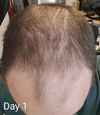
User suggests rotating scalp 180 degrees to address hair loss. Others discuss sanity, ethics, and similar procedures like scalp reduction and hair transplants.
The conversation discusses alternatives for hair loss treatment for someone allergic to finasteride, suggesting options like hair systems, topical anti-androgens such as CB-03-01, RU58841, and kx-826. It highlights the challenges faced by individuals allergic to anti-androgen inhibitors and the need for more information on this topic.
Users discuss alternatives to DHT blockers for hair loss, suggesting minoxidil, microneedling, natural DHT blockers, and scalp massages. Some explore RU58841, ketoconazole, hair transplants, and hair systems due to side effects from finasteride and dutasteride.
A user has been using sublingual minoxidil for hair loss due to difficulty obtaining pills and is concerned about cancer risk from ethanol exposure. Other users advise against this method, suggesting topical application instead, and debate the potential risks of ingesting topical minoxidil.
A user experienced increased hair shedding and unchanged DHT levels after taking 0.25mg of finasteride for 47 days, leading them to increase the dose to 0.5mg. Others discussed varying experiences with finasteride, minoxidil, and the importance of measuring scalp DHT.
The conversation discusses whether dermarolling (microneedling) works with oral minoxidil for hair loss treatment. References to studies on microneedling alone and combined with minoxidil are provided.
A user shared their 3-month hair loss treatment progress using 5% minoxidil, 1mg finasteride, and occasional nizoral. They noted significant progress and plan to continue treatments, with another update at the 6-month mark.
A user shared their 2+ years progress on Oral Dutasteride and Sublingual Minoxidil for hair loss. Another user asked about the form of Minoxidil used sublingually.
User GreatCanuck experienced hair regrowth after using finasteride for a year, reducing anxiety about hair loss. Others in the conversation shared similar positive experiences and discussed family members using the treatment.
OP used castor oil, ketoconazole shampoo, and biotin tablets for hair growth, reporting significant beard growth and faster hair growth on the scalp, but with stomach issues from castor oil. OP also used finasteride and recommended starting with 1ml of castor oil, noting that while hair grew faster, density did not significantly increase.
The user is experiencing significant hair shedding after three months on oral Dutasteride, Minoxidil, and Vitamin D3, but remains hopeful as shedding can indicate treatment effectiveness. They consider adding topical Minoxidil and dermal needling, while others advise patience.
The user is using finasteride for hair loss and is frustrated with shedding but plans to add oral minoxidil for convenience and safety. There are concerns about using topical minoxidil around pets.
Finasteride and minoxidil are discussed as hair loss treatments, with mixed opinions on side effects like sexual dysfunction and mood changes. Some users report positive results, while others express concerns about potential risks and insufficient information.
A user in their 30s with male pattern baldness reported significant hair regrowth after starting a daily pill containing 2.5mg Minoxidil and 1mg Finasteride. They were initially skeptical but experienced no side effects and were pleasantly surprised by the results.
A 31-year-old with diffuse thinning experienced significant hair regrowth after nearly 5 months on Finasteride 0.75mg MWF. Despite initial side effects like testicle pain and reduced sex drive, these issues resolved, and positive effects included reduced nighttime urination and scalp itching.
The user noticed a significant improvement in hair loss after 3.5 months using a topical treatment of 7% Minoxidil, 0.1% Finasteride, and 0.025% Tretinoin, which was prescribed and shipped from a pharmacy in Indiana. Other users discussed alternative products with varying concentrations of Minoxidil and Finasteride.
The conversation is about a user's hair regrowth after 2.5 months using topical minoxidil. Some suggest adding finasteride for long-term results, while others share their experiences with side effects or alternative treatments like dermarolling and dietary improvements.
The conversation is a satirical discussion about a baby with hair loss using adult hair loss treatments like finasteride, minoxidil, and ketoconazole, as well as dermarolling, scalp massages, and plans for PRP sessions. Suggestions include various other treatments and humorous advice, reflecting the satire of the situation.
User shared 15-month progress using Oral Dutasteride and Sublingual Minoxidil for hair loss. Treatment improved hair density, now considering hair transplant with fewer grafts.
This conversation is about a user struggling with hair loss who has been told by their barber that minoxidil does not work and the only solution is to accept it. Other users have encouraged them to continue using finasteride and minoxidil, as well as look for another barber, since these treatments are scientifically proven to be effective in combating hair loss.
Making a 1 year update on hair loss treatment of Finasteride, 5 mg oral minoxidil and topical minoxidil with 1.5 mm dermarolling; the user experienced some face pimples, baggy eyes, and had tried skin care. They also used fiber with their hair product and left it for a few days to make it look visually better. Replies were positive and one asked if using both oral and topical minoxidil was overkill.
Taking topical minoxidil orally for hair loss treatment, discussing safety, dosing, side effects, and FAQs. Users express concerns about safety and potential heart damage, while others share experiences and results.
A user questions if ingesting topical minoxidil could be an alternative to oral minoxidil for hair loss. Another user reports success with this method, noting they saw results and experienced no adverse effects.
The conversation is about using castor oil for hair loss treatment alongside finasteride and minoxidil. Users discuss the method of consuming castor oil, its potential side effects, and question its effectiveness for hair growth.
Oral minoxidil is more effective than topical minoxidil for hair regrowth but may cause side effects like heart issues and increased body hair. Combining it with finasteride is common for better results, though side effects vary.
A user shared their experience with oral minoxidil and finasteride for hair loss, taking 7.5mg of minoxidil and experiencing excessive hair growth all over their body without major side effects. Some users suggested lower doses for safety, while others shared their own experiences with hair growth in different areas and side effects.
This conversation is about how topical treatments for hair loss, such as Minoxidil and Finasteride, can be replaced by drinking oral versions of the same medications to achieve better results with less hassle. Some users have already been doing this with positive results.
Switching milk brands cleared scalp inflammation and other symptoms, but hair shedding continues. The user hopes shedding will stop as hair cycles progress.
The conversation discusses a transgender individual's successful hair loss treatment over 1.5 years using 2.5mg oral minoxidil, 5mg finasteride, and 8mg weekly injectable estradiol valerate. Some users debate the appropriateness of this approach within the group's goals, while others support the individualized treatment and its additional benefits for transgender individuals.