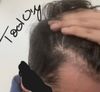
A 16-year-old is experiencing thinning hair at the front and shedding during showers. He is concerned about potential early baldness and is considering seeing a doctor and taking multivitamins.
A user reported that taking iron polymaltose significantly reduced their hair loss. They also mentioned hair loss due to DHT and asked if hair loss from iron deficiency is permanent or temporary.
A user shared their positive experience with a clinical trial for a new oral medication, VDPHL01, which is a reformulated version of oral minoxidil taken at a high dose of 17mg daily, showing significant hair regrowth after six months. The user noted that this formulation is believed to be more effective and time-released, with fewer side effects compared to regular oral minoxidil.
A user expressed frustration with hair loss treatments, including finasteride, minoxidil with micro-needling, and RU58841, which all failed to stop hair thinning and miniaturization. Suggestions from others included accepting baldness, considering hair systems, and continuing prescribed antidepressants for depression.
The GT20029 tincture, a topical androgen receptor degrader, showed significant hair growth and good safety in a China Phase II trial for male androgenetic alopecia (AGA), with the 1% dose twice weekly identified as optimal. The company plans to initiate Phase III trials in China and Phase II in the U.S., and the treatment also shows promise for acne.
A young male in his twenties discusses hair loss, mentioning the use of Minoxidil, topical finasteride, and occasional derma rolling. He inquires about scalp inflammation, fibrosis, and the potential benefits of magnesium oil and scalp massages for improving blood flow and hair health.
User discusses Alfatradiol (17a-Estradiol) as a potential hair loss treatment with mixed results. Concerns include low dosage, receptor theory, and possible increased aromatase activity on scalp.
A user is considering mixing Stemoxydine, RU-58841, Alfatradiol, and Tretinoin into a single topical solution for hair loss. They are concerned about potential interactions that could reduce the effectiveness of these ingredients.
The conversation discusses preventing infection from derma stamping for hair loss treatment, with suggestions to reduce needle depth and consider alternatives like tretinoin. The user experienced irritation possibly from zinc chloride and stopped using the shampoo and derma stamping.
The conversation discusses the removal of Breezula phase II 12-month results by Cassiopea and the search for the original data. Concerns were raised about potential negative long-term effects on hair growth, such as androgen receptor upregulation.
A user is seeking alternatives to **Curatio Triclenz Hair Cleanser** and **Triflow Hair Conditioner** due to issues with hair weight and scalp pimples. They need recommendations for mild shampoos available in Europe, preferably Sweden.
A user experienced severe sexual side effects and man boobs after 11 months of finasteride use, despite initial positive results for hair growth. They are discontinuing finasteride and caution others about potential risks, suggesting that side effects may be more common than reported.
The post discusses a user's successful hair recovery using minoxidil, finasteride, and hormone replacement therapy (HRT) with cyproterone acetate and estradiol. The user experienced significant improvement in hair density and hairline recovery.
A 30-year-old female with PCOS and male pattern baldness is frustrated with her endocrinologist's recommendation of only Spironolactone and minoxidil, feeling that dutasteride, finasteride, and progesterone would be more effective. Other users suggest various online sources for treatments, warn against self-medicating due to potential risks, and recommend seeking a specialized endocrinologist or considering additional treatments like Inositol, Berberine, and dermaneedling.
The user experienced significant hair loss after extended fasting, initially thought to be Telogen Effluvium, but later suspected male pattern baldness. They tried finasteride briefly but stopped due to concerns about side effects, and are unsure if the hair loss is due to Telogen Effluvium or another cause.
The post discusses a hair loss treatment regimen using saw palmetto, pumpkin seed oil extract, EGCG (green tea) extract, grape seed oil extract, rosemary oil extract, and Zix. The user plans to use these DHT-blockers and 5AR inhibitors for six months and report the results.
Topical treatments like minoxidil and finasteride are preferred for hair loss due to ease of use and natural appearance. Hair systems are considered high-maintenance and less genuine.
The user experienced facial puffiness after switching from finasteride to dutasteride, which they believe is due to dutasteride. They are seeking advice on reversing this effect, considering factors like diet, exercise, and potential hormonal changes.
The user changed their hair loss treatment in October/November, experienced increased shedding, and now sees no new hair growth, with a worsening condition and a possible bald spot. They also have severe seborrheic dermatitis, which may be affecting their scalp and hair loss.
Discussion on hair loss treatments, focusing on Breezula, with mentions of Minoxidil, finasteride, RU58841, Pyrilutamide, GT20029, and PP405. Breezula's effectiveness is uncertain, with some trials showing minimal regrowth.
The conversation is about a user complaining about the strong smell of a stemoxydine serum used for hair loss. Other users suggest that the product might be counterfeit due to its unpleasant odor.
South Korea's president is advocating for hereditary hair loss to be covered by national health insurance due to its impact on mental health and daily functioning. The discussion highlights the societal pressure in South Korea regarding appearance and the potential benefits of treating hair loss to improve mental health.
The user experienced hair shedding and follicle shrinkage when using retinoic acid, despite trying different concentrations and frequencies. The hair loss persisted for six months but regrew after stopping the treatment.
The user started oral finasteride and minoxidil in November 2024, initially saw improvement, but has experienced increased shedding since April 2025. They are concerned the treatment may not be effective anymore and seek advice.
A 47-year-old male experienced hair regrowth after 4 months of using topical minoxidil and derma stamping, with additional use of keto shampoo. He noticed improvements, especially at the back and front of his head, despite irregular derma stamping sessions.
The user experienced scalp inflammation and rapid hair loss after using minoxidil, despite initial success. Suggestions included switching to minoxidil foam, using oils, trying aspirin, and considering RU58841 for inflammation and hair loss management.
PP405, a topical LDH inhibitor, has shown to stimulate hair follicle stem cell proliferation in humans with moderate hair loss. They are advancing to more detailed trials this year.
Finasteride is used for hair loss, with mixed reports of no side effects and claims of long-term negative effects known as Post Finasteride Syndrome (PFS). The conversation debates the existence and causes of PFS, with differing opinions on whether it is psychological or real.