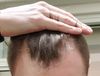
A 27-year-old experienced significant hair regrowth after a hair transplant with 4349 grafts, supported by minoxidil and finasteride, improving his confidence. He plans to update on further progress at 9–12 months.
A 33-year-old man is concerned about potential hair loss, comparing his hairline to his father's and noticing increased shedding and thinning. He is considering treatments like Minoxidil and Finasteride but is unsure if he has male pattern baldness.
A 29-year-old male is considering treatments for hair loss, including Minoxidil, Finasteride, microneedling, or a hair transplant, and is concerned about potential hair loss due to military service. He is currently at Norwood 2 and has a family history of hair loss.
Male pattern baldness (MPB) may be an early warning sign for type 2 diabetes due to its association with insulin resistance. Treatments discussed include testosterone therapy and finasteride, which affects hormone levels related to hair loss and insulin sensitivity.
A 20-year-old male with a high hairline seeks advice on potential hair loss, noting a family history that typically doesn't progress beyond Norwood 2. A user suggests it appears to be a mature hairline rather than hair loss and advises monitoring for changes.
A young individual experienced early hair loss and tried various treatments including Minoxidil, RU58841, micro-needling, and topical finasteride, which stopped the hair loss but did not regrow hair. Ultimately, they found a solution in a hair system, which restored their confidence and allowed them to participate in social activities again.
Hair loss discussion includes treatments like Minoxidil, Finasteride, and RU58841. Users share experiences and support, mentioning that many people face hair thinning.
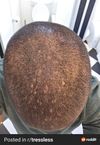
The user experienced significant hair regrowth using a regimen of minoxidil 5% twice daily, finasteride 1 mg daily, microneedling, ketoconazole 2% twice a week, and occasional castor and coconut oil, along with daily scalp massages. They are optimistic about reversing their Norwood 5/6 hair loss.
A 32-year-old male with Norwood 3 and heavy diffuse thinning is starting a hair loss treatment including RU58841, Minoxidil, finasteride, derma rolling, vitamins, and possibly MK677, while cutting out most sugars from his diet. He plans to share progress photos and updates on his test levels.
A 27-year-old considering a hair transplant after going bald from 2018 to 2024. Recommendations include using finasteride and minoxidil before the transplant, with mixed opinions on their long-term use and side effects.
A 37-year-old who started losing hair in their early 20s tried minoxidil with little effect, then experienced more loss until 2023. They are now using a treatment including finasteride, minoxidil, biotin, saw palmetto shampoo, and micro needling, and are seeing early positive results.
The conversation humorously discusses hair loss and potential treatments like finasteride and minoxidil. It includes playful banter and jokes about appearance and identity.
Younger generations now view receding hairlines as baldness, increasing the use of treatments like minoxidil and finasteride. Social media and changing beauty standards have intensified focus on hairlines, altering perceptions of baldness.
A 26-year-old male with a family history of early baldness documents his hair loss journey, using finasteride, dutasteride, and Nizoral, along with lifestyle changes like weightlifting and a vertical diet. Despite some stabilization, he continues to experience thinning and remains determined to fight hair loss.
A 21-year-old male diagnosed with telogen effluvium and male pattern baldness started oral finasteride, which initially slowed hair loss and slightly thickened hair, but experienced increased shedding after surgery. The doctor recommended iron and vitamin D supplements, and the user is seeking additional advice.
A user experienced androgenic alopecia starting at the vertex without frontal hairline recession and is seeking information on this pattern. Another user noted that vertex or diffuse hair loss is common among men.
A 24-year-old with early hair loss is managing it with finasteride, minoxidil, and dutasteride, and is considering using a hair system for more styling options while maintaining transparency. They emphasize confidence and self-expression over hair, viewing it as an amplifier rather than a foundation.
A person improved hair loss from Norwood 3 to Norwood 2 using a topical formula with minoxidil, dutasteride, and tretinoin, plus oral minoxidil and red light therapy. There is skepticism about the treatment's effectiveness and concerns about misleading comparison photos.
A 23-year-old man shared his 4-month hair regrowth progress using 1mg oral finasteride daily, 5% minoxidil with finasteride topical twice a day, multivitamins, microneedling, head massages, and ketoconazole shampoo. He's unsure of his current Norwood scale classification and is asking for help to determine it, with suggestions ranging from NW4 to NW4.5.
Finasteride is effective for DHT/AR-driven hair loss but not for chromosome 20-driven cases, where treatments like minoxidil, prostaglandin analogs, and low-level laser therapy may be more beneficial. Genetic testing can help determine the underlying cause of hair loss to tailor treatment effectively.
The user noticed hair thinning since age 15, initially attributed to a Vitamin D deficiency. They are currently using Rogaine and considering Propecia but are hesitant about a scalp biopsy; they seek financially practical treatments for male-pattern baldness.
A 20-year-old with aggressive hair loss is using oral minoxidil and finasteride, considering a buzz cut to manage appearance. Most suggest a buzz cut or shaving, recommending patience with medication and possibly trying RU58841 or dutasteride.
An 18/19-year-old male started balding at 16 and initially saw hair growth with minoxidil, but results diminished over time. He switched dermatologists and is now using a regimen of topical finasteride, minoxidil, vitamin D, and supplements, hoping for better results.
A 26-year-old with a bald spot is seeking advice for hair regrowth, having no treatment history. Suggestions include starting Minoxidil and finasteride to promote growth and reduce hair loss.
The user began experiencing hair loss a few years ago at age 22 and is a diffuse thinner with a Norwood scale rating of 2. They have a naturally athletic build and gain muscle easily, with a hairy chest and stomach.
The user noticed small circular hairless spots after a buzz cut and has been using finasteride, dutasteride, and oral minoxidil for hair loss. They are experiencing continuous shedding and thinning, and it is suggested they consult a dermatologist for a scalp examination and possible biopsy to determine if it's alopecia areata or androgenetic alopecia.
The conversation discusses hair loss and hairstyles for balding men, with some users suggesting treatments like Minoxidil, finasteride, RU58841, and dutasteride. The focus is on embracing unique hairstyles instead of shaving, with mixed opinions on their appeal.