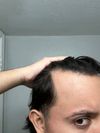
A man is worried about telling his girlfriend he uses finasteride for hair loss. Most responses suggest it's not a big deal and advise being open if it comes up naturally.
The user experienced hair thinning and used Minoxidil and Finasteride over 20+ years, with periods of stopping and restarting treatment, and eventually had a hair transplant. They are considering restarting Minoxidil and Finasteride and are curious about the effectiveness and potential shedding after resuming the treatment.
The user has been using topical minoxidil and oral finasteride for a year, experiencing initial side effects and shedding, but later noticing thicker hair. They are concerned about recent hair loss and considering increasing finasteride dosage, while others suggest patience and possibly adding minoxidil or dutasteride.
The conversation discusses hair regrowth after 100 days using 5mg Minoxidil and 0.5mg Dutasteride, focusing on changes in the temples and hairline. Users debate the effectiveness due to inconsistent photo comparisons.
Most users did not visit a dermatologist before starting finasteride, opting to purchase it directly or through a primary care physician. Some users shared experiences of side effects and emphasized the potential benefits of medical advice and monitoring.
Folligenz liposomal minoxidil sulfate is being discussed for its effectiveness and cost, with users comparing it to regular minoxidil and tretinoin. One user found no difference with the 10% version and noted that a lower tretinoin percentage reduced side effects like skin peeling.
A 26-year-old from the UK is experiencing increased hair thinning despite using dutasteride and topical minoxidil. They are considering additional treatments like ketoconazole shampoo, oral minoxidil, and possibly RU58841, while seeking advice on managing side effects and exploring other options.
A 22-year-old is experiencing hair thinning and is using oral finasteride and minoxidil chewables, along with microneedling and anti-dandruff shampoo, to manage it. Despite experiencing significant shedding, they remain hopeful for regrowth in the coming months.
The user plans to stop finasteride after three months, believing hair loss isn't due to DHT, and will continue with oral minoxidil, microneedling, and ketoconazole shampoo. They suspect stress and poor nutrition are the main causes and seek opinions on DHT blockers' effectiveness.
Counterfeit minoxidil can be identified by inconsistencies in bottle fill levels, label details, and smell compared to genuine products. Genuine minoxidil has a specific alcohol-based smell and consistency, while counterfeit versions may smell musky and feel greasy.
The user shared their positive experience with a hair transplant in South Korea, highlighting thorough consultations, consistent medical team involvement, and reasonable pricing. They noted good growth and natural-looking results after several months, with stem cell PRP treatment included to support graft survival.
The user improved hair density from 45% to 70% using dutasteride and minoxidil, but still uses hair fibers for a fuller look. They added a topical mix of minoxidil, finasteride, and bimatoprost, but doubt further significant improvement.
The user experienced hair regrowth using finasteride and minoxidil over 8 months, with noticeable improvements starting in June. They reported side effects like erectile dysfunction and flakes but continued treatment as the effects were not permanent.
A user applied minoxidil for hair loss and worried about its toxicity to cats after their cat drank from a water fountain they touched. After consulting a vet and pet poison control, they were reassured that the exposure was not enough to harm the cat, and others advised using gloves and being cautious in the future.
A user in Egypt is seeking alternatives to oral minoxidil, which is banned there, after stopping topical minoxidil due to concerns for their cat's safety. Suggestions include drinking diluted topical minoxidil or making homemade minoxidil tablets, but these methods carry significant risks and are not recommended.
The user experienced significant hair shedding while using finasteride and oral minoxidil but found that the shedding eventually stopped, and hair returned to its previous state. They advise patience, continuing medication, and maintaining good nutrition, including Vitamin D.
A 17-year-old is using Finasteride and Minoxidil for hair loss, experiencing hair shedding and cystic acne. They are considering Dutasteride for acne but are concerned about potential side effects on genital development.
The user is concerned about hair loss and is hesitant to use treatments like finasteride and minoxidil due to potential side effects. Another user suggests gradually introducing finasteride to minimize side effects and maximize results.
Topical finasteride can effectively reduce scalp DHT by targeting local enzymes, despite less systemic impact compared to oral forms. Combining oral dutasteride with topical finasteride and minoxidil may enhance hair loss prevention, though evidence of its effectiveness is limited.
A 20-year-old has been using finasteride and minoxidil to treat hair loss, with noticeable crown improvement but continued hairline recession. They are considering adding dutasteride and have experienced no side effects.
A 17-year-old experiencing hair loss, thinning, and white hair seeks advice on effective treatments. They have started using shampoo and conditioner but have not seen improvement and are open to product suggestions.
Minoxidil is causing hair growth in unexpected areas like the forehead, eyebrows, and body, rather than the scalp. Users discuss the effects of both topical and oral minoxidil, with some also using finasteride and experiencing varied results.
Creatine may cause hair loss in some individuals, especially those on finasteride, despite no scientific link. Personal experiences suggest individual sensitivity to DHT could be a factor.
The user has been using minoxidil and finasteride for hair loss, along with a biotin-based shampoo. Suggestions include being patient, sticking to the routine, and possibly using a keto shampoo for dandruff.
The user started using finasteride daily and ketoconazole occasionally, noticing reduced hair fall but no regrowth. Others shared mixed experiences with finasteride, some considering switching to dutasteride or adding minoxidil.
The conversation discusses hair loss treatments, specifically the use of dutasteride, finasteride, and the potential of mesotherapy. The user experiences hair loss despite low DHT levels and considers localized dutasteride treatment, while others suggest consulting a dermatologist and exploring other causes like malabsorption.
The user has been using Dutasteride and topical Minoxidil for hair loss, considering switching to oral Minoxidil and increasing Dutasteride dosage. They are seeking advice on whether to change their current regimen or continue, with some users suggesting oral Minoxidil and others cautioning about potential side effects.
Dutasteride, at 1 mg daily, was used for hair regrowth, with initial shedding and side effects like watery semen and increased libido. The user previously tried finasteride and minoxidil but switched to dutasteride for stronger, sustained results.
A 28-year-old male is experiencing excessive hair shedding despite using oral and topical minoxidil, and occasionally using ketoconazole shampoo. He is considering trying GHK-Cu serums but cannot use finasteride.
A 36-year-old is experiencing underwhelming results from derma stamping for hair thinning, using needle lengths of 0.5mm to 0.75mm. They are considering increasing needle length, taking a break, or pairing the treatment with rosemary oil.