PP405 increased hair density by 20% in 31% of participants, but results are considered underwhelming. Minoxidil and finasteride are seen as more effective treatments.
A user plans to stop Dutasteride to conceive a child, seeking advice on hair maintenance. Suggestions include switching to Finasteride, but many emphasize prioritizing child safety.
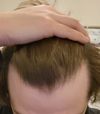
Hair loss progress in 4.5 months using dutasteride 3x/week, topical minoxidil 1-2x daily, and microneedling 2x/month. Users praised the significant improvement.
Koshine is considered less effective than finasteride, dutasteride, and RU58841 for hair loss treatment. One user reported positive results with Koshine, but others found it ineffective.
Higher doses of dutasteride reduce scalp DHT more effectively than finasteride, but have diminishing returns after 3mg daily and may cause more side effects. Combining dutasteride with topical minoxidil can enhance results, but using both finasteride and dutasteride together is unnecessary.
The conversation is about seeking updates on new hair loss treatments, specifically mentioning scube3 and GT20029, with one person mentioning HMI_115 as showing promising results.
PP405 shows promise in hair loss treatment, but stem cell therapy using adipose-derived stem cells and ATP also successfully reversed androgenetic alopecia in mice. Stem cell therapy is costly, and some doubt the effectiveness of PP405 based on press releases.
The user is experiencing continued hair loss despite using Dutasteride 1.5mg and previously Finasteride. They are considering combining Finasteride with Dutasteride and exploring other options like saw palmetto, but avoid Minoxidil due to excessive body hair growth.
GHK-Cu is being discussed as a potential treatment for male pattern baldness. Users are sharing experiences and asking about its effectiveness and side effects.
The conversation discusses the fluctuation of testosterone levels in men under 40 and the difference between serum DHT and scalp DHT. It also mentions that DHT levels are higher on Dutasteride than on Finasteride, which is unusual.
The user has been taking 2.5 mg of dutasteride for 6 months and using minoxidil topically for 3 years but hasn't seen significant hair regrowth, only a slight decrease in hair loss. Suggestions include switching to oral minoxidil, adding microneedling, or using growth agonists like bimatoprost to improve results.
Hair loss may be linked to the TRPS1 gene and protein, not just DHT. Amplifica's AMP-303 targets mesenchymal stem cells and shows promise in treating hair loss, unlike Pelage's PP405.
The post discusses a user's hair loss treatment journey over a year, using finasteride, dutasteride (dut), and oral minoxidil (min). The user found finasteride ineffective, switched to dutasteride and oral minoxidil, and noticed improvements, but couldn't determine which of the latter two treatments was most effective.
User experienced rapid thinning on crown, used dutasteride for 3 months with significant improvement. Microneedling and ketoconazole were also used, but no minoxidil or finasteride.
The user is concerned about high DHT levels despite using finasteride and dutasteride for hair loss, suggesting these treatments may not be effective. They plan to consult an endocrinologist and consider other antiandrogens, acknowledging potential side effects.
Finasteride helps with hair loss by lowering DHT levels in the scalp, which is more important than blood DHT levels. If finasteride is not effective, consulting a doctor or considering switching to dutasteride may be advisable.
The conversation discusses the molecular structures of compounds that reduce DHT levels, including finasteride and Ashwagandha. It explores the potential of using Ashwagandha topically as a 5a reductase inhibitor.
The conversation is about managing an itchy, flaky scalp, possibly due to psoriasis, and the use of a hydrating conditioner to address dryness. The user is concerned about using conditioner due to experiencing telogen effluvium.
User discusses Eucapil for hair loss treatment and asks if it helps with itchy scalp. People share their experiences and results, including maintenance or slight improvement.
Dutasteride is considered a stronger alternative to finasteride for hair loss, with mixed results; some users report improvement, while others experience worsening or side effects. Effectiveness varies, with genetics and individual responses influencing outcomes.
The user shared their hair regrowth journey using treatments like dutasteride, minoxidil, microneedling, tretinoin, Nizoral, silica, biotin, and hormone replacement therapy (HRT) with cyproterone and estradiol. They reported substantial hairline improvement and some crown thinning, with hopes for further progress.
The conversation is about identifying ingredients in a scalp serum and their effects on DHT levels. The serum contains various ingredients like Aqua, Biotin, and Oleanolic Acid.
A user shared their disappointing results after 1.5 years of hair treatments, including a hair transplant, finasteride, minoxidil, PRP, vegan shampoo, and more. They are considering switching to dutasteride, oral minoxidil, and improving their microneedling routine.
The user improved their hair loss from a Norwood scale 2.5/3 to 1.5/2 using treatments including 2.5 mg dutasteride, RU58841, 15 mg oral minoxidil, isoflavones, NAC, pumpkin seed oil, NAD+, and Vipelin, but still experiences temple recession. Other users expressed concern over the high dosages of oral minoxidil and dutasteride.
Switching from finasteride to dutasteride led to hairline regression and scalp issues for some users, prompting a return to finasteride. Users reported better maintenance and regrowth with finasteride compared to dutasteride, despite using oral minoxidil throughout.
The user is concerned about the quick prescription process for hair loss treatments like Minoxidil and Finasteride through HIMs, questioning the lack of a thorough evaluation. Another user reassures that such practices are common, emphasizing the effectiveness and low risk of these treatments, and suggests monitoring personal response to the medication.
The user has been using Finasteride 1mg daily for 13 years with stable results but is now experiencing thinning hair and is considering switching to Dutasteride 0.5mg. They are seeking advice on whether this change might be beneficial.
User asks about CB-03-01 for hair loss treatment and mentions using topical Dutasteride, TRT, and considering mixing CB-03-01 with Fluridil. CB-03-01 is sold at a high price, and user considers trying a lower concentration.
The user aims to achieve a hypertrichosis look and has used topical Minoxidil for 20 years, now trying oral Minoxidil in a low dose. They seek alternatives to Minoxidil to avoid side effects.