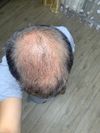
GHK-Cu is being considered for hair growth, but users report mixed results. Some use it alongside other treatments like 5AR inhibitors, making it hard to determine its effectiveness.
PP405 shows promise in activating dormant hair follicles and increasing hair counts but lacks detailed efficacy data compared to minoxidil and finasteride. Opinions are mixed, with some optimism and skepticism about its effectiveness.
The conversation discusses using GHK Cu + AHK Cu peptides combined with topical dutasteride and minoxidil for hair regrowth. It mentions negative side effects of finasteride and promotes a specific copper peptide serum.
The user has been using oral finasteride for over a year and recently added GHK-CU for two months, seeing progress but seeking further improvement, especially on the hairline. They discuss sourcing GHK-CU, its effects, and the importance of third-party testing, while considering additional treatments like dutasteride and hair transplants for better results.
A 28-year-old man shared his experience with a 2990 graft FUE hair transplant at HDC Clinic in Cyprus, praising the professionalism and care received. He has been using topical Minoxidil, Biotin, Dermarolling, and recently started Finasteride and oral Minoxidil.
A user's experience with using 5AR inhibitors (Finasteride and Dutasteride) in combination with Minoxidil foam and microneedling, which resulted in substantial improvements to their crown density and hairline, despite high systemic levels of testosterone and dihydrotestosterone.
The conversation discusses starting finasteride 1mg daily for hair loss and mentions a high baseline DHT level. Users comment on the unusually high DHT level and its potential causes.
The user has DUPA and suspects autoimmune activity as a cause. They have tried various treatments including finasteride, minoxidil, dutasteride, pyrilutamide, estrogel, hydrocortisone, and clobetasol, and are now seeking a long-term immunosuppressant.
A 17-year-old with AGA is considering Revitacare Haircare Mesotherapy, which includes hyaluronic acid, amino acids, zinc, and B vitamins, injected into the scalp. One reply dismisses it as ineffective.
New product Tomorrowlabs HSF targets hair loss through HIF pathway indirectly by removing scalp iron. Minoxidil and Stemoxydine also relate to HIF pathway.
High DHEA levels may contribute to hair loss by increasing DHT in hair follicles, potentially explaining why finasteride is ineffective for some. Treatments like high-dose dutasteride and RU58841 are suggested, but the underlying cause, such as adrenal issues, should be investigated.
The post discusses a phase 2 trial for HMI-115, a hair loss treatment, in China, specifically seeking volunteers aged 18-65 with Norwood 3 vertex, 4, and 5 hair loss. The conversation includes questions about the specific recruitment criteria and how to volunteer.
A European individual planning to go to China is seeking information on how to participate in HMI-115 trials for Androgenetic Alopecia. They've tried contacting Mrs. Yang and Mr. Wang for assistance but haven't received a response.
The user had four DHI hair transplants from 2021 to 2025 and is concerned about the lack of hair thickening despite using treatments like finasteride and minoxidil. They are seeking advice on why these efforts aren't working.
AHK and GHK are discussed for hair growth in the crown area, with questions about side effects and safety after microneedling. Users share experiences and concerns about these treatments.
New hair loss treatments PP405 and VDPHL01 are discussed with skepticism and hope, alongside existing treatments like minoxidil and finasteride. Users express frustration over limited progress since the 1980s but remain cautiously optimistic.
The user discusses their experience with diffuse unpatterned alopecia and acquired progressive hair kinkering, noting improvements with treatments including biotin, pantothenic acid, finasteride, ketoconazole, and zinc pyrithione shampoo. They report thicker, healthier hair and improved scalp condition, attributing success mainly to biotin, pantothenic acid, and finasteride.
The user is using a topical solution with finasteride, minoxidil, and tretinoin and is considering adding GHK-Cu to enhance hair growth and quality. Another user suggests diluting GHK-Cu and storing it in a smaller, refrigerated bottle.
The user shared progress 128 days after a DHI hair transplant with 4261 grafts, using Finasteride, Minoxidil, Cutihance Men tablets, Omega-3, Vitamin D3 with K2, and one session of GFC PRP. They seek feedback on their progress compared to others' experiences.
Elevated bile acids can inhibit the enzyme AKR1C2, leading to increased DHT levels, which may accelerate hair loss in those predisposed to androgenetic alopecia. Treatments mentioned include topical minoxidil and finasteride.
People are discussing the use of the peptide GHK-Cu for hair and skin, with mixed results. Some users have tried it alongside other treatments like adenosine and melatonin, but have not seen significant improvements, and one user stopped due to cost.
A user who was part of an ongoing trial for a prolactin blocker and had regrowth, but the progress photos were not shared due to negative reactions from other users. Treatments mentioned include HMI-115, Minoxidil, Finasteride, and RU58841.
A user has been taking finasteride for 5 months with no improvement in diffuse hair loss and suspects high levels of prolactin, cortisol, progesterone, and DHEAS, as well as iron, might be contributing to the issue. They are also taking vitamin D to address a deficiency.
Dutasteride might be better for hairline due to varying levels of 5AR activity in scalps. Genetic tests can determine if finasteride is enough or if dutasteride is needed.
Finasteride, Minoxidil, Bioneer CosmeRNA, Technoderma, Kintor, Hope, Breezula, and Follicum treatments showed increases in hair count, with Technoderma showing the highest increase at 24.3 hairs/cm². Amplifica has not yet published results.
An 18-year-old is using a high-dose treatment for hair loss, including 2.5 mg dutasteride, topical minoxidil, and injectable GHK-Cu, despite minimal hair loss. Many users suggest reducing the dutasteride dose due to potential side effects and recommend starting with finasteride instead.
Dutasteride is associated with increased blood glucose, HbA1c, LDL cholesterol, and liver enzyme activity, potentially leading to diabetes, NAFLD, and liver metabolism changes. The conversation highlights concerns about these adverse effects and calls for more studies, including on finasteride.
CRISPR treatments for blood disorders have been approved, leading to discussions about its potential for treating hair loss (AGA). A study showed that editing a gene related to DHT sensitivity could lead to hair regrowth, suggesting CRISPR may eventually be used for AGA, but it's expected to be expensive and not soon available.
A user is treating hair loss with Dutasteride, Minoxidil, RU58841, Derminator 2, Vitamin D, Biotin, and Zinc. After 6 months, there's no significant visual improvement, but the user feels less insecure about Retrograde Alopecia.